This article is published in Aerospace Daily & Defense Report part of Aviation Week Intelligence Network (AWIN), and is complimentary through May 05, 2026. For information on becoming an AWIN Member to access more content like this, click here.

BAE Unveils New Spacecraft Line For Dynamic Space Operations

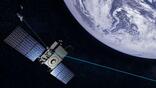
Ascent rendering

BAE Systems' Ascent spacecraft has been designed for dynamic space operations and exploration missions across multiple orbits.

Credit: BAE Systems

COLORADO SPRINGS—BAE Systems is entering the space tug market, debuting a new vehicle it says will be capable of transporting cargo and small satellites to the Moon and dynamic on-orbit maneuvering.

The company has spent the past five years developing the new space vehicle, called Ascent, as a refuelable platform capable of carrying multiple rideshare payloads for missions based in low Earth orbit (LEO) up to cislunar orbits, it announced April 14.

As NASA targets monthly landings on the Moon beginning in 2027 and the U.S. Space Force seeks maneuverable spacecraft that can perform on-orbit logistics, BAE Systems sees opportunities for Ascent to support both exploration missions and to counter on-orbit threats, company executives told reporters April 13 here at the Space Foundation’s annual Space Symposium.

On the civil space side, BAE Systems is pitching Ascent as a space tug capable of transporting cargo and small satellites across orbits. This would either be to support lunar architecture activities or for deep space exploration, said Bonnie Patterson, vice president and general manager of civil space for BAE Systems Space and Mission Systems, which was formerly Ball Aerospace.

Ascent’s first Pathfinder mission could launch as soon as 2027 in support of an undisclosed customer to prove out the most critical capabilities—including Ascent’s ability to be refueled and maneuver across a range of orbital regimes, said Thai Sheridan, company vice president and general manager of military space.

The refueling interface is still being finalized ahead of that mission, Sheridan said. The U.S. Space Force has highlighted multiple interfaces as “preferred” devices as the service plans to conduct numerous on-orbit refueling demonstrations this summer. “We are trying to make sure that what we use for the demo is relevant in the future,” Sheridan said.

The company is leveraging legacy capabilities developed through programs such as DARPA’s Orbital Express to ensure Ascent is capable of in-space refueling, rendezvous and proximity operations, and docking. That includes flight heritage software from Orbital Express and other programs, while the Elevation product line—which includes Ascent and two smaller platforms—has direct lineage from Orbital Express and other past company programs, Brad Shogrin, company vice president and general manager for national space, told Aviation Week in an April 13 email.

The space vehicle will have a five-year lifespan, be capable of carrying up to 2,200 kg (4,850 lb.) of payload to orbit, and deployable on a single launch vehicle, company data says. It will be powered by a refuelable, hydrazine-based chemical system with the ability to add electric propulsion for station-keeping, Shogrin told reporters.

The Space Force is supporting a number of on-orbit demonstration missions beginning this summer as it explores the commercial options coming to market. To date, the service has not earmarked significant funds to support on-orbit refueling or in-space servicing technologies, choosing to let commercial vendors forge a path before making significant investments.

That being said, the service selected 14 companies, including BAE Systems, to build new satellites under the RG-XX program under an indefinite-delivery, indefinite-quality contract worth a cumulative $1.84 billion. That program, which would provide space domain awareness capabilities from geosynchronous orbit, is being designed with a requirement for refueling.

While BAE Systems’ RG-XX submission includes a commercial bus option, that spacecraft and the Ascent platform would feature some common base technology for proximity operations, Sheridan said.

Vivienne Machi

Vivienne Machi is the military space editor for Aviation Week based in Los Angeles.