This article is published in Aerospace Daily & Defense Report part of Aviation Week Intelligence Network (AWIN), and is complimentary through May 23, 2026. For information on becoming an AWIN Member to access more content like this, click here.

NASA Set To Issue Proposals For Mars Telecom Network

spacemars

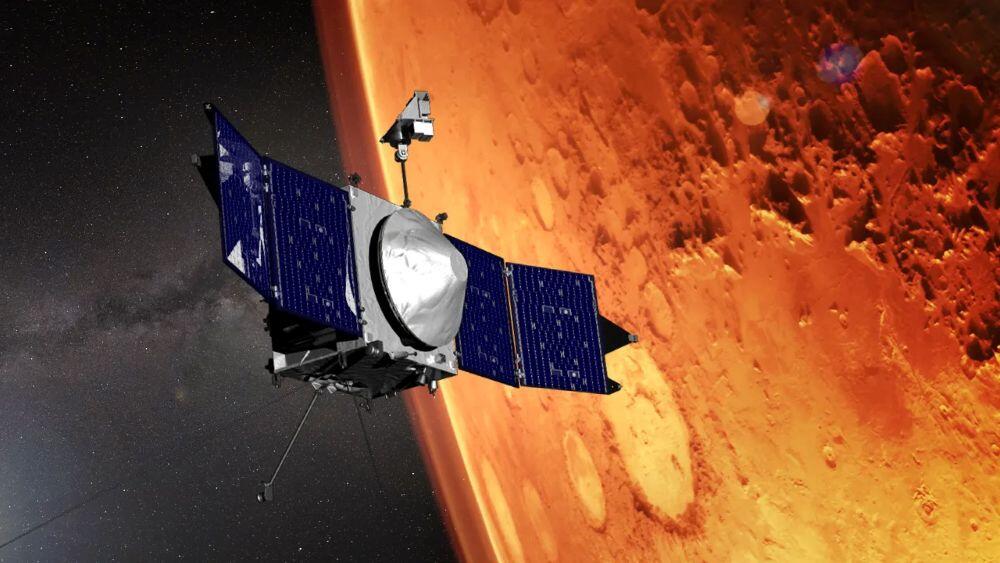
The loss of MAVEN in December has added urgency to NASA’s Mars Telecommunication Network contest.

Credit: NASA

COLORADO SPRINGS—Lockheed Martin, one of several space companies vying for NASA’s Mars Telecommunications Network spacecraft requirement, now anticipates a request for proposals (RFP) from the agency sometime in May.

Previously called the Mars Telecommunications Orbiter, the winner of the fast-track NASA program is widely expected to receive a contract by the end of September under legislation which requires funding for the spacecraft to be obligated by the end of fiscal year 2026. A draft RFP was issued at the beginning of April.

With only Mars Odyssey and the two-decade old Mars Reconnaissance Orbiter now the only surviving NASA spacecraft in orbit, the agency is racing to reinforce links with the planet. Relay capability with Mars was degraded in December with the loss of the MAVEN (Mars Atmosphere and Volatile EvolutioN) spacecraft. The earliest launch window to Mars opens in late 2028, just over two years from now – further adding a sense of program urgency.

Aside from Lockheed Martin, key contenders for the firm, fixed-price contract include Blue Origin, L3Harris, Northrop Grumman, Rocket Lab, SpaceX, Quantum Space and Whittinghill Aerospace.

The U.S. government has “recognized that there is a need for enhanced critical infrastructure at Mars to support not just immediate missions with surface assets today, but also the need for future missions like a Mars sample return as well,” says Whitley Poyser, Director of Exploration at Lockheed Martin.

Poyser spoke at the Space Foundation’s annual Space Symposium being held here April 13-16.

“It is very important that we have the right infrastructure in place at Mars to support that, and so we are very committed both to capabilities that provide critical communications infrastructure, as well as core precursor technologies that demonstrate what it takes to have a human presence at Mars,” she adds.

Lockheed Martin says it will propose a solution that banks on decades of experience with missions to Mars and other deep space destinations. “We have built, developed and operated 11 spacecraft for NASA that have gone to Mars, out of the 22. We currently operate all three science orbiters at Mars, with NASA, and we have developed every single Mars aeroshell that’s gone to Mars for an entry, descent and landing,” says Poyser.

“We not only have designed, built and operated in deep space multiple missions, we specifically have designed built and operated telecommunication deep space capabilities,” she adds. “And then, in addition to knowing what it takes to both reside and live for an extended period of time in the very harsh deep space environment, we’ve been operating telecommunications across multiple orbits, whether it’s Earth orbit all the way out into the lunar environment,” Poyser says.

Guy Norris

Guy is a Senior Editor for Aviation Week, covering technology and propulsion. He is based in Colorado Springs.