This article is published in Aerospace Daily & Defense Report part of Aviation Week Intelligence Network (AWIN), and is complimentary through Dec 26, 2025. For information on becoming an AWIN Member to access more content like this, click here.
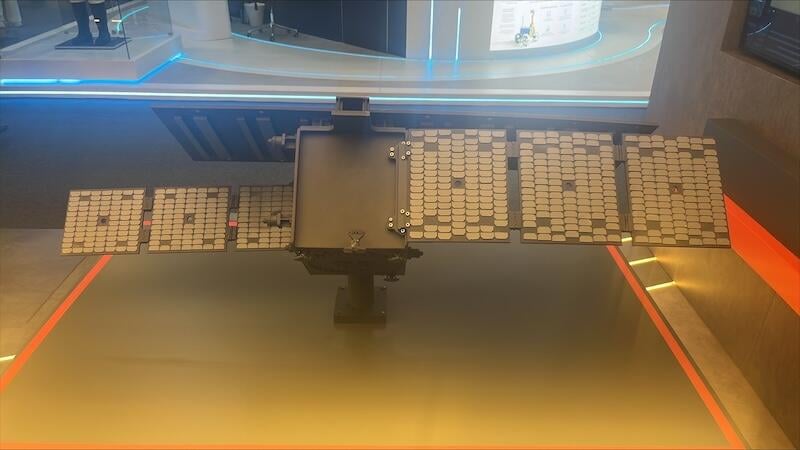
DUBAI—Abu Dhabi-based FADA will early next year start seriously ramping up work to develop its synthetic aperture radar (SAR) know-how with the aim of deploying a constellation in 2028.
The Edge Group unit this year selected Singapore-based ST Engineering and Italy's MetaSensing as foreign industrial partners to develop the SAR system. ST Engineering would help provide hardware and transfer technical expertise on the satellite bus, while MetaSensing would do the same for the sensor for the system—known as Sirb, the Arabic term for a flock of birds.
The first phase of Sirb will include launch of the first satellite, with a focus on knowledge transfer so the second and third satellites can be built locally in the second phase.
FADA staff, starting the first quarter of 2026, will travel to Italy to acquire the SAR knowledge and participate in the design and the development of the payload. By the end of the first phase, that expertise gained can be brought in-house, says Waleid Al Mesmari, president of Edge's Space and Cyber Technologies division.
Edge also has local industrial partners, including Space42 for the ground station. The UAE space company has been deploying its own SAR constellation working with Iceye.
A similar plan is unfolding for other elements of the Earth observation business. FADA is trying to identify the right partners to help work on systems that can deliver electro-optical, infrared, hyperspectral and thermal data, for instance, Al Mesmari says.
“Within the next five years, we will be able to have our own, different payloads when it comes to such capability,” he says.
FADA has launched an image portal called Zenith as part of its growing earth observation portfolio. It integrates various image types from different providers to give users a one-stop to review and analyze data. The terminal also can process satellite tasking requests, using different application programming interfaces to connect with vendor systems.
The company also is looking to develop protected modems to secure satellite communications, with the initial focus on ground or airborne terminals and then on the space payload.