This article is published in Aerospace Daily & Defense Report part of Aviation Week Intelligence Network (AWIN), and is complimentary through Jan 16, 2026. For information on becoming an AWIN Member to access more content like this, click here.
NASA To Accelerate Return Of Four Space Station Crew Due To Medical Concern
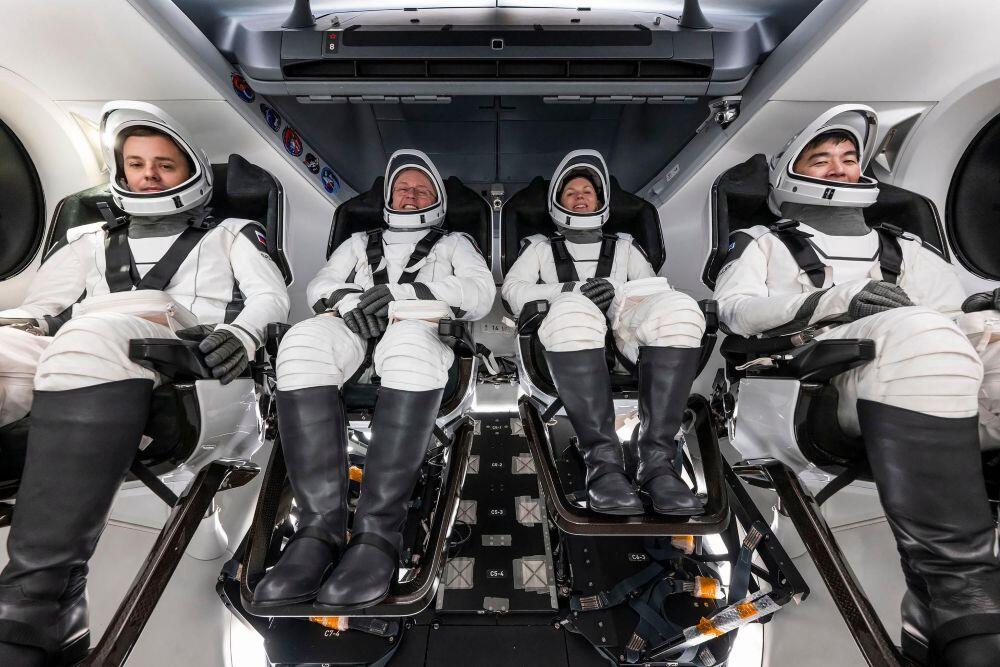
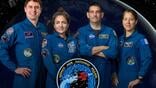
Left to right, Roscosmos cosmonaut Oleg Platonov, NASA astronauts Mike Fincke and Zena Cardman, and Japan Aerospace Exploration Agency astronaut Kimiya Yui.
HOUSTON—NASA plans to return the International Space Station’s Crew-11 astronauts to Earth early due to a recent medical issue experienced by one of the four, Administrator Jared Isaacman announced Jan. 8.
NASA has not identified the specific crewmember affected by the issue.
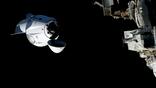
The Crew-11 Dragon mission launched on Aug. 1 with NASA’s Zena Cardman and Mike Fincke as the commander and pilot; the Japan Aerospace Exploration Agency’s Kimiya Yui and Russian cosmonaut Oleg Platonov. They docked to the station’s U.S. segment the following day to begin a planned six-month mission filled with dozens of scientific research and technology development activities in addition to daily maintenance of the seven-person orbital lab.
Prior to the unspecified medical concern that arose Jan. 7, the Crew-11 Dragon foursome was to return to Earth with a parachute-assisted Pacific Ocean splashdown off the California coast following the arrival of their Crew-12 Dragon replacements—NASA astronauts Jessica Meir and Jack Hathaway, European Space Agency astronaut Sophie Adenot and cosmonaut Andrew Fedyaev. They were scheduled to launch no earlier than Feb. 15 to engage in a crew handover lasting several days after they docked to the ISS.
The advanced dates for the Crew-11 Dragon’s departure and launch of the Crew-12 Dragon are under evaluation and could be decided upon and announced within 48 hr., Isaacman told a Washington news briefing.
The shakeup will leave the ISS indefinitely staffed by one NASA astronaut, rookie Chris Williams, and two cosmonauts, Sergey Kud-Sverchkov and Sergei Milkaev, who launched on Nov. 27 aboard the Soyuz-MS-28 for a planned eight-month stay.
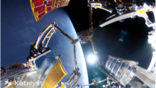
During the news briefing, Isaacman and James Polk, NASA’s chief health and medical officer, clarified that the accelerated Crew-11 Dragon’s return was associated with a health concern—not an injury—a day ahead of a planned Jan. 8 spacewalk by Fincke, the ISS’s current Expedition 74 commander, and Cardman to secure a Mod Kit to the 2A power channel on the port side of the orbital lab’s solar power truss. The Mod Kit is to secure the installation of an ISS Roll-Out Solar Array (IROSA), to augment electrical power generation by the close of 2026.
“Obviously this was a serious medical condition. That is why we are pursuing this path. The crewmember is stable, and we are not electing an emergency deorbit,” Isaacman said. “But obviously as we have already communicated, the capability to diagnose and treat this properly does not live on the ISS, and there is pretty broad agreement across our experts here on the ground as well as the crewmembers in space. I think there is complete alignment around that point.”
During the briefing, the NASA participants were also asked if the rescheduling might have an impact on plans to launch Artemis II, a 10-day mission with three NASA astronauts and one Canadian astronaut on a course around the Moon for a Pacific splashdown and recovery. Artemis II is to launch no later than April but potentially as soon as early February.
“These would be totally separate campaigns at this point,” said Amit Kshatriya, NASA’s associate administrator. “As we mentioned before, we are still evaluating what earlier dates would be achievable, if any, for Crew-12. Right now, we are going to look at all of our standard processes to prepare Crew-12 and look for opportunities, if we can, to bring it in while simultaneously conducting our Artemis II campaign. There is no reason at this point in time to believe there would be any overlap that we would have to deconflict for.”
Fincke and Cardman’s planned spacewalk has been postponed indefinitely.
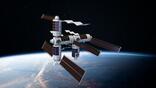
The ISS was equipped with four pairs of solar panels during its initial assembly between December 2000 and March 2009. NASA elected to upgrade six of the original eight power channels serviced by the initial 240-ft.-long solar panels installations with IROSAs between June 2021 and June 2023.
Subsequently, NASA decided to obtain and install two more IROSAs at the 2A and 3B power channels, located respectively on the port and starboard sides of the solar power truss, to support increasing scientific research and the planned controlled deorbit of the 15-nation orbital lab in 2030.
Both the seventh and eighth IROSAs await launch later this year aboard a NASA-contracted SpaceX ISS resupply mission.