This article is published in Aerospace Daily & Defense Report part of Aviation Week Intelligence Network (AWIN), and is complimentary through Mar 14, 2026. For information on becoming an AWIN Member to access more content like this, click here.
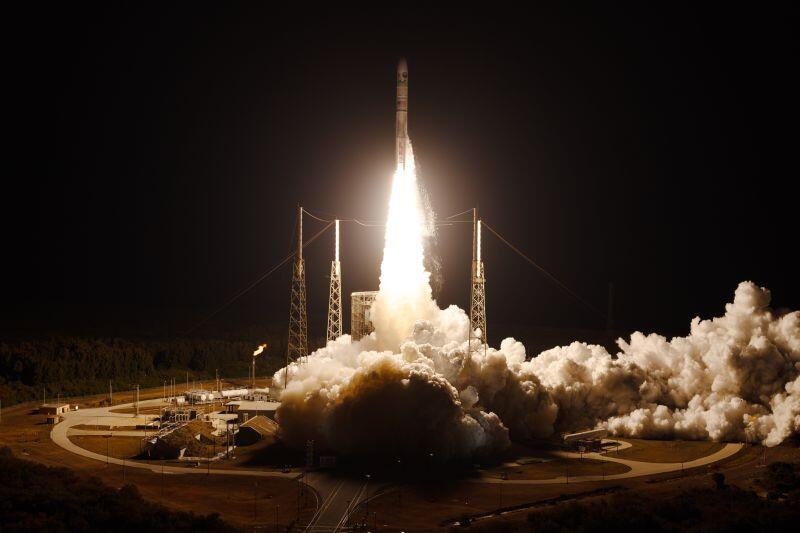
A United Launch Alliance (ULA) Vulcan rocket carrying the USSF-87 mission for the United States Space Force’s Space Systems Command (SSC) lifts off from Space Launch Complex-41 at 4:22 a.m. EST, strengthening national security space.
AURORA, Colorado—The U.S. Space Force will not launch any National Security Space Launch (NSSL) missions on a United Launch Alliance Vulcan rocket until it completes the investigation into a Feb. 12 launch anomaly, a senior service official said Feb. 25.
Space Systems Command is investigating a solid rocket motor anomaly that occurred during Vulcan’s recent launch of USSF-87 from Cape Canaveral SFS. The mission was a success, and Vulcan delivered the payloads, including two geosynchronous space situational awareness program (GSSAP) satellites and an experimental satellite, to their respective orbits.
The investigation is in its initial phase but is shaping up to be a months-long process, Col. Eric Zarybnisky, Acting Portfolio Acquisition Executive for Space Access, told reporters at the Air and Space Forces Association’s Air Warfare Symposium here. “Until this anomaly is solved, we will not be launching National Security Space Launch missions on the Vulcan,” he said.
Zarybnisky highlighted that mission success is “the number-one priority.”
“But anytime there’s an anomaly, my team is going to be actively engaged with the contractors to make sure we understand what happened and we correct that issue,” he said.
The pause on Vulcan missions may impact its next NSSL mission currently on the manifest, supporting the 10th GPS III satellite, which is currently scheduled to launch this spring. The Space Force has now switched three GPS III satellites in a row that were contracted to launch on Vulcan over to SpaceX, which launched them on its Falcon 9 rocket.
Zarybnisky said that to date, he has not changed the provider for that GPS III mission, but that he is working through a number of options to get the payload on orbit as quickly as possible.