This article is published in Aerospace Daily & Defense Report part of Aviation Week Intelligence Network (AWIN), and is complimentary through May 23, 2026. For information on becoming an AWIN Member to access more content like this, click here.

Space Force Weighs Options To Use Vulcan For Lower-Risk Missions

vulcan

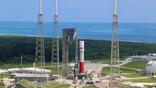
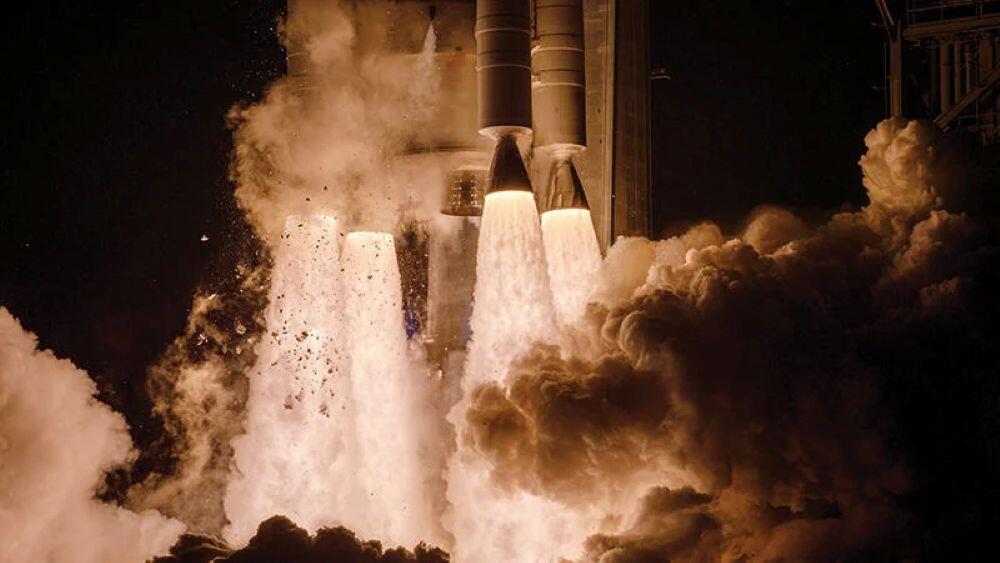
A Vulcan rocket lifted off on U.S. national security mission USSF-87 from Space Launch Complex 41 at Cape Canaveral.

Credit: United Launch Alliance

COLORADO SPRINGS—Amid an ongoing investigation into a solid rocket motor anomaly that had grounded United Launch Alliance’s (ULA) Vulcan rocket for U.S. national security missions, the U.S. Space Force is exploring options to still use the heavy-lift launch vehicle for less-complex missions, senior service officials said April 14.

The Vulcan vehicle has been grounded for National Security Space Launch (NSSL) missions since February, following a nozzle anomaly that occurred during a Feb. 12 Vulcan launch for the service’s USSF-87 mission.

Since the issue is restricted to the Northrop Grumman-built solid rocket motor, the service is considering the potential of flying Vulcan without those boosters, Acting Program Acquisition Executive for Space Access Col. Eric Zarybnisky said in a media roundtable at the Space Foundation’s annual Space Symposium here.

No plans to launch NSSL missions with Vulcan have been made yet, Zarybnisky said. “That will require some moves in my spacecraft customers to enable that, and that’s not something we’re going to do immediately,” he said.

A spokesperson for ULA did not respond to a request for comment by deadline.

The service continues to work with an integrated team including NASA, the National Reconnaissance Office (NRO) and the Vulcan industry partners to resolve the anomaly.

The Space Force could launch certain missions without the solid rocket boosters that are carrying lower mass levels or are bound for lower orbits. For example, the service could launch an upcoming Space Development Agency mission on Vulcan, Space Systems Command Commander Lt. Gen. Philip Garrant told reporters in a separate briefing.

“Essentially, if it doesn’t rely on a solid, there’s no reason why we can’t launch, and I’m committed to supporting that and keeping that mission going,” he said.

The Space Force has seen good progress in working with ULA and its parent companies, Boeing and Lockheed Martin, as well as the SRB manufacturer Northrop Grumman, to resolve the anomaly, Garrant said. “We’re working to recover the solids from the last flight, just to learn everything that we can,” he said.

The Space Force has switched four GPS III missions from a Vulcan rocket to a SpaceX Falcon 9 vehicle since December 2024, to include an upcoming launch for the 10th Lockheed Martin-built satellite. That launch is currently scheduled for April 20 from Cape Canaveral SFS, Garrant said.

The service has not made any further launch swaps from Vulcan to a Falcon 9 to date, Zarybnisky said. But his team is working through “a significant number” of potential swap opportunities at the moment, including opportunities to pull payloads from multi-manifest missions that may be ready to launch.

Vivienne Machi

Vivienne Machi is the military space editor for Aviation Week based in Los Angeles.