This article is published in Aerospace Daily & Defense Report part of Aviation Week Intelligence Network (AWIN), and is complimentary through Mar 12, 2026. For information on becoming an AWIN Member to access more content like this, click here.

Rocket Lab Delays Neutron Flight To Late 2026 After Test Failure

Neutron
Credit: Rocket Lab

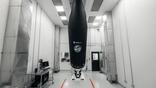
Rocket Lab says a manufacturing fault caused the failure of a Neutron rocket Stage 1 tank in January and has now pushed the inaugural flight for the launcher to late this year.

The company reviewed what caused the manufacturing miscue and will make changes to its production process and hardware design that will then undergo extensive testing, CEO Peter Beck said Feb. 26 on the company’s quarterly earnings call.

The first mission that was originally planned for last year is now not expected until October-December.

“We’ll be bringing a robust and thoroughly tested vehicle to the pad,” he insisted.

The tank showed the strength to withstand anticipated flight loads but failed when pushed beyond, Beck said. The defect in a joint structure was linked to the hand-building of the composite tank by a contractor used in the hope of expediting production while the automated fiber-placement machine was brought online, he said.

The next tank, in production, uses the machine. It also features some design changes to boost margins, Beck said. “We’re happy with the overall tank design, but since we’re making a new one, we thought we’d always take the opportunity to tweak things a little bit and optimize it,” he noted.

Rocket Lab late last year shipped the 18-ft.-dia. fairing, which opens and closes like a clamshell, to Neutron’s launch site at the Mid-Atlantic Regional Spaceport at NASA’s Wallops Flight Facility on Wallops Island, Virginia. The so-called Hungry Hippo fairing is now at the site, with a second in production.

Beck added Neutron’s thrust structure, which must withstand 2.1 million lb. of thrust, is now in final integration ahead of integrated system checkouts, cryogenic proof tests, vehicle hot fires, wet dress and then, of course, launch. Other tests also are underway and Stage Two is being readied to go to a test stand at Launch Complex-3 at Wallops.

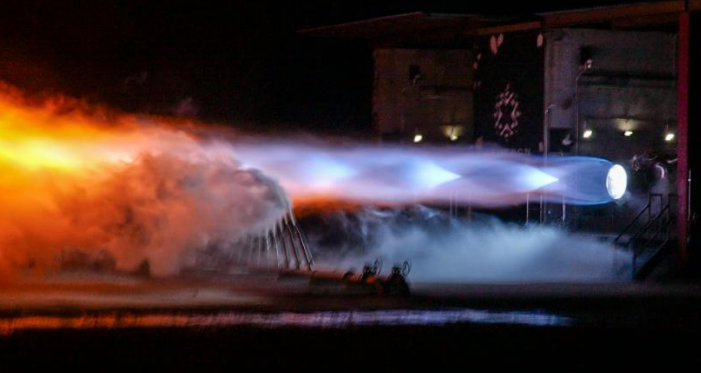
Work on the Archimedes engine that caused Neutron delays earlier in the program is progressing and being put through its paces, Beck indicated. “We’re really pushing them through the edge cases, backing right off the inlet pressure, inducing cavitation, and generally doing really nasty stuff to them,” he said, characterizing it as engine “boot camp.”

Rocket Lab is building more Neutrons already and said follow-on flights are not all being delayed as much as the inaugural mission. Timing of the second flight will be driven by lessons from the first mission, though, Beck said, including how reentry and landing burns go.

The company on Feb. 26 also said it signed a deal with BlackSky Technology for four Electronic launches to loft the Earth-imaging provider’s Gen-3 satellites.

Beck also said the company is still awaiting word on its planned acquisition of German laser-terminal maker Mynaric. He played down reports out of Germany that Berlin is looking to block the deal in favor of local buyers amid concerns about losing technology to a foreign company. The company said it was working with regulators in Germany to address foreign investment requirements.

Robert Wall

Robert Wall is Executive Editor for Defense and Space. Based in London, he directs a team of military and space journalists across the U.S., Europe and Asia-Pacific.