This article is published in Aerospace Daily & Defense Report part of Aviation Week Intelligence Network (AWIN), and is complimentary through Sep 10, 2026. For information on becoming an AWIN Member to access more content like this, click here.
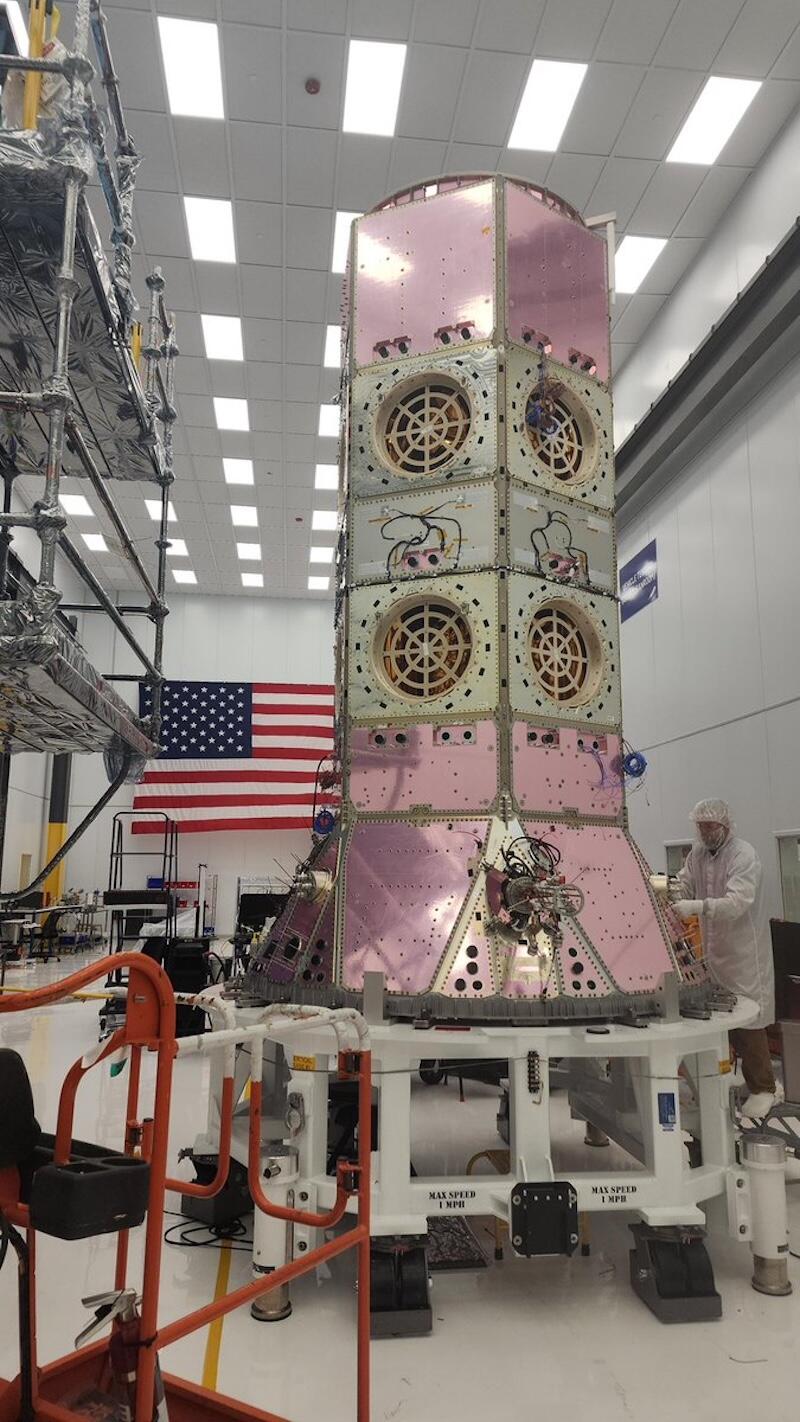
Blue Origin's first Blue Ring spacecraft being prepared for launch.
NASA has selected a Blue Origin proposal to use its Blue Ring platform as a telecommunications orbiter to support Mars missions, with service to begin by the end of 2028.
The firm-fixed price contract, worth up to about $700 million, was awarded Sept. 1. NASA did not immediately say how many contenders submitted bids, but interested companies included Rocket Lab, SpaceX, Northrop Grumman and possibly others.
In emails to Aviation Week, Rocket Lab declined to comment; Lockheed Martin said it did not submit a proposal; and other companies' responses were pending.
“We’re going to Mars,” Blue Origin CEO Dave Limp wrote on social media. “Honored that Blue Origin has been selected by NASA to deliver our Mars Telecommunications Orbiter (MTO) … in production now in Huntsville. MTO will enable science, carry payloads, and help lay the foundation for human exploration.”
“We are grateful for the opportunity to compete and humbled by your trust,” said Blue Origin National Security President Tory Bruno.
The NASA solicitation, released in May, called for the “design, development, integration, launch and on-orbit, continuous communications in support of a Mars sample return mission and future Mars surface, orbital and human exploration missions.”
Terms of the contract were not released.
“The architecture will consist of a high-performance telecommunications spacecraft orbiting Mars, transmitting science data, imagery, navigation information and critical mission communications for spacecraft operating on and around the planet,” NASA wrote in a press release.
Spacecraft currently operating on or around Mars include NASA’s Mars Odyssey, Mars Reconnaissance Orbiter and the Curiosity and Perseverance rovers; Europe’s Mars Express and ExoMars Trace Gas Orbiter; China’s Tianwen-1 orbiter; and the UAE’s Hope probe.
NASA said the Mars Telecommunications Network award marks a milestone in the agency’s efforts to “expand communications and navigation services beyond Earth and the Moon, establishing the foundation for sustained exploration of Mars in the coming decades.”