This article is published in Aerospace Daily & Defense Report part of Aviation Week Intelligence Network (AWIN), and is complimentary through Nov 21, 2026. For information on becoming an AWIN Member to access more content like this, click here.
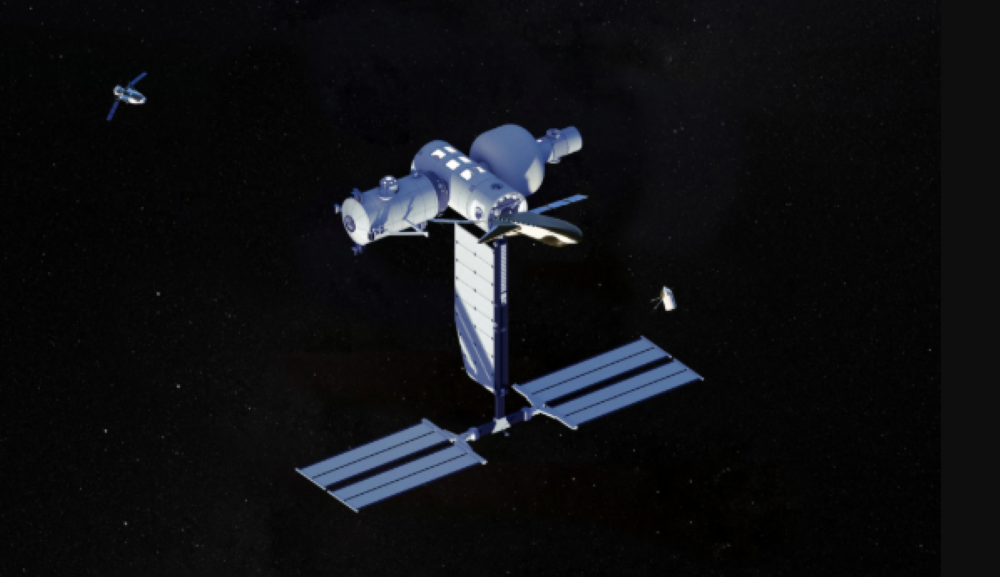
Blue Origin is shelving plans for its Orbital Reef space station to focus on its lunar programs.
Blue Origin is dropping out of a NASA competition to build, own and operate a crewed outpost in low Earth orbit to focus its resources on technologies and services supporting human presence and transportation services to the Moon.
Blue Origin, in partnership with Sierra Space, was selected by NASA in 2021 for one of three Commercial LEO Destinations (CLD) Phase 1 contracts to develop a commercial space station to succeed the International Space Station (ISS), currently slated to be decommissioned in 2030.
The awards for Blue Origin’s Orbital Reef, Voyager Technologies’ Starlab station and a proposal from Northrop Grumman followed a 2020 award to Axiom Space, which proposed a station that initially attaches to the ISS and then separates to become a free-flyer. Northrop withdrew from the competition in October 2023 and joined the Starlab team, now a joint venture with Airbus.
NASA also is working under an unfunded Space Act Agreement with startup Vast, which plans to launch an early version of its space station, named Haven-1, in the first quarter of 2027.
NASA released its CLD Phase 2 solicitation on Oct. 9. The agency intends to award multiple firm-fixed-price, indefinite-delivery/indefinite-quantity contracts, initially supporting two or more contractors through early development. A follow-on competitive task order would then be awarded to one or more providers for the final design, test, evaluation, certification and services of a CLD. Proposals are due Dec. 8, with awards expected around April 2027.
“Blue Origin’s mission is to build a road to space for the benefit of Earth so that millions of people can live and work in space. Establishing a sustained human presence on the Moon is a critical step toward that future,” Blue Origin said in a statement emailed to Aviation Week.
“As our role supporting NASA’s Artemis and Moon Base missions continues to grow, we’re focusing resources on capabilities that directly advance our lunar projects. By sharpening that focus, we can move faster on the technologies and infrastructure needed to make lunar permanence a reality,” the company said.
In addition to its CLD Phase 1 work with NASA, Blue Origin holds an unfunded Space Act Agreement to mature technologies and build hardware for a crewed vehicle. The company is a primary contractor to NASA for lunar transportation services, including landing crew on the Moon.

Related Content