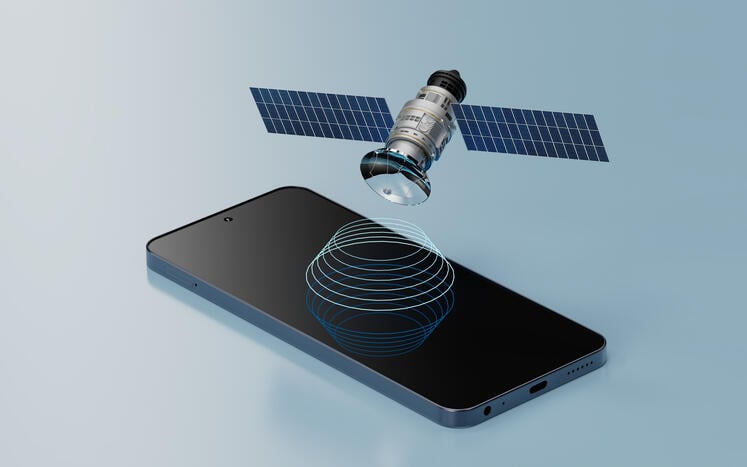
U.S. telecommunications heavyweights AT&T, T-Mobile and Verizon are looking at working more closely together to deploy satellite-provided direct-to-device communications.
A proposed joint venture between the telcos—that still requires final regulatory approvals—is being billed as a way to eliminate wireless dead zones in the U.S., the trio said May 14.
The partners said they would pursue joint investment into the use of space-based direct-to-device (D2D) technologies in a way that should be more seamless than by working alone. The companies would pool spectrum resources to deliver a better service.
“With the expansion of satellite constellations, soon to be supported by multiple space-based operators, this JV will use expanded capacity and improved performance to deliver the best possible service to customers,” T-Mobile CEO Srini Gopalan said. The teaming would also make it easier for satellite operators to provide more expansive offerings and innovate, he said.
The company’s existing agreements with satellite service providers are not affected, the partners said.
D2D service has become a big focus for communication satellite providers. SpaceX is among the service providers in a field that is becoming increasingly contested as new players emerge.
“We plan to be a key enabler of this transformation as we continue to grow our global network in low Earth orbit and expand available spectrum to our network,” AST SpaceMobile CEO Abel Avellan said in a separate statement.
Through the JV, the telecom companies said more satellite service providers will get opportunities to compete, without detailing how. They also argued that partnering would facilitate more efficient spectrum use at a time of high demand and greater comparability because of the use of common standards.

Related Content