This article is published in Aerospace Daily & Defense Report part of Aviation Week Intelligence Network (AWIN), and is complimentary through Jun 11, 2026. For information on becoming an AWIN Member to access more content like this, click here.
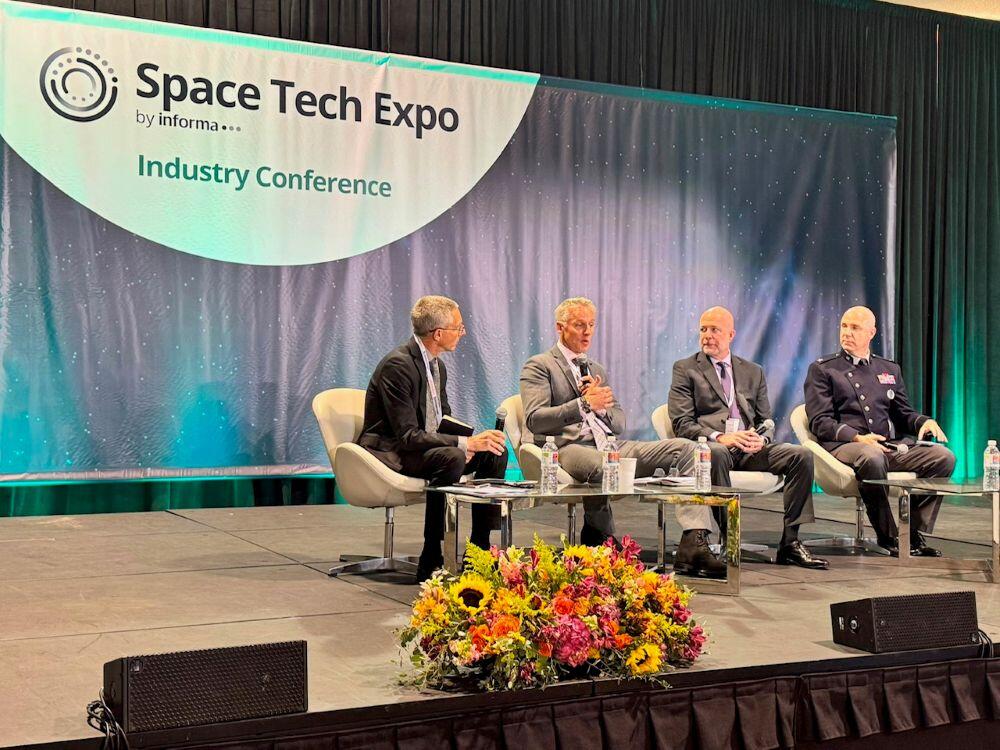
Aviation Week Defense & Space Executive Editor Robert Wall (left) moderates a space superiority panel with industry executives and Space Systems Command Deputy Commander Col. Andrew Menschner (right) at the 2026 Space Tech Expo on June 3 in Anaheim, California.
ANAHEIM, California—Space Systems Command (SSC) is now leaning heavily on other transaction authorities (OTAs) to award key contracts, the command’s deputy chief said June 3.
The U.S. Space Force’s acquisition field command has increased the number of OTA contracts it has awarded by 470% over the past year, SSC Deputy Commander Col. Andrew Menschner said during a panel discussion at the annual Space Tech Expo here.
An OTA is a more flexible federal contracting mechanism that exempts the U.S. government from certain acquisition laws to quickly award contracts for prototyping, research and production programs. The Space Development Agency (SDA) incorporated the OTA into its acquisition structure from its establishment in 2019.
Meanwhile, SSC has used OTAs for several recent big-ticket prototyping awards, including a $2.29 billion Space Data Network contract and $4.16 billion for Space-Based Air Moving Target Indication—both awarded to SpaceX—and 20 Space-Based Interceptor contracts worth $3.2 billion, awarded to 12 vendors.
Menschner said that increased use of OTAs was part of SSC’s commercial-first approach as the Space Force looks to bolster its next-generation space capabilities over the next several years, should Congress approve a sizable budget increase under the service’s fiscal 2027 request.
The service is focused on prototyping under these contracts so it can field capabilities “that may or may not meet all of our final requirements, because it’s better than a capability that we have fielded today,” he said.
On the industry side, the Space Force also needs vendors to “step up” and self-fund prototypes rather than waiting for a formal solicitation.
“We’re going to award contracts based on how quickly you can deliver capabilities to the United States Space Force,” he said.

Related Content