Participants of U.S. Space Command’s Global Sentinel '25 Capstone event work together to solve challenging space scenarios at Vandenberg Space Force Base, California, April 28 through May 10.
Amid increasing competition among the stars, the U.S. and its allies are asserting themselves more clearly on space control.
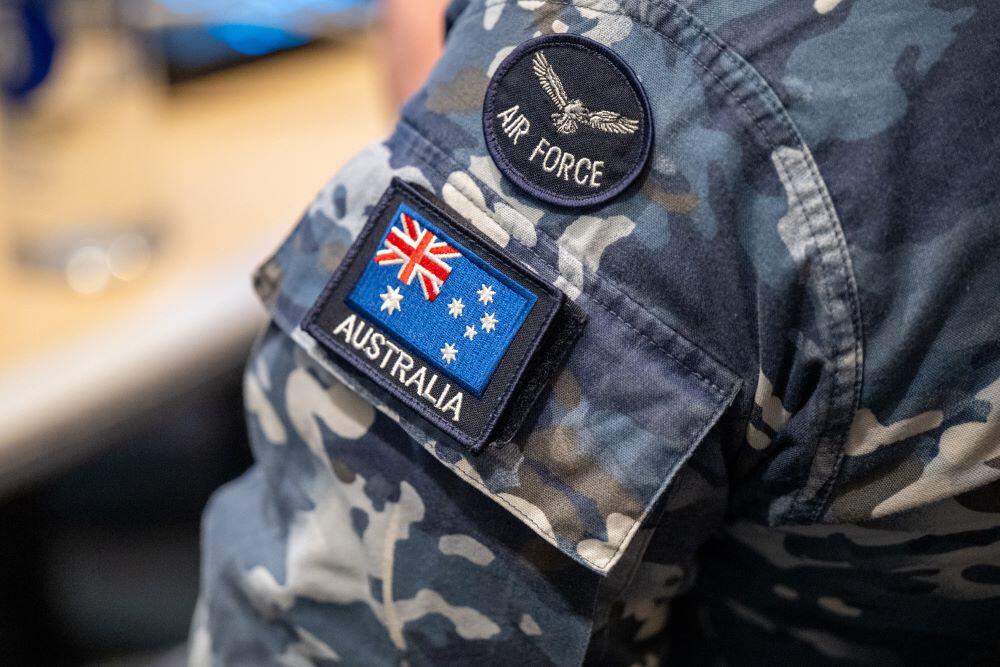
Australia plans to invest in the mission area as one of four priorities for its Space Command, Brig. Christopher Gardiner, Australia’s space and cyber attaché in Washington, said Oct. 8 during a webinar hosted by the Air and Space Forces Association.
The increased focus comes as Canberra announced last month that it would commit $25 billion AUD (US $16.27 billion) to boost defense spending, and earlier in 2024 said it would earmark $9 billion to $12 billion for enhanced space capabilities. The nation is revamping its national defense strategy ahead of a planned 2026 release, but the 2024 version already identifies space control, space domain awareness, intelligence, surveillance and reconnaissance (ISR), and satellite communications as the four “big call-outs” for space investment, Gardiner said.
As the U.S. and its allies increasingly view space as a contested environment, officials are speaking more openly about conducting orbital warfare—language rarely used in public before. At the same time, leaders are acknowledging that no nation can fight this battle alone.
For Australia, Gardiner described space control as essential not only to defend the country and its region, “but then also as a credible capability cooperatively,” he said. Canberra has stood up a new framework for space operations called Concept Selene, which promotes space resiliency through partnerships, he added.
“Within that, it actually recognizes that we don’t have enough resources to build that resilient architecture in a sovereign sense. We need to partner and we need to cooperate to generate the resiliency effect,” he said.
Historically, international collaboration on offensive and defensive space capabilities remained largely off-limits. But that view is changing. The Space Force projects it will support $10 billion to $12 billion for domain capabilities in foreign military sales by 2030, and has fielded interest in space control and space domain awareness assets, the service previously told Aviation Week.
U.S. Space Force Chief of Space Operations Gen. Chance Saltzman clearly defined space control during a keynote in March at the Air and Space Forces Association’s Air Warfare Symposium in Colorado: “Space control encapsulates the mission areas required to contest and control the space domain–employing kinetic and non-kinetic means to affect adversary capabilities, from disruption to degradation to destruction,” he said. Saltzman has also strongly supported expanding international partnerships, reducing longstanding classification barriers, and releasing the service’s first international strategy in July.
The UK is also prioritizing space control. According to the Royal United Services Institute for Defense and Security Studies (RUSI), the mission area was described as “a foundational capability” during a July 24 workshop hosted by RUSI and featuring UK Space Command Commander Maj. Gen. Paul Tedman, according to an institute write-up. For London, the space control mission is vital to becoming a “competitive space power by 2035,” and includes space domain awareness, command and control assets, and co-orbital and terrestrial counterspace systems.
Amid constrained budgets worldwide, both the UK and Australia see opportunities for public-private cooperation and international collaboration in the space control arena. The RUSI workshop summary noted that such partnerships will be essential to accelerating capability development and strengthening national security assets. For example, the UK could deepen space cooperation with Japan as both nations work to update the 2023 Hiroshima Accord strategic partnership.
“The sharing of capacity within sovereign satellite constellations presents one route for greater collaboration between the two nations on military satellite communications, ISR, in-space service assembly and manufacturing, and space control, against a challenging backdrop,” RUSI said.

Related Content