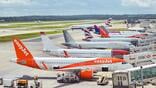
AirportNEXT Solutions Chairman Paul Ouimet discusses the Airport Futures Study, a comprehensive survey and analysis of what North American airport executives believe will be the key trends over the next three to five years.
Subscribe Now
Don't miss a single episode. Subscribe to Aviation Week's Window Seat Podcast in Apple Podcasts, Spotify or wherever you get podcasts.
Discover all of our podcasts at aviationweek.com/podcasts
AI-Generated Transcript
Aaron Karp (00:10): Hello everyone, and thank you for joining us for Window Seat, our Aviation Week air transport podcast. I'm ATW senior editor, Aaron Karp. Welcome aboard. Today we'll be focusing on airports, learning about what North American airport executives believe the top trends will be over the next three to five years and what they're most concerned about. I was recently in Philadelphia covering the Airports Council International North America Annual Conference and heard a very interesting presentation. It was on the 2026 Airport Futures Study conducted by AirportNEXT Solutions in partnership with ACI-NA. It is based on extensive feedback from North American airport executives and comprehensive analysis by AirportNEXT. The man who led the Futures Study and who gave the presentation in Philadelphia is here with us today. We're delighted to welcome Paul Ouimet. He's the chairman of AirportNEXT. Welcome to you, Paul. I think perhaps the best way to start is for you to just briefly give us an overview of the Futures Study, how it was done and why it was done.
Paul Ouimet (01:22): Thanks, Aaron. I'm delighted to be on your webcast here. This was a project that we started last year, and it's a new thought leadership piece on key trends and strategies for the airport industry during the next three to five years. It's a partnership that we've done with Airports Council International North America and my company, AirportNEXT Solutions. There were two phases to the project. The first is we identified all of the key trends in the industry. We used a strategic radar map to look at trends coming at airports from all different angles: socioeconomic, demographic technology, political, economic trends, and we came up with a list of 55 trends that we thought would have an impact over the industry in the next five years. And then we developed a survey, a comprehensive survey that was sent out to all of the North American airports. And as you said, we did get extensive feedback from the industry.
(02:41): We had over 300 responses from airport executives across North America, and these were executives, CEOs, directors from airports, large and small airports, and really right across Canada and the United States. And after we received the results from that survey, we were able to identify some key takeaways, which we can get into in a few minutes. And then we switched over to some work to look at what can airports do about those trends. So, we did a major focus group with all of the airport executives at an ACI-NA executive CEO forum earlier this year and came up with a list of strategies, have done a bunch of follow-up research using different AI platforms. And what we have now is over a hundred strategies and 72 case studies of things airports should be considering to deal with these trends.
Aaron Karp (03:59): And one thing that really jumped out at me was that cybersecurity was considered the most important trend and it was by a wide margin. Of course, the most prominent example here in North America was the 2024 cyber-attack on Seattle-Tacoma International Airport. And that was something I remember covering as it was happening. And the airlines were able to keep the flights moving but had to resort to using pens and paper to check people in. And all the signage went down in the airport. No one in the airport could use email, and it caused just a lot of uncertainty. It took about a week to get most of the systems back on, but some like three weeks. And what I remember was just how uncertain everything was. And this attack was done, it was later determined, by a group that was well known and they wanted a ransom from the airport.
(04:50): Could you talk a little bit about that finding and why the airport executives are so concerned about this?
Paul Ouimet (04:57): Yeah, I mean this is clearly just a major topic of discussion and concern. And as you said, the Sea-Tac attack was really a major, major development in our industry. There was a Robert De Niro series last year on Netflix called Zero Day, and it's sort of a shocking reminder of how vulnerable we are to cyberspace. But what we've seen really, I think in the last few years, is a significant increase in ransomware attacks on our transportation and logistics industry. Last year, the number that we've seen in terms of research was over 280 ransomware attacks on the industry. And a lot of this is around credential theft and unauthorized access into our systems, but clearly a major issue. There was another incident also just after the Sea-Tac attack that involved Kelowna, a couple of other Canadian airports and a US airport where their PA system was actually hacked and their flight information system was taken over and there were all sorts of religious messages that were played over their system.
(06:42): It was shut down very quickly, but another shocking reminder of just how vulnerable our system is.
Aaron Karp (06:50): And three of the top five trends were economic concerns. Could you talk about what those concerns were and the level of concern that airport executives have about economic conditions?
Paul Ouimet (07:06): Yeah, I think that was really the other major topic. And really, we consider the cybersecurity was number one of the 55. The next four were really about tough business conditions and economic uncertainty. I think it starts with a slowing economy. We've seen a significant decline in the GDP growth rate in the US. Canada's following a similar pattern. Lots of concern about funding challenges by government. And this is especially a big issue in the United States where airports are by and large publicly funded. Canada's just announced a new privatization initiative for the four largest airports. The other area that's related to this is rising interest rates. Again, big issue with the trillions of dollars that are being invested in our airports in North America. And then the fourth related trend is that again accounts for tough business conditions over the next three to five years is skilled labor shortages.
(08:31): There's quite a bit of concern about shortages with skilled labor at our airports.
Aaron Karp (08:39): And what are some of those areas? I noticed that maintenance was a concern, security was a concern. What are the areas where the labor shortage could have the most impact?
Paul Ouimet (08:51): Some of the big areas for labor shortages, I think that they're forecasting are in maintenance, security, technical roles. I think there's a lot of discussion of how do we really ramp up our AI capabilities across all roles within our management teams and labor forces as well.
Aaron Karp (09:17): And looking at all of these trends, some of the ones we talked about, some of the other ones we haven't gotten to yet, what are the big risk factors for airports? What do the executives think really pose risks to their operations and their economic wellbeing?
Paul Ouimet (09:34): Yeah, I mean I think clearly cybersecurity and the economic conditions. Another area, and again, it's not a surprise, but when we talk about risk management, the other big area is weather conditions. And again, in some of the research we did, one of the numbers that our colleague who led this work, Alex DeBelle, found in his research, in the last 45 years, this is in the United States, there was an average of nine weather events that caused over a billion dollars in damage. That's nine events over a billion dollars per year. And in the last five years, that number has increased to 23 events per year that have caused over a billion dollars in damage. So, airports are having to weatherproof their facilities, the infrastructure that they're putting in and are facing in many cases impacts on their operations from time to time. So that's another big area that's on the radar screen for all the airports.
(11:08): I think the other big topic is there's a lot of opportunities and challenges with technology innovation. The 5G enhanced connectivity was a big topic. Smart energy systems, that big shift. Biometrics and AI are clearly major topics of discussion. Another one, again, we've just seen outages in the US on the east coast, FAA modernization, airspace management, and that's considered to be one of the top trends as well. And then digital travel. So, lots of things that airports are having to deal with to be ready for the next five to 10 years.
Aaron Karp (12:10): And there's a lot of talk, of course, as you mentioned about air traffic control modernization, and the FAA administrator, Bryan Bedford, has been talking about this and actually saying that there's not enough money that has been handed out by Congress yet to fund this. And so, what are the airport directors looking at in saying if this system isn't modernized, what could the impacts be?
Paul Ouimet (12:37): Yeah, we just don't have capacity in the United States to handle the traffic that we've got. And I think there's a lot of support to move on, get the funding in place to actually modernize the system as quickly as possible. I think that is an urgent national priority for the U.S., not just from a transportation perspective, but from an overall economic and social perspective as well. People want to travel. It is just getting increasingly difficult because of the capacity shortages.
Aaron Karp (13:21): You also mentioned biometrics, and when I talk to airports, that's really a hot topic, particularly when it comes to security and identification and moving through customs. What are the airport executives talking about in regard to biometrics and how they think things could be going in the next three to five years?
Paul Ouimet (13:43): Biometrics is really an interesting and an exciting opportunity for airports. When I was in my former consulting company at InterVISTAS years ago, we were doing a lot of work on border facilitation and really believed that biometrics was the key to improving border processing at airports. So, what we're seeing right now is about half of the airports, just over half of the airports are actually using biometric border control, and that number's expected to increase to over 80% by 2028. The airports that are using biometric border control, their processing times are increasing by up to 30%. I mean, we're seeing significant improvements in wait times and just ease of going through. So that's a big opportunity for airports to improve their capacity and throughput.
Aaron Karp (14:55): How about AI? That is across society a big topic. When I was up at the conference in Philadelphia, Kevin Burke, who's the retiring ACI-NA president, in his speech talked about the airport industry, this is something that he focused on and how it's really going to change how airports operate, how they think about things. What did you get in doing this study about how airport executives are thinking about AI and how it could change how airports operate?
Paul Ouimet (15:26): Yeah, this is probably the first podcast that you've had that your guest didn't say AI in the first three sentences. I mean, it's clearly a big topic of discussion. What was interesting in the survey that we did was there were two things that were interesting from an AI perspective. The first is AI was not in the top five in terms of impacting airports over the next three to five years. Those other ones we talked about earlier were higher. It was still clearly one of the top ones, but not the highest level. The second thing that was interesting is when we looked at how different management groups ranked AI, there were significant differences amongst different airport executive roles. So, some saw it as important. CEOs I think saw it the most important, but that's something that I think where there's an education role, and I think a lot of airports are still trying to digest what it can do from an operations perspective as well as from a passenger-facing perspective and helping in terms of the digital experience and all of that.
(16:56): But that's a major opportunity. Some airports, Kelowna Airport now, Copenhagen has done a lot of work on the AI side to dramatically improve operations. They've created software AI platforms to monitor incoming aircraft, and if there's a delay, they can make modifications. And it's such a complex process at the current time. So, AI is helping dramatically to smooth out the arrival process for airlines coming into the airport.
Aaron Karp (17:46): And somewhat related to that, what about robotics and autonomous vehicles? How much do airport executives expect robots to be carrying out tasks in airports? And I know there's a lot of talk about autonomous vehicles doing everything from towing aircraft to mowing the lawn at airports to having autonomous taxis picking up passengers when they arrive at the airport. Where are autonomous vehicles and robots in the discussion?
Paul Ouimet (18:20): Yeah, I think those are both, again, topics of discussion. I think robotics is something that might be a little bit higher from what we saw in our survey. I think we are starting to see robots being used by some airports. Some are using them for passenger services to provide information on directions and things at the airports. Some are using them for custodial services, for security services. We're seeing that at airports and convention centers. I do work in the tourism industry as well. So, we're starting to see robots being adopted and implemented at various airports.
Aaron Karp (19:15): And how about how airports are being designed and built? I noticed some talk in this study about modular construction, and obviously we see more and more airports being built with these very open designs. Where do the airport executives see the design and construction going over the next several years?
Paul Ouimet (19:37): Yeah, I think that the modular concept I think is certainly a critical priority today. Part of that has to do with the uncertainty that we're seeing in markets and doing a modular sort of buildout permits you more flexibility to make incremental changes and to spend capacity in more manageable phases and less disruptive in many cases to the current airport operations. So that again is considered to be a pretty significant airport trend.
Aaron Karp (20:30): And just in case people aren't aware of that term modular construction, what that means is that parts of the airport are being, if you're building some new gates, it may be built at a site on a remote part of airport grounds, but offsite from where the main airport is, and then at some point it's moved and attached to the terminal. And that is becoming an increasing trend in airport construction. Well, we've covered a lot of topics here today. What next? Now that you have all this information, airport executives can look at this and say, "Well, this is what my colleagues are thinking." How can this study be used as airports plan for the future?
Paul Ouimet (21:12): Yeah, good question. I mean, clearly there's a lot of different trends that are going to impact the airports. What we did in the second phase of our project was to really look at strategies that large and small airports in Canada and the US could adopt. And we've got a list now of over a hundred strategies. In 2024, we built a model to actually assess airports. This was the first project we did with ACI, Airports Council International North America, called Airport Next. We assess how the airport's doing in terms of stakeholder satisfaction, all the sort of stakeholders that interact with the airport. And we built a model with 12 different variables to look at infrastructure and facilities and stakeholder engagement. And we're building strategies to help airports improve in all of those different variables that we've been assessing. So that's a work in progress. We want to keep updating that.
(22:37): We've got a number of case studies, some really cool things that some airports have done to deal with some of these trends and takeaways that we've talked about earlier. So that's going to be a work in progress, but we hope that that's really useful for airports when they're doing strategic planning and master planning work at their airports.
Aaron Karp (23:04): And maybe just very briefly, maybe mention one of those case studies and an example of an airport doing something in response to all this information.
Paul Ouimet (23:16): Yeah. So, one would be Philadelphia Airport in the city that we met at the ACI conference where they have just created a new digital app that is at your gate, that is a new digital service that passengers can order anything from at the airport and have it delivered right to their gate. So, there's a digital experience that passengers want improved, expanded digital services. That's really a very interesting case study. I think other airports have had apps and things, but that's a specific app targeted to a need for improved digital service.
Aaron Karp (24:10): And one final question. Obviously, the biggest thing perhaps for airports is the relationship with airlines. How are airport executives thinking about that and some of what may be occurring in the airline industry that affects the airports and how the airports and the airlines get along with each other?
Paul Ouimet (24:31): Yeah, I mean that's clearly the most important relationship that airports have. There's a lot of concern about fuel prices, the slowing economy and the impacts on the air industry. When we do AirportNEXT assessments, that relationship with the airlines themselves is a major part of the assessment that we're doing is really looking at how airlines, the satisfaction level of airlines with airports. And that varies from airport to airport in terms of how satisfied they are with the airports, but there's no question that is a critical, critical partnership in every community.
Aaron Karp (25:26): Well, thank you so much, Paul. We were delighted that you joined us here today. This was a great conversation. Thank you also to our producer, Natalia Pelayo, and to our listeners. Make sure you don't miss us by subscribing to Window Seat on Apple Podcasts or wherever you like to listen. This is Aaron Karp disembarking from Window Seat.

Related Content