A fresh wave of supply chain volatility is reshaping the aircraft seat‑actuation market, with ITT Enidine cautioning that macroeconomic pressures continue to influence pricing, availability and long‑term planning across the interiors sector.
Max Baigent, international aerospace sales manager at ITT Enidine, tells Aviation Week the industry is still contending with the lingering effects of the past several years. “We’ve seen volatility from pandemic aftereffects, inflation and tariff-driven geopolitical pressures. These can all influence component pricing and availability,” he explains.
To counter these pressures, ITT Enidine has shifted toward a more resilient sourcing model that blends localized and globalized supply. Baigent says a key part of that strategy is de‑risking critical components. The company is approving at least two suppliers for key components to reliably support production and customer demand.
Investments in lean manufacturing and selective automation are also helping stabilize lead times and reduce exposure to labor‑cost fluctuations, Baigent notes. “Overall, while the supply environment remains dynamic, a diversified and actively managed supply chain provides the control needed to protect availability, manage costs and support long-life products designed to reduce repair and replacement needs for operators,” he adds.
While supply chain turbulence remains the dominant theme, the technical challenges behind seat‑actuation systems continue to evolve. Airlines are demanding smoother, lighter and more durable mechanisms, pushing suppliers to refine architectures while managing cost and certification constraints.
Baigent points to several persistent engineering hurdles, including maintaining consistent recline performance across temperature extremes. He also points to the need for components that can withstand heavy, repeated cycling over their service life, as well as the requirement to handle the stringent structural loads associated with 16G crash certification.
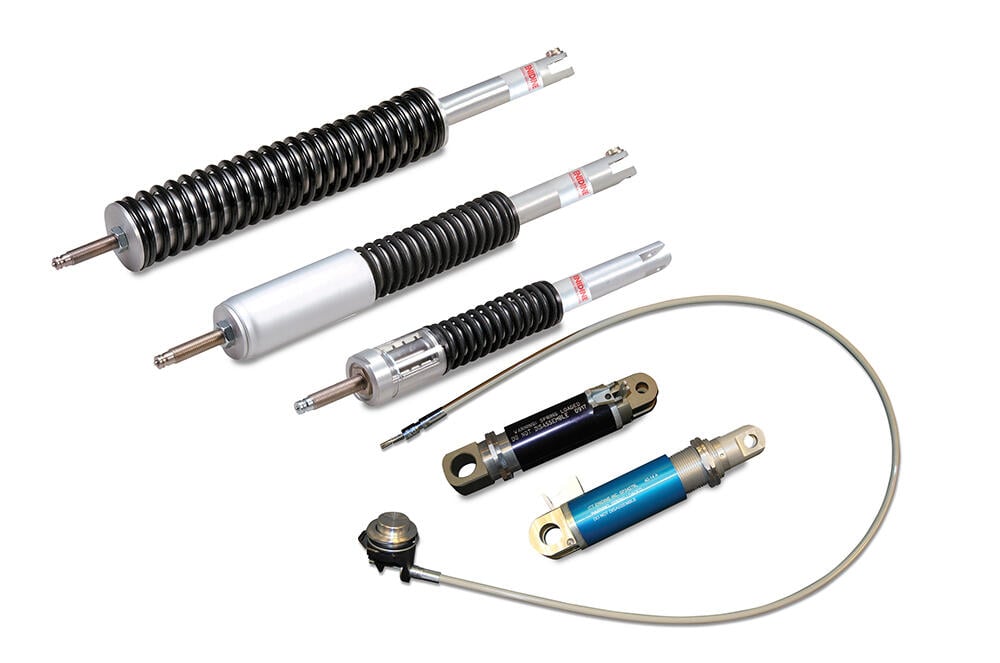
Regarding traditional gas springs, he explains that gas‑spring performance is inherently unstable because cold temperatures and gradual nitrogen leakage both reduce internal pressure, weakening the recline mechanism and driving up replacement rates.
Another industry pain point, says Baigent, is the excessive push-button force caused by high internal gas pressure, which increases cable wear and reduces system reliability. “We’ve addressed this by lowering actuation [pin] force substantially, enabling smaller, easier-to-use buttons and longer cable life,” he says.
Astronics PGA’s recent acquisition of Bühler Motor adds another dimension to the competitive landscape, particularly around lightweighting and power efficiency. Fabrice Berthelot, president of Astronics PGA, says the combined organization is pursuing three parallel paths to meet airline expectations for lighter, more energy‑efficient systems. Mechanical optimization—or reducing weight through refined architecture and motors, optimized gear trains and material-efficient component design—is one pillar, he says, alongside the adoption of new materials and improvements in overall system power consumption.
“Astronics PGA and Bühler Motor each bring ongoing research in lightweight mechanical solutions, which now can converge into a shared development road map,” says Berthelot.
Beyond mechanical refinement, both companies see digital integration as the next major shift in seat‑actuation evolution. Berthelot describes digitalization as a natural progression for the cabin environment. “The objective is to turn the unrefined vast amount of operational and passenger-interaction data into actionable insights that enhance service quality, reliability and the overall travel experience,” he says.
Berthelot stresses that predictive maintenance is central to that vision, turning the seat from a basic mechanical unit into a connected part of the aircraft that supports smarter operations and fits more closely with an airline’s digital systems.

Related Content