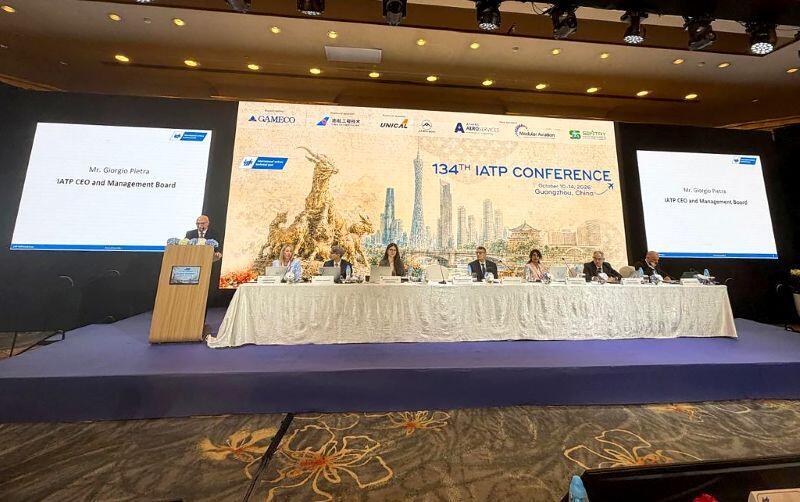
Giorgio Pietra, IATP CEO and management board director, speaks during the conference in Guangzhou.
GUANGZHOU—Aircraft parts shortages have led airlines to rethink how they source critical components, and the International Airlines Technical Pool is testing whether shared-asset models can offer relief. The organization is preparing to launch several component pools soon, although efforts have proved challenging for engines.
The International Airlines Technical Pool (IATP) has taken the first steps toward developing the landing gear pool, which has already generated significant interest among its members. Speaking at the organization’s 134th conference in Guangzhou, China, last week, IATP CEO and Management Board Director Giorgio Pietra said the project is expected to launch in 2027.
Landing gear repair turnaround times have reportedly increased from around 50 days to as much as 150 days, according to IATP leadership, leaving operators struggling to secure equipment while units are in the shop. A shared pool could give participating airlines another source of available assets when repairs take longer than planned.
Unlike engine pooling, IATP believes there is a broader base of potential providers for landing gear, although the model will need to address the availability and value of the assets involved.
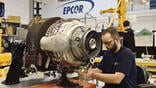
The challenges are more pronounced in the engine market. IATP has suspended its engine pooling initiative after initial member interest failed to translate into a workable project, with limited engine availability identified as the principal obstacle.
“We decided to suspend it for the time being,” IATP leadership told Aviation Week. The organization had been exploring the concept for several years, but the lack of engines available in the market made it difficult to establish a viable pooling arrangement.
The decision comes against a backdrop of sustained pressure on engine maintenance capacity. In his opening remarks, IATP Chairman and Custodian Essam Hanafy said an aging fleet, delayed aircraft replacement and the maintenance requirements of newer engines were adding to MRO sector strain. Material and technician shortages, high component costs and engine maintenance constraints continue to affect operators, he said, with engine shop turnaround times of 180–200 days or longer remaining a reality for many airlines.
Hanafy said these supply chain pressures are expected to continue next year, with some challenges potentially lasting several years. “When resources are scarce, assets are expensive and operational challenges become more complex, cooperation is not simply an opportunity—it becomes a necessity,” he said.
IATP’s auxiliary power unit (APU) pooling project is progressing as the organization works with airline and associate members to identify potential providers and develop a workable commercial model. The aim is to match airlines struggling to source particular APUs with available units. IATP hopes to begin operating the pool next year.
Alongside its pooling projects, IATP signed a memorandum of understanding with the International Air Transport Association (IATA) in June to strengthen cooperation between the two organizations. Pietra said the agreement recognized IATP’s role in the industry and created opportunities to develop areas of common interest for member airlines.
The organizations already work together on aircraft recovery and ground handling. More recently, radio-altimeter modification requirements affecting airlines operating flights to the U.S. have demonstrated the value of closer engagement with IATA, Pietra said. IATP leadership also highlighted the importance of cooperation on operational issues such as station restrictions and maintenance certification processes.

Related Content