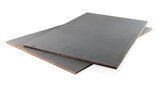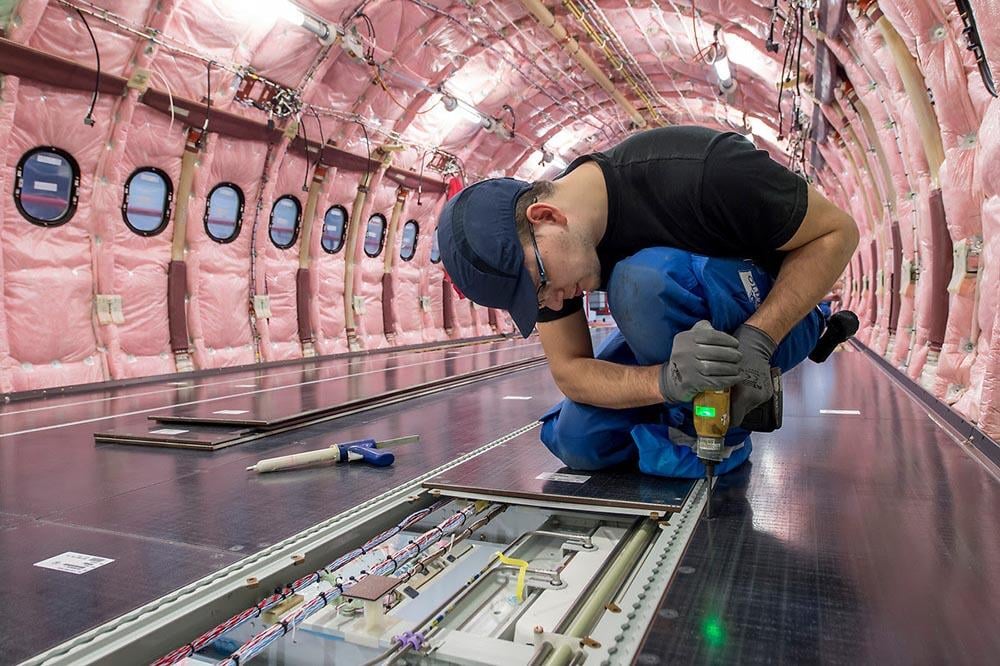
Just weeks after announcing its new Cargo Robust floor panel product, Satair is sharing new details about the solution’s customer adoption and how it is reshaping repair strategies for Airbus operators—as well as what it means for operators facing costly cargo bay damage and downtime.
The Copenhagen-based Airbus Services company confirmed that its latest development expands the Airbus semi-finished floor panel range, extending coverage from passenger cabins into high-impact cargo zones. The aim is to provide airlines and MROs with a faster, more adaptable and more durable alternative to traditional finished floor panels.
Thomas Lagaillarde, vice president of product management at Satair, says the new panels are the result of operator demand. “From a market perspective, we've seen a clear need from our customers to address the significant financial and operational impact of floor panel damage,” he tells Aviation Week Network. “In high-impact zones like the cargo bulk area, manual loading and extreme forces cause panels to be damaged beyond repair.” Concurrently, the continuous abrasive wear from unit load devices and roller systems in the main container areas leads to persistent wear and tear.
Such conditions, he explains, often create cascading maintenance issues. “These issues often result in costly, unscheduled maintenance and potential AOG [aircraft-on-ground] situations, creating a major operational challenge and directly impacting our customers' bottom line.”
Satair’s answer lies in the semi-finished format—a concept the company introduced to the passenger sector a few years ago. Unlike conventional finished parts, the semi-finished panels can be cut and drilled to size directly by MROs or repair shops. Lagaillarde says the simplified model also helps reduce the sheer volume of part numbers, consolidating thousands of unique floor panel part numbers into a few core, semi-finished ones. Satair says the approach not only reduces lead times for MROs and distributors, but also offers a lifeline when specific part numbers are not readily available.
“Our semi-finished panel format is an innovative addition to our product portfolio, providing customers with increased flexibility to address supply chain and inventory challenges,” says Lagaillarde. “While we continue to offer our full range of finished OEM parts, this solution offers a strategic alternative for situations where a specific part number may not be in stock or for AOG situations.”
MRO feedback, according to Satair, has been “overwhelmingly positive.” Lagaillarde explains: “The fabrication process is straightforward and aligns with standard tooling and procedures already familiar to any repair shop with experience in composite materials. Our solution is fully documented in the official Airbus manuals (structural repair manual and aircraft maintenance manual), providing a clear and reliable framework for our partners.”
The company is taking a phased approach to market introduction. “Our passenger deck and cargo container panels have been available since 2022 across all our major warehouses in Hamburg, Dubai, Beijing, Singapore and Dulles,” says Lagaillarde. “For the cargo bulk area, the panels are already stocked in our Hamburg warehouse and will be distributed to our other regional hubs by the end of this year.”
Full global availability and structural repair manual documentation are expected by late 2025, but Satair says adoption is already widespread. “This phased approach has allowed us to gather consistent, positive feedback from over 45 airlines and MROs globally who have already adopted the solution,” Lagaillarde says.

Related Content