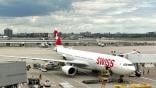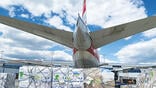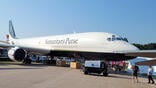
Geneva-based nonprofit carrier BlueLight Humanitarian Airlines is pressing ahead with an engineering and maintenance strategy built around Airbus A340 mission operations, naming Joramco as its MRO partner.
BlueLight plans to integrate cargo, passenger and air ambulance capabilities, initially with an A340, enabling rapid and coordinated deployment to global crisis regions.
Christian Sutter, BlueLight’s head of engineering and cabin configuration, tells Aviation Week that the A340-300 was selected not as a stopgap, but as the most strategically viable platform for humanitarian missions and a future bridge to A330 operations.
Sutter argues that the A340-300 offers the best balance of payload, flexibility and available feedstock for BlueLight’s early operations. Due to its quad-engine design, the aircraft avoids extended twin-engine operations limits, making this version a practical step toward eventually operating an A330 fleet.
While acknowledging the A340’s niche status, he notes that sourcing airframes and engines is manageable for a small, purpose-built fleet. “We selected a -300 version because obviously it gave us a commonality platform in case we decided to go [with] an A330 in the future,” he says.
The airline is choosing a basic cabin design tailored to the needs of each mission. Standard economy seating will remain where structurally intended, while a section of the aircraft is being converted into a medical room with dedicated equipment and secured systems.
Importantly, BlueLight is not changing the main structure or adding extra cabin systems. This choice helps speed up certification, cut weight and make maintenance more predictable. “Let’s not change floor beams; let’s not complicate the primary structure of the aircraft,” Sutter says, stressing an emphasis on retrofit rather than overhaul.
The airline is pulling out inflight entertainment, powered seats and other parts that could cause serious delays when flying far from support bases. “We are stripping it down to the basics so we can add whatever we need to accomplish those missions,” he says. The target is 100% dispatch reliability. "Every seat needs to be available 100% of the time,” he adds.
The airline is relying on experienced partners for maintenance and aircraft-on-ground support. BlueLight chose Joramco to handle heavy checks and complex repairs, with Sutter noting the Jordan-based MRO provider’s familiarity with the A340 and its record of handling structural events. This will be an essential capability for aircraft operating into airfields with foreign object debris exposure, adverse weather or unstable conditions.
Supply chain resilience will be critical for BlueLight. Sutter admits that while Airbus and suppliers continue to support the A340 because of renewed cargo-sector demand, engine availability—specifically CFM International CFM56 green-time engines—remains constrained. “Pricing for that in the aftermarket has doubled,” Sutter says.
However, he believes the current market pressure is temporary, driven by problems affecting new-generation geared turbofan fleets rather than the A340 itself. “By the time we are operational, we might be at the tail end of that issue,” he argues, noting that BlueLight’s lower utilization allows it to accept engines deemed unattractive for high-cycle operators.
As the airline works toward certifying its supplemental type certificate, Sutter says the key factors are simplicity, reliability and choosing the right partners. “We are taking slow steps to get the right pieces of the jigsaw in place,” he says.
The airline anticipates full-scale operations to begin this year.

Related Content