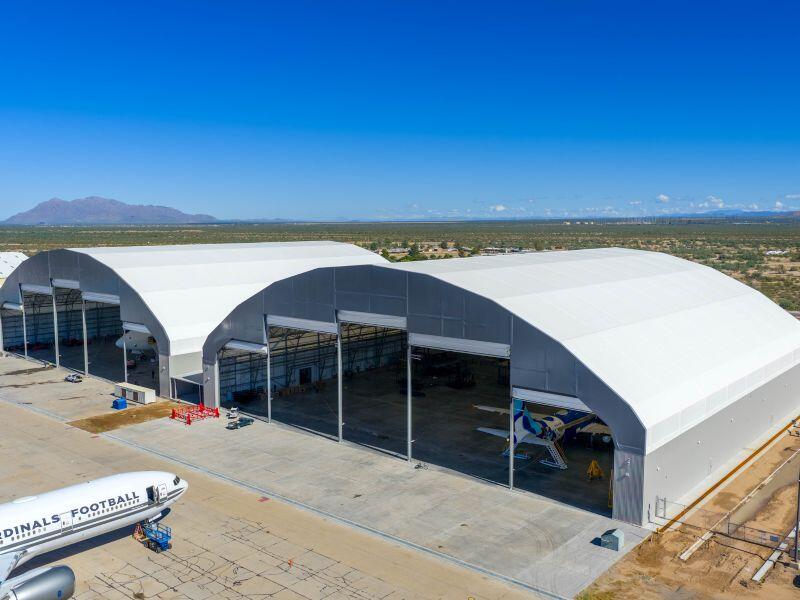
MARANA, Arizona—As Ascent Aviation Services balances busy hangars with ex-Spirit Airlines aircraft and Boeing 777-300ER passenger-to-freighter conversion preparations, the MRO provider is leaning on technologies to navigate challenges.
CEO David Querio tells Aviation Week that post-COVID-19 supply chain challenges, tariffs and ongoing Middle East conflict have been hurdles for the company. For instance, he notes that tariffs created confusion and complications for the 777-300ER conversions.
“There was a lot of navigating around the requirements when [tariffs] first came out,” Querio says. “The kit for the modification program comes out of Italy. Some of the tooling comes out of Asia. And the tariff logistics of getting those [kits] and bringing them in on a temporary import, because it’s leaving the country and being installed on an airplane, [required] a lot of navigating around the requirements.”
Querio notes that part sales and purchasing technology provider AMP has also helped Ascent “keep our material flow going on a pretty steady basis.” Tim McGuire, Ascent’s president and chief operating officer, says the company has also implemented AMP's software, which has reduced the time its buyers must spend hunting for parts.
McGuire says Ascent has also begun implementing a system that provides predictive insights into maintenance projects by considering factors such as staffing and overtime levels to manage an aircraft. “We’re still going through the training piece, so they’re working out the kinks of how to use it properly,” he says.
With both this software and “some of the other software development that we put into place to give us more timely, accurate reporting,” Querio says Ascent will be able to “make smarter, fact-based decisions, and that’s essential for us to be ahead of the curve as we [pursue] our aggressive growth plans.” He adds that the company is “striving across our entire platform to be ahead of AI and not be chasing AI.”
Beyond software, Querio says Ascent is working toward implementing drone-based aircraft inspections. “We’ve already purchased the drone for it, and that’s going to take a little bit more time because you have to get the OEMs to approve drone inspection versus a physical inspection, and then the regulatory authorities on top of that,” he says. “So, we know that’s a long-range thing, but we’re looking at how we can do things more efficiently.”
Ascent hopes to perform both indoor and outdoor drone-based inspections, though Querio says outdoor inspections may be more difficult to implement at its facility at Tucson International Airport. “More work would have to be done inside than here [in Marana]. We can probably get away with getting permits in certain areas to do drone mapping outside here. We’ve been able to get drone operating permits down in our teardown and reclamation area to do inspections and testing,” he says.

Related Content