This article is published in Aviation Week MRO part of Aviation Week Intelligence Network (AWIN), and is complimentary through Dec 22, 2025. For information on becoming an AWIN Member to access more content like this, click here.
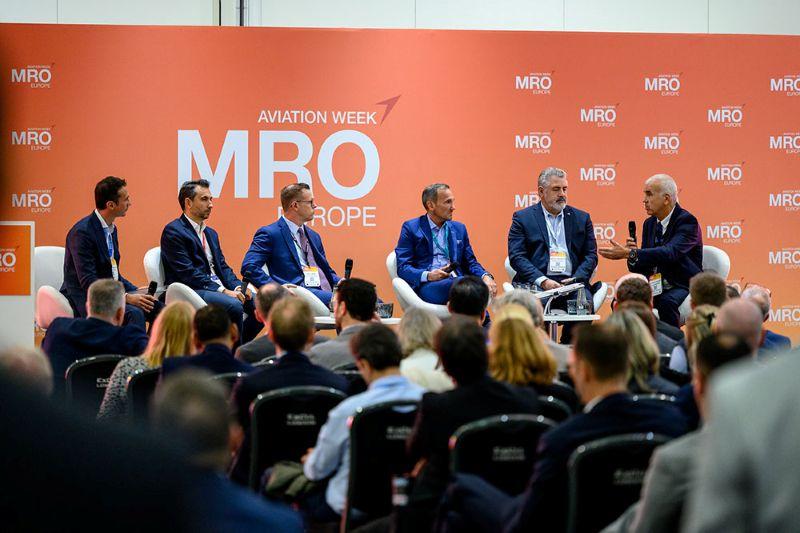
(From left) Massimo Sabella, Klaus-Peter Leinauer, Bo Lump, Basil Papayoti, Enrique Robledo and Olivier Ruffet speaking on a panel about MROs and aging fleets at MRO Europe.
LONDON—The aftermarket is preparing to support older aircraft for an extended period, as new aircraft deliveries remain sluggish and retirements continue at historic lows. At Aviation Week’s recent MRO Europe conference here, senior executives from various maintenance organizations warned that the industry is entering a critical phase where aging aircraft are not only staying in service longer but are demanding increasingly complex and costly support.
During a panel on MRO providers’ approaches to managing aging fleets, executives from Delta TechOps, HAECO, Iberia Maintenance, SR Technics and StandardAero discussed the mounting pressure on day-to-day operations and the broader strategic shifts taking place across the MRO sector.
Airlines are increasingly relying on older aircraft as backup options, even though they fly less and cost more to maintain. This shift is driving up turnaround times and straining technical teams, particularly in engine shops where legacy platforms like the Pratt & Whitney PW4000 and CFM International CFM56 continue to dominate workloads. Panelists noted that pandemic-era groundings have exacerbated findings during heavy checks, further compounding delays and cost pressures.
The supply chain remains a weak link, with ongoing disruptions continuing to impact parts availability and repair timelines. While some improvements have emerged, the unpredictability of component availability continues to challenge planning and capacity management. MROs are increasingly relying on tactical flexibility to accommodate unplanned events and urgent shop visits.
The talent shortage took center stage in the discussion, with panelists outlining a clear challenge in drawing and keeping the next wave of engineers and technicians. According to Klaus-Peter Leinauer, SVP of group commercial for the EMEA region at HAECO, a recent graduate told him it was easier to become an influencer than to work in a sweltering hangar. It was a pointed reflection of how perceptions of aviation careers are shifting. The shared view was that the industry must rebrand itself as forward-looking and meaningful, leveraging technology not just for efficiency, but to attract and motivate future talent.
There was optimism, however, in how digital transformation is reshaping MRO strategy. Basil Papayoti, VP of commercial MRO at Delta TechOps, outlined the company’s investment in predictive maintenance and artificial intelligence-based forecasting tools that allow for precise parts management and failure prediction. Digital tools, augmented reality and data analytics are helping to connect classic engineering skills with the modern, tech-savvy workforce the industry needs.
Looking ahead, views differed on when the market might stabilize.
Many anticipate a 3-5 year window before supply chain issues ease and aircraft deliveries pick up, but ongoing geopolitical tensions and OEM setbacks could prolong the disruption. In the meantime, MROs are under pressure to stay agile and responsive.
Olivier Ruffet, StandardAero’s VP of sales for EMEA and lessors, emphasized that the company is prioritizing capacity and adaptability to keep engine workflows moving efficiently. While this is essential in the near term, it also signals long-term strength. The panel broadly agreed that future success hinges on three key areas: strengthening the workforce, advancing digital tools and expanding both supply chains and repair options.
The session revealed an industry under ongoing pressure yet poised for change. Despite the hurdles of aging aircraft, tight supply chains and shrinking talent pools, MROs are turning to artificial intelligence, data-driven forecasting and modular repair strategies to adapt and stay competitive.