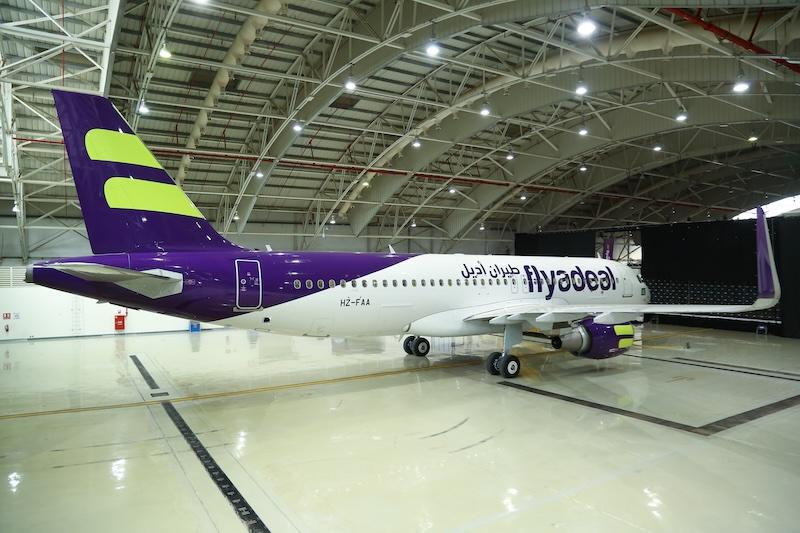
DUBAI—Powerplant availability issues were cited as flyadeal’s most pressing operational challenge, as ongoing CFM Leap engine shortages leave aircraft idle despite otherwise stable MRO access, CEO Steven Greenway said at Aviation Week’s MRO Middle East.
“Engines are the biggest issue for us, particularly CFM Leap engines,” Greenway said Feb. 4. “Last year, we were fortunate not to have aircraft grounded due to engines, but that is no longer the case. We currently have aircraft on the ground that are not generating revenue.”
Greenway continued, “Outside of engines, there are still challenges, but they are manageable given the relatively standard nature of our cabin and component specifications.”
Outsourcing most of its maintenance, flyadeal relies heavily on third-party MRO providers for heavy maintenance, including Lufthansa Technik Sofia and Saudia Technic, which also performs the majority of its line maintenance.
Greenway said the MRO’s support system has helped it avoid difficulties securing maintenance slots. “If one provider cannot accommodate an aircraft, we have alternatives,” he said. “The bigger challenges tend to arise once the aircraft is in the shop, particularly when findings require parts that are difficult to source.”
The Jeddah-based airline is expecting its 45th aircraft to arrive imminently, bringing its fleet to 45 Airbus A320ceo and A320neo aircraft. The carrier plans to grow to around 100 aircraft within the next three years by adding the A320neo family and venturing into the widebody segment, with an order commitment for 30 A330neo aircraft, as the airline looks to expand international routes.
The level of fleet growth could likely impact on future maintenance strategies. “As the fleet grows, we are evaluating which maintenance capabilities we need to control more directly,” Greenway said.
Greenway said flyadeal still ships a significant amount of component maintenance outside Saudi Arabia, but this could change in the long term as part of the country’s Vision 2030 strategy to grow its aerospace ecosystem, with an increase in local MRO content factored into the airline’s supplier contracts. “That could mean in-kingdom maintenance, local parts manufacturing or other forms of industrial participation,” he said. “Component maintenance capacity in the region is still at an early stage, but it is growing quickly, and I expect significant change over the next few years.”
He admits that adding widebody aircraft could also increase maintenance complexity. “There are fewer MRO options for the A330neo compared with narrowbodies, and both the airframe and engines are new to us,” he said. “This is precisely why we are engaging with suppliers and partners now. It is a stretch for a low-cost carrier, but we know the economics work and we are confident it is the right move.”
In the wider Middle East region, he noted an increase in airlines insourcing some MRO capabilities. “Airlines are reassessing which parts of the maintenance vertical they need to own or control, even if it does not always make economic sense,” he said. Greenway also highlighted large-scale investments taking place in regional MRO capacity, particularly in Saudi Arabia. “The open question is whether that capacity can keep pace with the region’s aircraft order book, which is why airlines are progressively focused on securing operational durability.”

Related Content