This article is published in Aerospace Daily & Defense Report part of Aviation Week Intelligence Network (AWIN), and is complimentary through Nov 20, 2026. For information on becoming an AWIN Member to access more content like this, click here.
U.S. Air Force To Start Defining Characteristics Of Future Airlifter
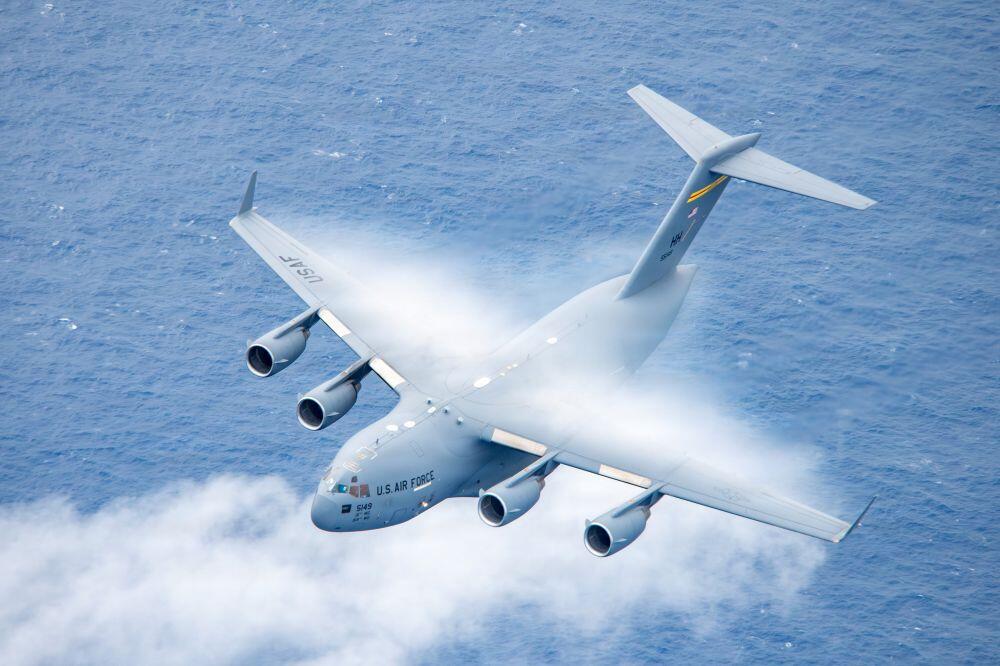
KISSIMMEE, Florida–U.S. Air Force officials and others in the Pentagon plan to start looking at the requirements for the service’s next-generation airlifter in the coming months as the current thinking for the Next Generation Airlift (NGAL) program is focused on all options available.
The NGAL process will begin with an analysis of alternatives this fiscal year, reliant on funding available, to inform what will replace the current Boeing C-17 and Lockheed Martin C-5 fleets. Air Mobility Command (AMC) hopes to begin NGAL production as early as 2038 with initial operational capability three years later. The C-5 would be retired in 2045 and the C-17 would operate through 2075.
Industry officials have been meeting with the Air Force following a request for information (RFI) that outlined certain early characteristics, though there is still uncertainty this early in the process.
“Mostly I hear that they’d love to know what we want,” AMC boss Lt. Gen. Daniel Tulley tells Aviation Week. “So would I. And so our answer is all options are on the table and we would love to nail that down.”
That is the focus of the NGAL analysis of alternatives (AOA) that is expected to begin soon. But it is a new start program, reliant on congressional approval that is uncertain. AMC told Inside Defense that a delay would be expected under a continuing resolution.
Tulley said in a Nov. 7 interview at the Airlift/Tanker Association symposium here that there will be meetings with Pentagon stakeholders over the next month or two to start these discussions and point the Air Force in the direction to go.
“We’ll start refining that, and that AOA will answer a number of questions on range, capacity, payload. There’ll be questions about the engines and what types of engine technology are available in the time frame we’re talking about,” Tulley says.
The Air Force needs to take into account advances in autonomy, particularly for single pilot operations or optionally manned capabilities, along with connectivity to other aircraft and other systems.
The aircraft will need to be at least as dependable as the C-17 and “built in a way that is easily upgradeable and sustainable without having to build or add a new aperture every five or so years based on new systems that come online,” Tulley says.
Air Force Chief of Staff Gen. Ken Wilsbach tells Aviation Week the main decision points are not on the front burner, as the service has other key modernization priorities that are more pressing.
“We’ve got a lot of life left in our C-17s, so we’re not rushing to make that decision anytime soon,” he says.
AMC has previously outlined hopes to reengine the C-17 and provide upgrades as a full production restart is unlikely, with the original production site torn down and tooling decommissioned.
“Reengining and continuing the C-17 with service life extensions is always an option, but there’ll have to be a cost assessment done,” Tulley says.
This includes tearing down a C-17 to fully understand the wear and tear on the airframe, providing a clear indication of what work would need to be dome.
“We’re pretty sure we have a solid aircraft at least through the next decade, probably further,” he says.

Related Content