This article is published in Aerospace Daily & Defense Report part of Aviation Week Intelligence Network (AWIN), and is complimentary through May 26, 2026. For information on becoming an AWIN Member to access more content like this, click here.

European Defense Agency Aerial Refueling Studies Expand To Uncrewed System Needs

Royal Air Force

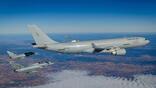
European Defense Agency tests automated aerial refueling technology.

Credit: Nathan Edwards/Royal Air Force

LONDON—A European Defense Agency initiative to explore the potential automation of hose and drogue refueling has moved into a second phase to examine how the technology could be used to refuel uncrewed aircraft systems.

Working in conjunction with Airbus Defense and Space, GMV in Spain, Germany’s AES Technology and the DLR German Aerospace Center, the European Defense Agency (EDA) has already concluded a series of flight tests to build data on the potential stabilization of the drogue.

Details of the ongoing work were published in the latest edition of EDA’s in-house magazine.

The initial trials were aimed at improving the identification and tracking of the hose and drogue system and state that a concept to enhance the drogue’s stabilization is also being developed using cameras and motors.

Engineers are also looking at simulating ways to study the best trajectory of the receiver aircraft as it approaches the tanker, by looking closely at the receiver platform’s interaction with the drogue.

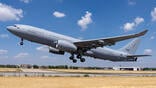
Flight tests were carried out using an Airbus A330 Multi-Role Tanker Transport (MRTT) and Panavia Tornado aircraft. As part of the effort, the project is studying sensor performance, computing capability and suitability under all weather conditions.

The EDA revealed it had contracted the companies for the €4 million ($4.32 million) studies in December 2022, with the studies following on from Airbus’ successful development of automated boom refueling.

Phase 2 of the project expands the scope to refueling unmanned aircraft, including the use of unmanned tankers, and seeking more data on which to expand trials.

“Automated doesn’t mean replacing the pilot,” says Daniel Mosquera, Project Officer for Air Systems Technologies at the European Defense Agency.

“It means the tanker can communicate with the fighter guiding it in without human intervention to the refueling point, while the pilot remains in full control and as a safety backup,” he says.

While the first phase of the project was led by Germany and Spain, the second phase also involves Belgium, which brings aerodynamic simulation expertise needed for refining control laws and understanding receiver dynamics.

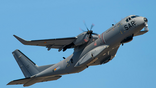
If the technology is successful, the EDA sees it being fitted to the MRTT, A400M and tanker conversions of the C295.

Tony Osborne

Based in London, Tony covers European defense programs. Prior to joining Aviation Week in November 2012, Tony was at Shephard Media Group where he was deputy editor for Rotorhub and Defence Helicopter magazines.