This article is published in Aerospace Daily & Defense Report part of Aviation Week Intelligence Network (AWIN), and is complimentary through Sep 13, 2026. For information on becoming an AWIN Member to access more content like this, click here.

U.S. Army Needs New Strategy, Improved Command For Air Defenses

Credit: U.S. Army

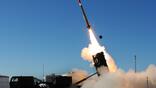
A soldier works on a U.S. Army Patriot system at an undisclosed location in the Middle East in June 2026.

Credit: U.S. Army

HUNTSVILLE, Alabama—U.S. Army air defenders are facing the largest air and missile defense fight in the nation’s history, and lessons both in the Middle East and other conflicts are driving a rethink of the service’s strategy, the top air defense soldier argues.

The 32nd Army Air and Missile Defense Command has had four brigades deployed over the past 14 months, with more than 1,200 ballistic, cruise and drone threats neutralized as part of Operation Epic Fury, in addition to 125 ballistic missiles downed during the 2025 Twelve-Day War between Israel and Iran, says Lt. Gen. John Rafferty, commander of the Army’s Space and Missile Defense Command.

This pace of operations has led to a stark reduction in the nation's stockpiles of key defensive interceptors. The Center for Strategic and International Studies in late July estimated that the prewar stockpile of 2,330 Patriot interceptors had dropped to between 759 and 827.

Rafferty did not mention numbers but said the need to increase the current magazine depth is critical.

“I cannot add anything to the emphasis on magazine depth for currently fielded systems, or for the need for [a] cheaper and wide-ranging mix of interceptors,” Rafferty said at the Space and Missile Defense Symposium here. “That couldn’t be made more loud and clear from the highest levels of our government.”

However, Rafferty also says that more interceptors alone won’t solve the problem.

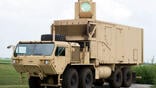
“We need more of a comprehensive missile defeat strategy that focuses on interceptors, equally so on non-kinetic effects—both electronic warfare and directed energy,” he says.

The Army needs to better integrate its defensive systems, such as Patriot and the Terminal High Altitude Area Defense (THAAD) system, with its offensive fires under a new strategy, he said. By combining air defenses with other systems like the Precision Strike Missile or the Typhon Mid-Range Capability, the Army can have a better view of the threat and be able to target both the incoming missile and the system that fired it.

The current fight has shown that adversary forces can operate at a standoff distance and hit key targets. Rafferty also says there have been incremental improvements in their operations to be more effective. This is both against Iran, Russia’s war on Ukraine and other military developments such as modernization by China.

“Watching all of our adversaries, they are advancing platforms and weapons across multiple domains,” he says. “It’s long-range fires, ballistic and cruise missiles, advancing them with increasing range, speed, lethality and maneuverability. And it’s not a huge leap every time, it’s an incremental change and over time that additive effect is really multiplicative in terms of the challenge that it presents to us.”

He also says the Army has seen use of artificial intelligence (AI) tools to have drones work with other drones, and with other systems.

“It’s collaborating with other weapons systems to create a real dilemma for us,” he says. “So it’s not just these individual weapon systems—it’s integrated capabilities to challenge across multiple domains simultaneously.

“This convergence of advanced missiles, counter-space, UAS and emerging AI is really another development in the timeless and age-old functional battle, this two-way-fires fight that we find ourselves in.”

Brian Everstine

Brian Everstine is the Pentagon Editor for Aviation Week, based in Washington, D.C.