This article is published in Aerospace Daily & Defense Report part of Aviation Week Intelligence Network (AWIN), and is complimentary through Sep 13, 2026. For information on becoming an AWIN Member to access more content like this, click here.
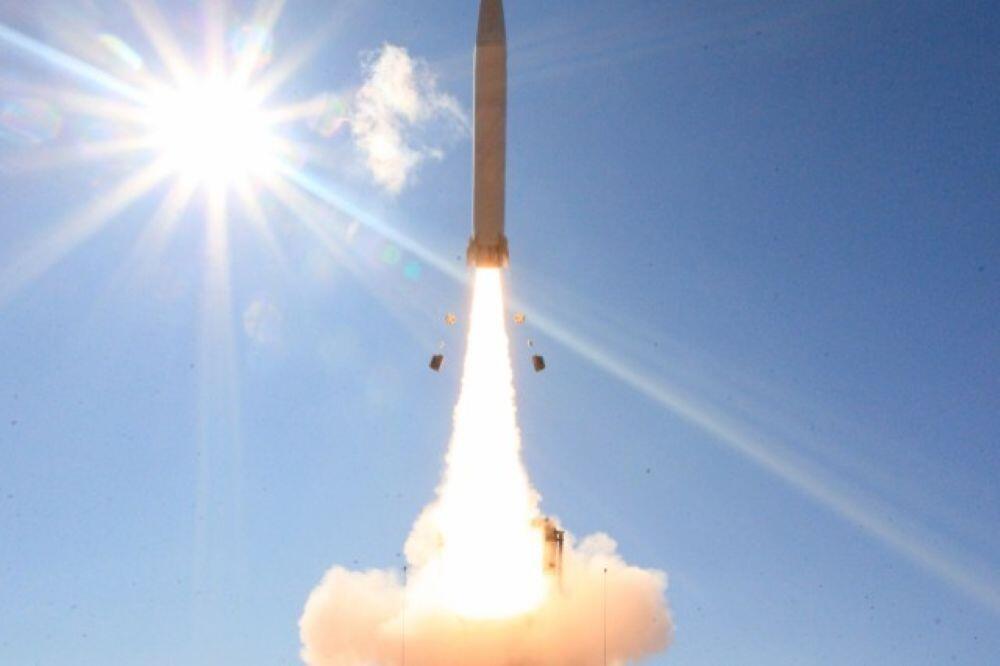
U.S. Army HIMARS test.
HUNTSVILLE, Alabama—The U.S. Army is developing four new competitions in its fires portfolio, and while they are addressing separate needs all of them are prioritizing key features.
Brig. Gen. Robert J. Mikesh, the capability program executive for offensive fires, said during an update at the Space and Missile Defense Symposium here that the service needs to focus on affordability, modularity, open architecture and the ability for each of the systems to defeat complex threats from low-end drones to high-end missiles.
“We do not know of every threat the Army can be confronted [with] 10 years from now, therefore we cannot design every system as though today’s configuration is the final configuration,” Mikesh says.
The four competitions highlighted are the Low-Cost Interceptor (LCI), the Future Interceptor, the Joint Forcible Entry Radar and increment four of the Maneuver Short-range Air Defense (M-SHORAD) vehicle.
The Low-Cost Interceptor has gotten much of the attention recently, with the Army targeting a missile at a price point of about $100,000. A recent industry day received hundreds of responses on a quick turnaround, with Army Secretary Dan Driscoll attending to foot stomp the importance of the plan.
The Future Interceptor was announced earlier this year and is in the solicitation of white papers phase. It follows a 2024 decision to end the Lower-Tier Future Interceptor program as a planned follow-on to the Patriot missile.
The Joint Forcible Entry Radar is a replacement to the AN/TPQ-50 to provide tactical formations with a mobile, multimission sensor. M-SHORAD Inc. 4 is intended to be a mobile system for joint force air defense against Group 1 to 3 drones along with fixed and rotary wing threats.
These are upcoming competitions, and Mikesh highlighted four ongoing competitions in its fires portfolio: the Common Autonomous Multi-Domain Launcher, the Low-Cost Containerized Munition, a second interceptor for the Indirect Fires Protection Capability, the Mobile Tactical Cannon, the Next Generation Short Range Interceptor and increment four of the Precision Strike Missile.
Across its modernization and sustainment efforts, Mikesh highlighted four gaps that need to be addressed: high costs and complex manufacturing in its energetics and propulsion, magazine depth, targeting and sensors against complex jamming and in GPS-denied environments, and working against vendor lock to better integrate across different systems.