This article is published in Aerospace Daily & Defense Report part of Aviation Week Intelligence Network (AWIN), and is complimentary through Aug 24, 2026. For information on becoming an AWIN Member to access more content like this, click here.

Rafael Sees Lasers Downing Ballistic Missiles, Eyes Golden Dome

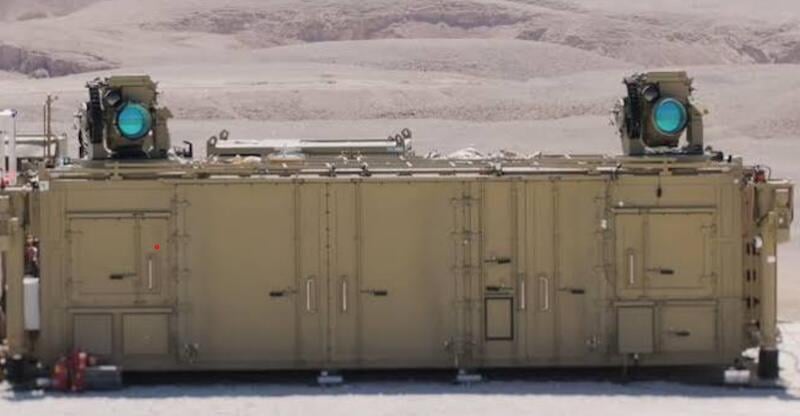
iron beam
Credit: Israeli Defense Ministry

FARNBOROUGH, England—Israeli defense technology specialist Rafael should be able to scale its Iron Beam laser air defense technology in the coming years to be able to intercept even ballistic missiles, says Chairman Yuval Steinitz.

“It's my estimate that in between three to four years from now, we will be able to have a laser that is also capable of shooting down large ballistic missiles from far away,” Steinitz said in an interview during the Farnborough Airshow.

Rafael began work on Iron Beam using its priority adaptive beam adjustment technology several years ago. It delivered the first operational system to the Israeli military late last year. That system has now been fully operational as an adjunct to the Iron Dome air defense system.

Ballistic missiles have remained a problem because of their high closing speed and robust structure, but Steinitz says that, too, will be overcome.

Recent breakthroughs in laser defenses are only set to gain pace, he suggests, arguing that in 10 to 20 years the main missile defenses in Israel and other countries in the world will be based on laser technology.

Rafael has secured the first export licenses for the Iron Beam system, Steinitz says, without specifying to whom.

Steinitz also says he sees opportunities for Rafael to play a role in the U.S. Golden Dome missile defense effort. “We have a good package for Golden Dome,” he says, without elaborating where Rafael may contribute to the massive U.S. missile defense effort.

Steinitz says he has met with U.S. officials to float the issue. “I made it clear that if they want, Israel can contribute to the Golden Dome program,” he says, promising to bring about some capabilities faster and possibly also at lower cost.

The issue is up to the U.S., he says. “I’m confident we can make a significant contribution,” he adds, while acknowledging it requires a degree of openness from the U.S.

Robert Wall

Robert Wall is Executive Editor for Defense and Space. Based in London, he directs a team of military and space journalists across the U.S., Europe and Asia-Pacific.