This article is published in Aerospace Daily & Defense Report part of Aviation Week Intelligence Network (AWIN), and is complimentary through Apr 21, 2026. For information on becoming an AWIN Member to access more content like this, click here.

PRSM Stocks Expended Early In Iran War

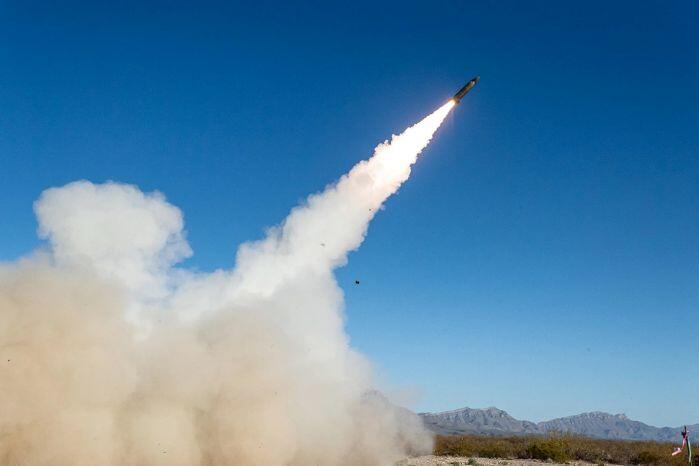
The Precision Strike Missile was fired from a U.S. Army M270A2 and HIMARS.

The baseline Precision Strike Missile was still in testing when the weapon was used in combat for the first time.

Credit: U.S. Army / Christopher Bohn

LAWTON, Oklahoma—A U.S. Army official said here on April 12 that a deployed artillery unit exhausted the full inventory of Lockheed Martin Precision Strike Missiles (PRSM) early in the war against Iran last month, but replacements are coming soon.

The 1st Battalion, 121st Field Artillery Regiment of the Wisconsin National Guard is credited with the first launch in combat of the surface-to-surface ballistic missile with a range of more than 400 km (248.5 mi.).

“We shot our entire inventory of PRSM right now during the start of the war, and we’ve already got more coming in,” said Jimmy Arter, the transformation and lessons learned manager in the Fires Center of Excellence at Fort Sill, speaking at the Fires Symposium.

An Army spokesperson later said that a number of PRSM weapons remain in the inventory.

The Army had ordered 130 PRSM missiles prior to fiscal 2024 and another 250 in fiscal 2025. It is not clear how many of those missiles had been delivered by Lockheed before the war against Iran began on Feb. 28.

The Army rushed the PRSM into combat for the war before the program had completed an initial operational test and evaluation period. But the combat experience may render that process redundant.

“Our testing was done in action already,” Arter added. “We don’t have to do any more testing after that.”

Central Command has confirmed that the PRSM has been used during the war, but refuted media reports that the weapon was involved in an errant strike on a residential area in the city of Lamerd, Iran, which killed dozens of people. The U.S. military claims that a BBC report shows instead a Hoveyzeh, which is an Iranian cruise missile.

Steve Trimble

Steve covers military aviation, missiles and space for the Aviation Week Network, based in Washington, DC.