This article is published in Aerospace Daily & Defense Report part of Aviation Week Intelligence Network (AWIN), and is complimentary through Aug 11, 2026. For information on becoming an AWIN Member to access more content like this, click here.
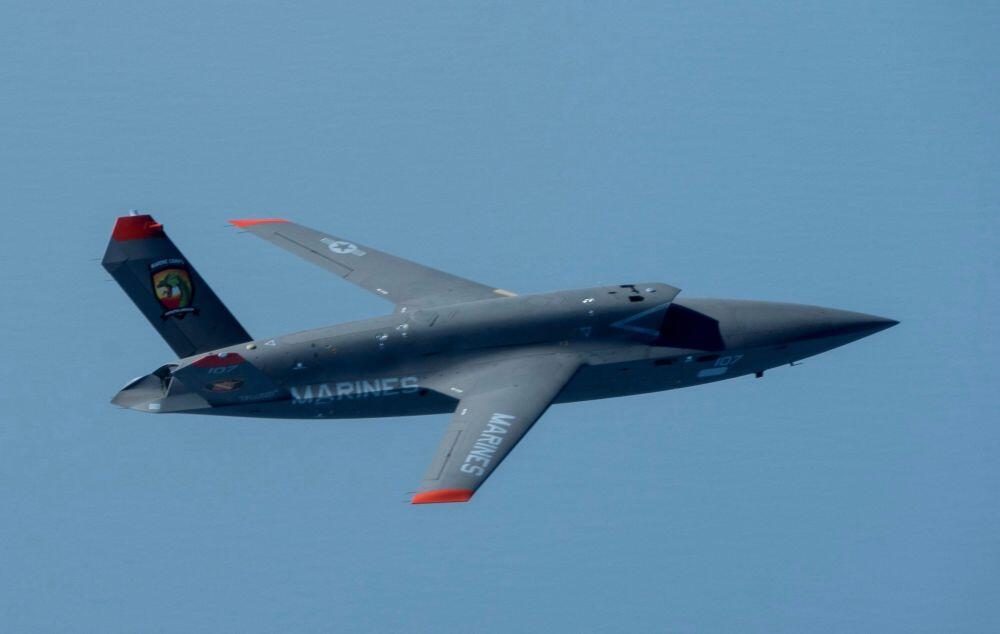
Valkyrie CAA
A newly launched project expands the U.S. military’s months-old search for a low-cost counter-air missile and includes language that questions a global trend toward an exquisite class of very long-range air-to-air missiles (VLRAAMs).
The prototyping and experimentation arm of the Pentagon’s Research and Engineering directorate quietly called for proposals to rapidly build and demonstrate prototypes of a Medium-Range Affordable Mass Munition (MRAAM).
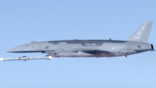
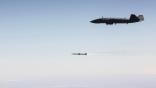
The new weapon should be designed for the new class of autonomous Collaborative Combat Aircraft (CCA). The solicitation specifically mentions compatibility with the Kratos XQ-58 Valkyrie, a CCA developed originally by the U.S. Air Force but selected to enter production by the Marine Corps.
The goal is to demonstrate missiles that are smaller than the current standard. The solicitation does not name the 12-ft.-long, 7-in.-dia. Raytheon AIM-120 Amraam, but it is the military’s only medium-range air-to-air missile still in production. In that sense, the MRAAM program recalls the objectives of past Air Force experimental projects. A decade ago, the Small Advanced Capabilities Missile (SACM) program, for example, sought to replace the Amraam with a missile around half the size but with similar range. A similarly reduced price tag for each missile, however, was not a goal for the SACM program.
The MRAAM solicitation, which was released on July 6, appears in parallel with a similar Air Force initiative—Counter-Air Missile Program (CAMP). The Air Force has released plans to first develop prototypes for a ground-launched counter-air missile, but an air-to-air variant could follow.
It is not clear if MRAAM and the Air Force’s CAMP are related. The funding for MRAAM comes from the Pentagon level, but the acquisition is being administered by the U.S. Army’s Rock Island arsenal.
If MRAAM succeeds, it will help to equip at least hundreds of potential CCA aircraft projected to be acquired by the Air Force and Marines over the next five years. But it will require the CCA’s to launch MRAAMs in combat against potential threats, such as China, equipped with VLRAAMs, such as the PL-16.
The MRAAM program officials, however, are not as concerned about VLRAAMs as shorter-range options, like the radar-guided PL-12.
“While many current weapons are optimized for long-range engagements, adversary stealth, electronic attack, and contested targeting environments increasingly force aircrews into medium-range intercept scenarios where high-volume, tactically relevant, affordable missile employment becomes essential to maintaining operational advantage and air dominance,” the solicitation says.