MBDA Secures Production Contract For Teseo Mk. 2/E Anti-Ship Missile
teseo mbda
Credit: MBDA
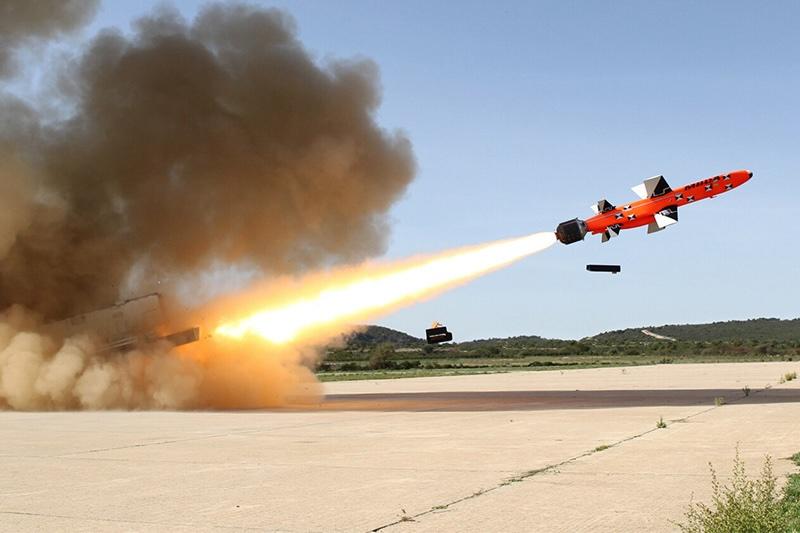
European missile manufacturer MBDA has been contracted by the Italian government to begin production of a new anti-ship missile for the country’s navy.
 
The Teseo Mk. 2/E will equip Italian Navy warships including the Fremm Evo-class frigates, the Multi-Purpose Combat Ships and the planned new DDX destroyers. The new weapon will be developed from the legacy Teseo missile which is currently in service. The original Teseo was marketed internationally as the Otomat.
 
The production contract, announced Sept. 29, follows on from a contract signed in 2021 for the development, integration and qualification of the missile.
 
MBDA says the weapon will be capable of engaging both surface and land targets from long ranges and will feature active, electronically scanned array seekers.
 
Propulsion will be provided by an air-breathing engine spooled after launch by a booster rocket. Target information can be updated through inflight missile control using a satellite data link.
 
“Starting the production of Teseo MK. 2/E demonstrates not only that the product is mature and fully compliant with the Navy's requirements,” said Lorenzo Mariani, MBDA Italy’s managing director and group director of sales and business development. The new weapon also complements MBDA's portfolio, “adding a new benchmark capability in the anti-ship domain, to be offered to foreign markets, as well,” Mariani said.
 
Meanwhile, MBDA has also signed a memorandum of understanding with Airbus’ Aerostructures business to expand cooperation in the development of MBDA’s SHARCS remote carrier demonstrator.
 
The missile manufacturer is one of the companies working on the remote carrier pillar of the European Future Combat Air System program along with Airbus and a Spanish joint venture, Satnus, made up of GMV, Sener Aeroespacial and Tecnobit-Grupo Oesia.
 
Use of the SHARCS demonstrator is a low-risk approach to rapid and early testing of new technologies, trialing sensors, systems and algorithms that could feature in an expendable remote carrier air system.
 
The work with Airbus will explore the production of lightweight airframes through innovative manufacturing technologies, the two companies state.
Tony Osborne

Based in London, Tony covers European defense programs. Prior to joining Aviation Week in November 2012, Tony was at Shephard Media Group where he was deputy editor for Rotorhub and Defence Helicopter magazines.