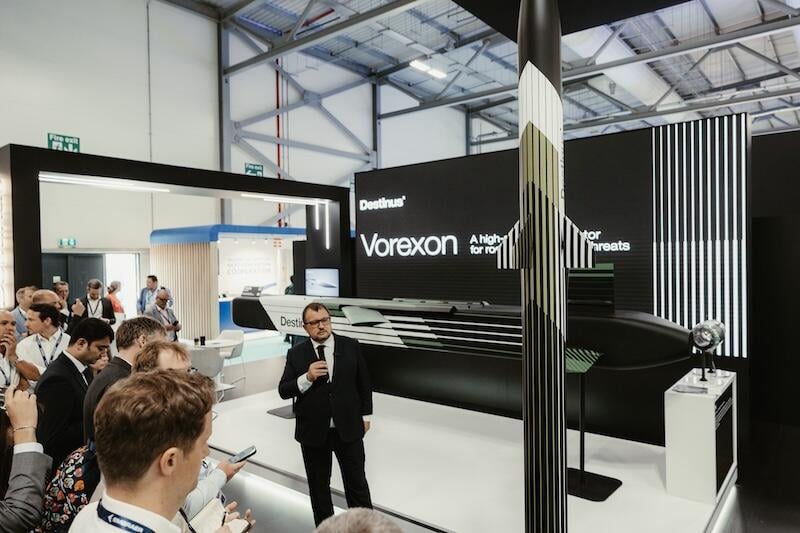
Destinus CEO Mikhail Kokorich (center) unveiled Vorexon at Farnborough Airshow.
Credit: Destinus
FARNBOROUGH, England—European defense startup Destinus is adding a counter-rocket interceptor to its portfolio with plans to have the system customer-ready in 2028, CEO Mikhail Kokorich says. The ground-launched rocket is being designed to have a range of about 20 km (12 mi.) and to be equipped with...

Subscription Required
Destinus Unveils Vorexon Counter-Rocket Interceptor is published in Aerospace Daily & Defense Report, an Aviation Week Intelligence Network (AWIN) Market Briefing and is included with your AWIN membership.
Already a member of AWIN or subscribe to Aerospace Daily & Defense Report through your company? Login with your existing email and password.
Not a member? Learn how you can access the market intelligence and data you need to stay abreast of what's happening in the aerospace and defense community.
Related Content