This article is published in Aerospace Daily & Defense Report part of Aviation Week Intelligence Network (AWIN), and is complimentary through Oct 16, 2026. For information on becoming an AWIN Member to access more content like this, click here.
USAF Mobility Finds Ways To Improve Readiness Amid High Ops Tempo
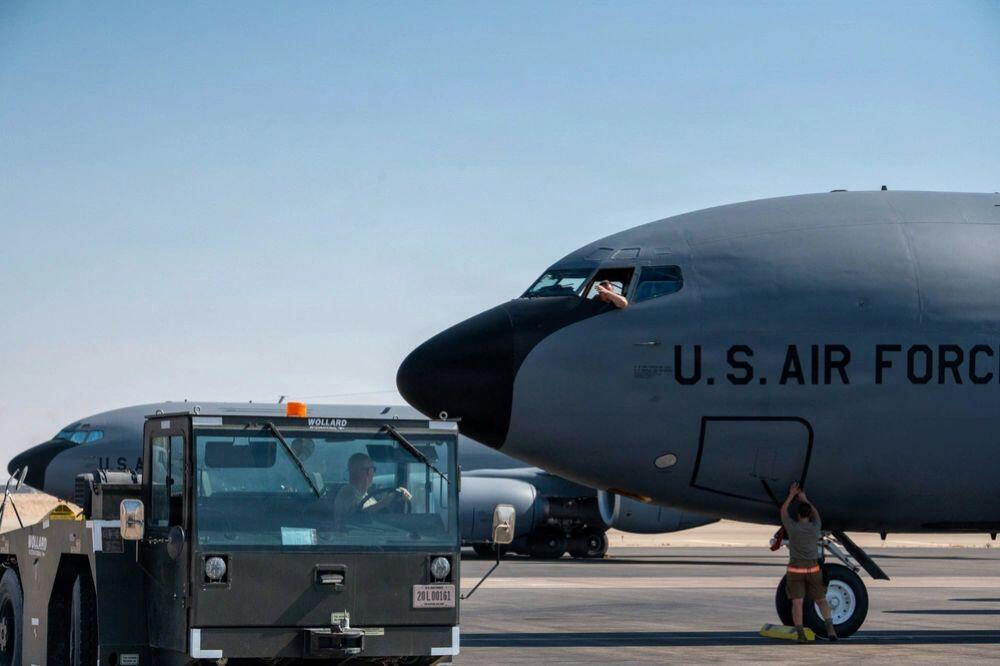
U.S. Air Force KC-135s deployed to the Middle East.
NATIONAL HARBOR, Maryland—The U.S. Air Force’s mobility fleet has faced a sustained high operations tempo over the past few years that has pushed back some modernization and training, and Air Mobility Command (AMC) is now looking into how it can better improve readiness while remaining heavily deployed.
New AMC Commander Lt. Gen. Daniel Tulley calls the focus “readiness in contact”—using new technology tools coupled with creative steps such as forward deploying heavy maintenance to help keep an in-demand fleet ready.
“How does the U.S. Air Force, how does Air Mobility Command, build and generate readiness while we’re in contact?” he told reporters at the Air & Space Forces Association’s annual conference here on Sept. 16. “We’re ready, we’re able to easily rotate forces in and out and address the concerns we’ve got. I think any commander is always looking to get better.”
Tulley says operations for the command really stepped up in October 2023 as support for Israel ramped up, though over the past five to 10 years there has been constant demand for mobility assets. This includes, for example, the airlift out of Afghanistan and support for Ukraine among other needs.
“But if you look back five years or 10 years and you try to identify what was normal ... when was normal, ever? I don’t know that I can land on that,” he says. “I think that AMC is continuously employed.”
A major initiative Tulley pointed to is the command’s adoption of the Palantir-produced Maven Smart System that is a program of record across the Pentagon. The artificial intelligence (AI) command and control system is able to take large amounts of data and instantly provide the command real-time, easily accessible information.
Tulley says AMC is using Maven to analyze the health of its fleet to identify sustainment steps that are needed. It has been used to analyze requirements for airlift, aerial refueling and aeromedical evacuation forces. For example, U.S. Central Command previously would provide slides outlining its airlift requirements back to U.S. Transportation Command and AMC as part of the global force management process.
“We’ve done that in an antiquated way, kind of a paper-based process for years,” he says. “Moving that into Maven lets us very rapidly and dynamically always understand where our assets are and request and requirements are and how we can fulfill those requirements.”
With aircraft in demand for the ongoing conflict with Iran, AMC has worked with Air Force Materiel Command to find ways to address sustainment in different ways. This includes forward deploying KC-135 spare parts to RAF Mildenhall, England, where 30 of the tankers we able to replace refueling booms instead of having to return to the U.S. for the maintenance.
“It always takes us a little time to connect the supply lines with our forward locations,” he says. “We’ve done that, so we’re able to bring up the mission capability rate and aircraft availability rates of those fleets.”
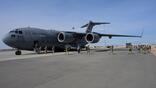
For personnel, AMC is looking for ways to give aircrews more efficient training when needed. This includes a new training process for C-17 crews who had been deployed for a while to get them check rides in one training stage to speed up that process.
“So, innovative, creative solutions to get after it,” he says. “But what we’re seeing is we’re seeing ourselves adjust to this type of conflict and the potential for some sort of protected conflict in the future.”

Related Content