This article is published in Aerospace Daily & Defense Report part of Aviation Week Intelligence Network (AWIN), and is complimentary through Jan 15, 2026. For information on becoming an AWIN Member to access more content like this, click here.

U.S. Seizes Two Oil Tankers In Pressure Campaign On Venezuela

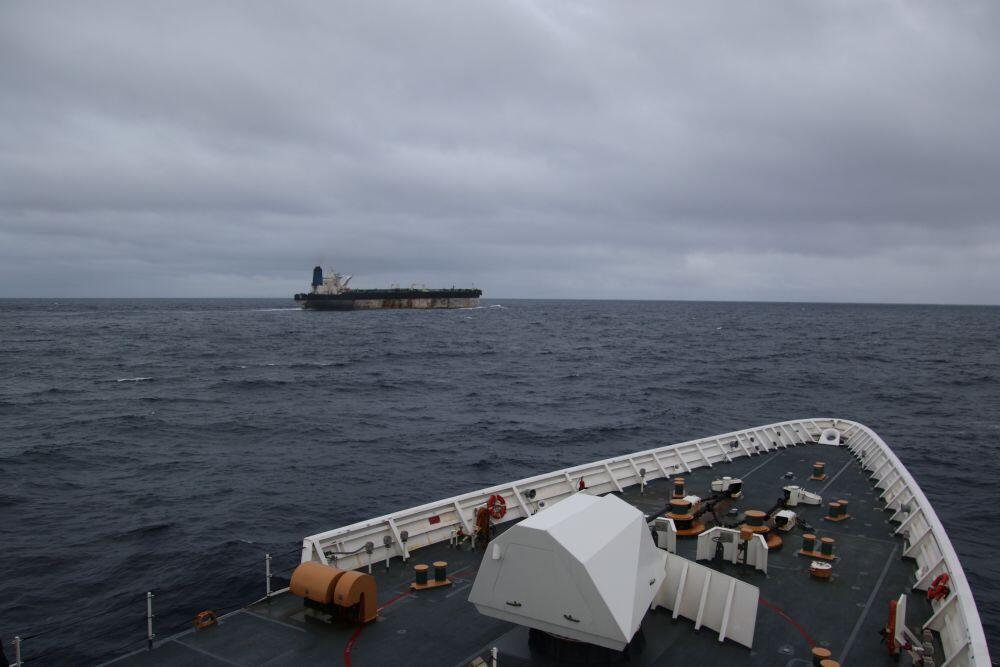
An image taken from the US Coast Guard Cutter Munro shows the Marinera oil tanker. Credit: U.S. European Command

An image taken from the U.S. Coast Guard Cutter Munro shows the Marinera oil tanker.

Credit: U.S. European Command

U.S. helicopter-borne special operations and law enforcement personnel on Jan. 7 seized two oil tankers in separate hemispheres, as Washington’s expanding use of the military to enforce restrictions on Venezuela continues days after seizing the nation’s leader.

The first disclosed raid occurred in the North Atlantic between the British islands and Iceland, with videos on social media showing a Boeing MH-6 Little Bird approaching the Marinera oil tanker, formerly registered as M/V Bella-1, that had been attempting to avoid the U.S. blockade of Venezuela. Images of the ship show it sitting high in the water, indicating it is largely empty of oil.

The use of the Little Bird, a small, specially equipped helicopter used by the U.S. Army’s 160th Special Operations Aviation Regiment, was a unique choice for a mission typically executed by Navy or Coast Guard forces. Using the short-range aircraft to carry a small number of special forces personnel would require launching from a nearby ship. A Coast Guard Legend-class cutter Munro had been trailing the ship, though that ship typically carries two of the service’s Airbus MH-65 Dolphin.

In a statement on social media, U.S. European Command said the ship was seized pursuant to a warrant issued by a U.S. federal court. The mission supports a proclamation from President Donald Trump to target sanctioned vessels. Neither EUCOM nor the Pentagon would provide more information on the mission when queried.

“The operation was executed by [Department of Homeland Security] components with support from the [Defense Department], showcasing a whole-of-government approach to protect the homeland,” EUCOM said in the social media post.

A large number of special operations forces assets were deployed in support of the seizure, with much of the equipment—including Sikorsky MH-60M Black Hawks and Boeing MH-47G Chinooks from the Army’s 160th Special Operations Aviation Regiment—arriving in the UK less than a day after the Caracas raid. But these were not used in the tanker seizures. Special Forces personnel instead headed toward the ship on UK-based U.S. Air Force CV-22 Ospreys refueled by MC-130J Hercules tankers, but were ultimately never used and returned to the UK. Other aircraft deployed were AC-130J gunships, at least one of which was airborne during the seizure. Also deployed to the UK were single examples of Special Operations Command’s Airbus CN235 and C295 turboprop transports. The CN235 flew to the Faroe Islands—a Danish territory—and may have operated from there during the seizure.

U.S. Navy P-8 submarine-hunting aircraft had also been tracked near the ship, amid speculation about a potential Russian submarine escort, and possibly to provide radio relay and search-and-rescue cover.

In a statement, the UK Ministry of Defense said it provided “enabling” support for the mission at the request of the U.S. This included preplanned operational support, including basing of American aircraft. The RFA Tideforce replenishment tanker also provided support, and the Royal Air Force provided surveillance support from the air, though the statement did not disclose specific aircraft.

“Our UK Armed Forces showed skill and professionalism in support of a successful U.S. interception of the vessel Bella 1 while on its way to Russia,” UK Defense Secretary John Healey said in a statement. “This action formed part of global efforts to crack down on sanctions busting.”

Also Jan. 7, U.S. Southern Command and the Department of Homeland Security announced the seizure of the M/V Sophia in international waters in the Caribbean Sea. In a statement, the Pentagon said the ship was a “stateless, sanctioned dark fleet motor tanker” that was taken without incident. The Coast Guard was escorting the ship to the U.S. for “final disposition.”

Video of the seizure taken from a nearby aircraft shows one H-60 helicopter offloading personnel onto the ship without appearing to encounter any crewmembers.

Defense Secretary Pete Hegseth and Secretary of State Marco Rubio also briefed lawmakers Jan. 7 on the seizures, along with details of the Jan. 3 large-scale raid into Venezuela that captured Nicolas Maduro, the nation’s leader. Rubio said following a briefing in the Senate that the U.S. is starting a plan to take 30 to 50 million gal. of seized oil to be sold at market rates, with current Venezuelan leaders agreeing to a deal that they hope to include oil taken from the Sophia.

Hegseth told reporters that the Pentagon is poised to keep conducting similar missions, as Trump has also threatened the nation’s interim leader Delcy Rodriguez with consequences if she does not support American wishes.

“Our military is prepared to continue this,” Hegseth said.

—Additional Reporting by Tony Osborne in London

Brian Everstine

Brian Everstine is the Pentagon Editor for Aviation Week, based in Washington, D.C.