This article is published in Aerospace Daily & Defense Report part of Aviation Week Intelligence Network (AWIN), and is complimentary through Mar 13, 2026. For information on becoming an AWIN Member to access more content like this, click here.
The Israeli military said it would employ further ways to throw Iran off guard as its operations with the U.S. enter a new phase at the end of the first week of fighting.
“We are now moving to the next phase of the operation. In this phase, we will further dismantle the regime and its military capabilities,” Israel Defense Forces (IDF) Chief of Staff Lt. Gen. Eyal Zamir said. “We have additional surprises ahead which I do not intend to disclose,” he added late March 5.
The comments echo those from U.S. Central Command boss Navy Adm. Brad Cooper on March 5. “As we transition to the next phase of the operation, we will systematically dismantle Iran’s missile production capability for the future,” Cooper told reporters at CENTCOM’s headquarters in Florida. The effort is “absolutely in progress,” he said, while adding it would take time.
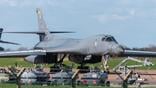
Shortly before making the remarks, U.S. Air Force Northrop Grumman B-2s dropped 2,000-lb. penetrator bombs on Iranian ballistic missile capabilities hidden underground. It was only the latest use of long-range bombers in the war, in which the Pentagon has used Boeing B-52s armed with Lockheed Martin Joint Air-to-Surface Standoff Missiles.
Zamir said that about 80% of Iran’s air defense system has been destroyed, as well as 60% of its ballistic missile launchers.
In a March 6 update, CENTCOM said more than 3,000 targets had been struck since the operation began Feb. 28, including 43 Iranian ships damaged or destroyed.
The Israeli Air Force since the outbreak of hostilities on Feb. 28 has flown more than 2,500 strikes and expended more than 6,000 munitions, Zamir said. The service has conducted 15 waves of strikes on Iran and around twice that number on Beirut, where Israel has been targeting Iranian proxy Hezbollah.
Iran has largely relied on ballistic missiles, cruise missiles and drone strikes to fight back, attacking around a dozen countries in the region. The pace of those attacks appeared to slow, though Israel still reported missiles fired at the country from Iran on March 6.
The United Arab Emirates, which Iran has heavily targeted, said it destroyed another nine ballistic missiles and 109 of 112 drones. The ballistic missile total fired at the UAE since the war’s start has now reached 205 projectiles, the government said March 6. Saudi Arabia, on the same day, said it intercepted an Iranian drone headed in the vicinity of the capital Riyadh. Qatar said that overnight it downed a drone headed for Al-Udeid AB. Bahrain on March 6 reported downing 14 more Iranian drones over the past 12 hr. Kuwait said it was dealing with missile and drone attacks.
The missile threat also prompted NATO to increase its alliance-wide ballistic missile defense posture on March 5. It took the action after a NATO asset downed a ballistic missile that Iran had fired at alliance-member Turkey.
Israel also said it struck an underground leadership bunker in Tehran that now-dead Iranian ruler Ayatollah Ali Khamenei had used. The IDF called the vast facility one of Iran’s most important military command centers.
—Brian Everstine contributed to this report