This article is published in Aerospace Daily & Defense Report part of Aviation Week Intelligence Network (AWIN), and is complimentary through Jul 12, 2026. For information on becoming an AWIN Member to access more content like this, click here.

FCAS Fracture Prompts Call To Continue Joint Engine Development

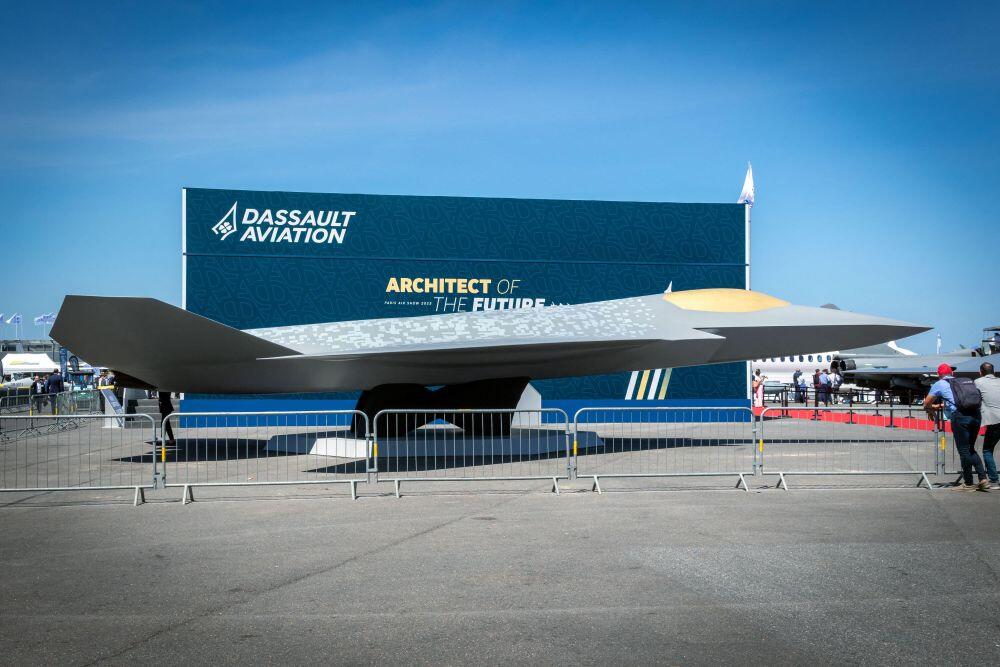
Mock-up of the NGF Future Combat Air System (FCAS) from Dassault Aviation

Mockup of the NGF Future Combat Air System from Dassault Aviation.

Credit: Alamy

BERLIN—MTU Aero Engines is urging the French and German governments to take “necessary steps” to preserve the expertise and industrial capabilities created to support the development of an advanced powerplant for a European sixth-generation combat aircraft, despite the fracture in the industrial partnership that would develop the platform.

With the two governments shuttering the pillar of development on the Future Combat Air System’s (FCAS) Next Generation Fighter (NGF), there is now uncertainty on the future of the joint venture between MTU and Safran—the European Military Engine Team (EUMET) and its co-partnership with ITP Aero. The companies are currently maturing technologies to support the development of engine demonstrators as part of Phase 1B. But the collapse of the fighter development effort calls into question the need for the engine. Funding for the program’s current segment runs out in September.

“The basic situation remains unchanged and the need for a sixth-generation fighter jet remains as great as ever,” says Ottmar Pfänder, MTU’s chief program officer. Pfänder spoke to journalists on the opening day of the Berlin ILA Air Show here on June 10. “Now we need a future framework to secure what has been achieved so far,” he added.

The companies are urging the governments to take the “necessary steps” to “preserve national expertise and industrial capability,” Pfander said.

Should there be a need for two different combat aircraft—one German, one French—then MTU has the comprehensive capabilities to support this, he said.

“Our current partners can meet the requirements of two aircraft models, and we are open to broader cooperation with other industrial partners in Europe,” he said.

MTU was one of eight German companies involved in the FCAS program that issued a call to action to the German government to decide on the future of the FCAS program after a two-year pause caused by the industrial deadlock. This resulted in long-awaited statements by the governments just before ILA began.

MTU CEO Johannes Bussman said he could not comment on what the companies had achieved as part of the engine development work or how much had been spent by them. But he said it was in the interest of the nations that there be a “joint solution” to make use of what had been invested.

The companies had been looking to develop an adaptive or variable-cycle engine that would have allowed different modes of operation, such as fuel-efficient cruise or high-power for air combat. Whether development of the complex adaptive cycle engine continues will depend on the requirements set out by the nations.

Tony Osborne

Based in London, Tony covers European defense programs. Prior to joining Aviation Week in November 2012, Tony was at Shephard Media Group where he was deputy editor for Rotorhub and Defence Helicopter magazines.