This article is published in Aerospace Daily & Defense Report part of Aviation Week Intelligence Network (AWIN), and is complimentary through Mar 12, 2026. For information on becoming an AWIN Member to access more content like this, click here.
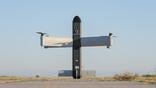
SINGAPORE—Airbus Helicopters, Singapore’s Defense Science and Technology Agency and the Republic of Singapore Air Force (RSAF) have conducted their first crewed-uncrewed teaming (also known as MUM-T) trial, involving an H225M and the Flexrotor uncrewed aircraft system (UAS).
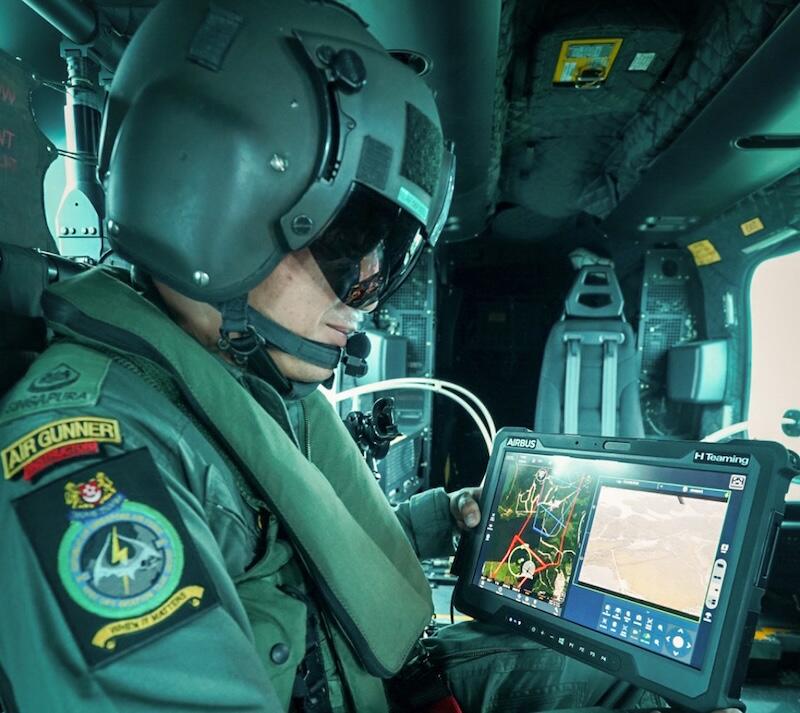
The trial took place in January 2026 in Singapore, seven months after Airbus and the Defense Science and Technology Agency signed a collaboration agreement. For the test, the RSAF H225M was outfitted with four additional antennas and Airbus’ roll-on/roll-off HTeaming mission kit.
Victor Gerin-Roze, head of Airbus Helicopters’ UAS business, said the trial focused on a combat search-and-rescue scenario. During the mission, the Flexrotor conducted reconnaissance operations under the control of an operator stationed inside the H225M's cabin. The operator later provided overwatch as the medium-lift helicopter descended to recover a simulated casualty.
During the trial, the Flexrotor operated several kilometers away from the H225M, validating MUM-T interoperability Level 4, which enables control and monitoring of the UAS directly from the helicopter. Conducting the test in Singapore also allowed Airbus to validate data link stability in a highly congested electromagnetic environment.
Gerin-Roze said the partners will continue to explore additional operational scenarios and concepts of operations tailored to RSAF requirements.
While the HTeaming mission kit architecture is hardware-agnostic, Gerin-Roze noted that it still relies on Airbus’ proprietary software and algorithms. In parallel, DSTA has signed collaboration agreements in recent months with companies such as Anduril and Shield AI to explore swarm UAS concepts and MUM-T software capabilities.
Looking ahead, Gerin-Roze added that Airbus is studying the integration of new payloads, including Starlink satellite communications, on the Flexrotor platform, as well as additional variants planned for introduction in 2026.