This article is published in Aerospace Daily & Defense Report part of Aviation Week Intelligence Network (AWIN), and is complimentary through Jul 14, 2026. For information on becoming an AWIN Member to access more content like this, click here.
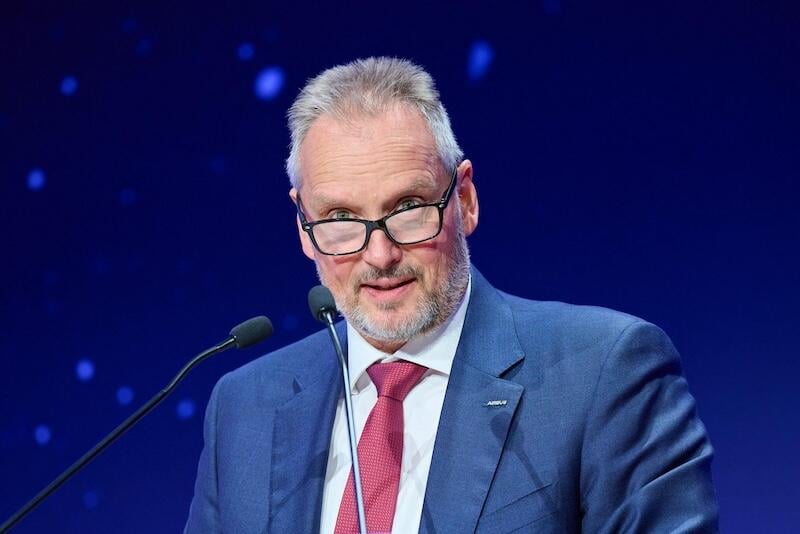
Michael Schöllhorn, Airbus Defense and Space CEO, pictured in Berlin in 2025.
FRANKFURT—Airbus Defense and Space CEO Michael Schöllhorn hopes France and Germany will finally resolve the path forward on the New Generation Fighter program by the ILA Berlin Air Show next month, in part because the outcome will have implications for a German aerospace strategy due for launch at the event.
“FCAS is a big strategic program that is extremely important for a connected air war program that is more than just a fighter,” Schöllhorn said May 27. “It will continue, there will be a combat cloud, there will be unmanned fighter systems.” He conceded that the fighter as originally planned is currently “in difficulties” because of “insurmountable differences” between Airbus and Dassault.
However, he stressed: “There has to be a way forward, either with two fighters, which would impact the other [FCAS] pillars, or we are [entering] another partnership in Europe.“ He did not say what other partnerships Airbus is considering.
Schöllhorn, also president of Germany’s aerospace industry association BDLI, said he had expected a decision several times already, and it would be “very helpful if it happens before or at ILA.” ILA Berlin begins June 10.
The French and German defense ministries are still discussing how to move forward. ILA could be a trigger for a decision because the German federal government has committed itself to presenting its new aviation strategy by the time of the air show. The strategy is to describe policy directions for three sectors: commercial, defense and space. BDLI Managing Director Marie-Christine von Hahn said May 27 that the government could not present a strategy without a statement on FCAS.
Germany’s aviation sector saw fast revenue growth in 2025, according to figures released by BDLI ahead of ILA. Overall revenues grew by 19% and reached €62 billion ($72 million). While commercial aviation still represented the bulk of the industry’s business—€45 billion, up 15%—the defense sector grew the fastest, with revenues increasing by 35% to €13.5 billion.
Schöllhorn said that the government's focus on defense spending is beginning to turn into a strength for the country and its aerospace industry as Berlin has been following through faster than other countries on promises to invest in its military.
Employment in the sector was up by 10,000, reaching 130,000 at the end of 2025.