This article is published in Aerospace Daily & Defense Report part of Aviation Week Intelligence Network (AWIN), and is complimentary through Mar 06, 2026. For information on becoming an AWIN Member to access more content like this, click here.
Singapore, Epirus Agree To Study High-Power Microwave C-UAS Capability
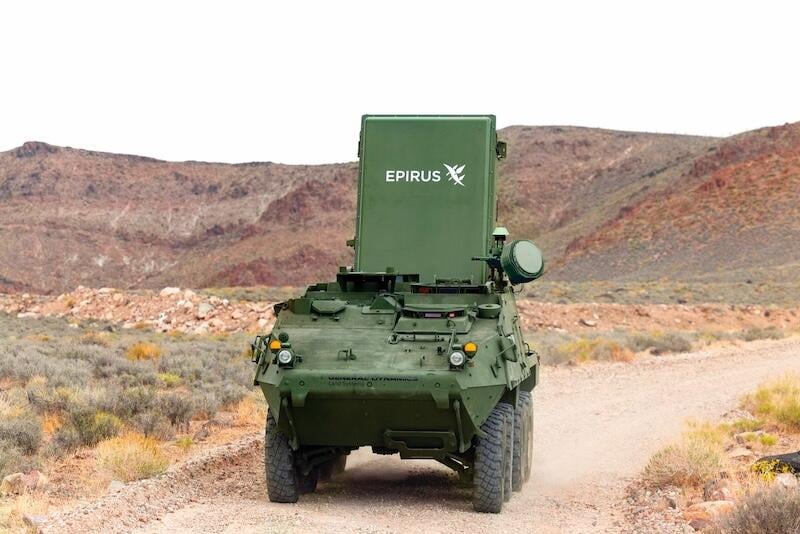
Epirus produces the Leonidas gallium nitride-based HPM array.
SINGAPORE—Singapore’s Defense Science and Technology Agency (DSTA) and U.S.-based Epirus have signed a memorandum of understanding to advance high-power microwave (HPM) counter-drone capabilities.
The pact marks Epirus’ first collaboration in the Asia-Pacific region following a series of programs with the U.S. military.
Under the agreement, the partners will collaborate on research, testing and evaluation of HPM technologies against advanced drone threats under different deployment scenarios. The pair said the effort will include testing against fiber-optic-guided and artificial intelligence-enabled drones, which are increasingly designed to evade conventional radio frequency jamming and electronic warfare systems.
DSTA added that the technology could be used to “strengthen Singapore’s capabilities in counter-electronics and critical asset protection.”
Epirus produces the Leonidas gallium nitride-based HPM array, which the U.S. Army selected for the Indirect Fire Protection Capability-High Power Microwave program. The company has also partnered with General Dynamics Land Systems to integrate Leonidas onto a mobile platform based on the Stryker 8 X 8 armored vehicle.
While detailed performance parameters of the Leonidas system remain largely classified, Epirus disclosed that in August 2025 the system demonstrated the ability to defeat 49 drones in a single high-energy microwave engagement. The company is also developing a smaller podded variant designed for integration onto uncrewed aircraft systems (UAS), providing a low-altitude, airborne HPM counter-drone option.
The collaboration comes amid growing concern over the proliferation of small, autonomous and swarm-capable UAS in the Asia-Pacific region, particularly those employing nontraditional guidance methods that reduce susceptibility to electronic attack.
The timing of the agreement follows Singapore’s recent acquisition of a new batch of Terrex s5 8 X 8 wheeled infantry fighting vehicles from ST Engineering. The Defense Ministry said the vehicles—designated Titan—will be armed with a 30mm cannon and equipped with counter-UAS features, suggesting a broader push to integrate layered air defense and counter-drone capabilities at the tactical level.