This article is published in Aerospace Daily & Defense Report part of Aviation Week Intelligence Network (AWIN), and is complimentary through Jul 18, 2026. For information on becoming an AWIN Member to access more content like this, click here.

Shield AI Distances X-Bat From CCA Market Segment

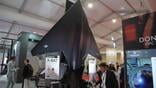
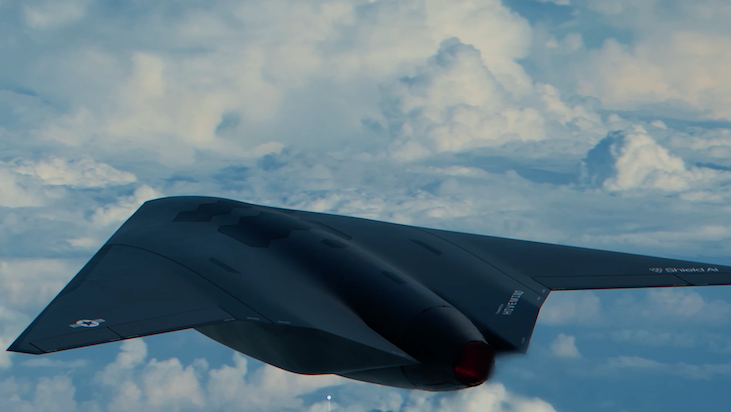
X-Bat
Credit: Shield AI

PARIS—Shield AI’s proposed X-Bat already stands out as an autonomous, jet-powered, vertical-takeoff-and-landing, long-range strike aircraft, but company President Ryan Tseng adds another distinction.

The X-Bat is also not a collaborative combat aircraft (CCA), Tseng said in an interview with Aviation Week on June 15 at Eurosatory.  

“I would say that X-Bat is probably, or is, the world's first autonomous combat aircraft, as opposed to collaborative combat aircraft,” Tseng said.

The distinction is not trivial. It means Shield AI is positioning the X-Bat apart from the tactical CCA market, which is producing smaller, mostly runway-dependent aircraft to serve as adjuncts to fighters and other tactical aircraft.

The GE Aerospace F110-powered X-Bat is being built to take off vertically from a truck with a transporter-erector-launcher system, ascend to an altitude above 50,000 ft., fly as far as 1,000 nm, then return and land vertically using a thrust vectoring control on the same ground vehicle.

The X-Bat may be able to operate with other crewed and uncrewed aircraft, but it is designed to find the target and destroy the target by itself, with a human giving the final command to fire.

“We don't need a mothership,” Tseng said. “We're not dependent on some other aircraft to do the job for us.”

After unveiling the X-Bat last October, Shield AI expects to fly the self-funded prototype by the end of this year. 

Steve Trimble

Steve covers military aviation, missiles and space for the Aviation Week Network, based in Washington, DC.