This article is published in Aerospace Daily & Defense Report part of Aviation Week Intelligence Network (AWIN), and is complimentary through Dec 25, 2025. For information on becoming an AWIN Member to access more content like this, click here.
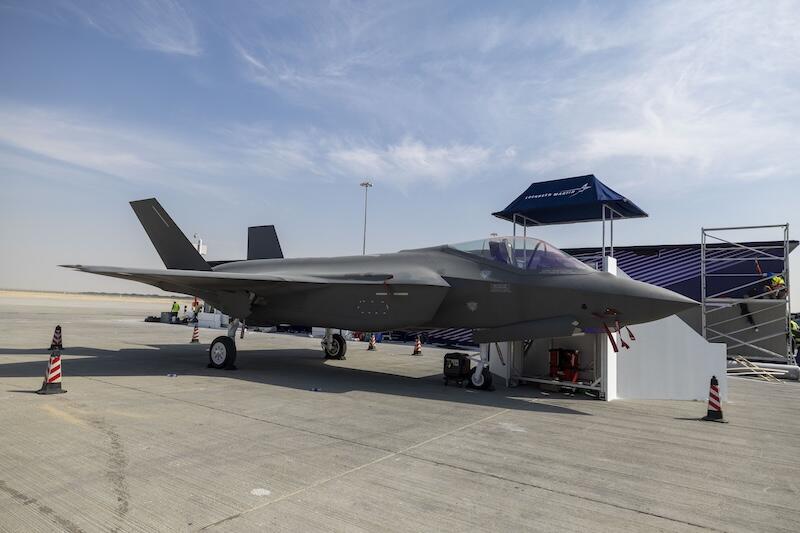
Lockheed Martin is displaying the F-35 on static display at Dubai Airshow.
Credit: Billypix
DUBAI—Airpower strength is tipping toward Saudi Arabia in the Gulf region after President Trump declared Nov. 17 that he would approve the sale of Lockheed Martin F-35As to the Kingdom.
Trump’s announcement on the eve of a White House visit by Saudi Crown Prince Mohammed Bin Salman on Nov. 18 does not lock up the Arab region’s first long-awaited F-35 order, but it signals closer ties between Washington and Riyadh, perhaps at the expense of other relationships.
As they awaited the completion of the U.S. government’s labyrinthine arms export approval process, Lockheed Martin executives awkwardly avoided any temptation to gloat over the prospect of finally securing a future F-35 operating base to occupy an operational desert for the stealth fighter that now stretches between Tel Nof, Israel, and Cheongju, South Korea.
“All I can say is President Trump made the announcement,” says Steve Sheehy, vice president of international business development for Lockheed’s Aeronautics business, at Dubai Airshow. “We appreciate, you know, his supporting of the F-35 program.”
The F-35 has reached this point before in the Gulf region. Six years ago, the first Trump administration approved a $10.4 billion deal to export 50 F-35As to the UAE, a Saudi neighbor and close security partner. The approval came after the UAE became the first Gulf nation to agree to the U.S.-brokered Abraham Accords and normalize relations with Israel, a move that has been strained by Arab and global reaction to the impact of a two-year war in the Gaza Strip.
But President Joe Biden suspended the F-35 export case for the UAE in September 2021, citing the UAE’s allegedly growing links to the Chinese military.
Once scorned by the U.S. government, UAE officials seemed to lose interest in the long-sought F-35A acquisition, even as the possibility grew last year for a second Trump administration. In September 2024, the UAE government ruled-out renewing talks to seal an F-35 order even if Trump won re-election. On Nov. 17, UAE President Mohammed bin Zayed Al Nahyan toured the Sukhoi Su-57 parked on the Dubai Airshow static display.
If the potential F-35 sale to Saudi Arabia secures Congressional approval, it is not clear what impact the order could have on further fighter orders by the Kingdom. The Boeing F-15EX, Eurofighter Typhoon and Dassault Rafale have been competing for a blockbuster fighter order from Riyadh. Saudi Arabia still has the option of further modernizing its air force with a mixed fleet.