This article is published in Aerospace Daily & Defense Report part of Aviation Week Intelligence Network (AWIN), and is complimentary through Jun 13, 2026. For information on becoming an AWIN Member to access more content like this, click here.

New Heavy Bomber Study Appears In U.S. Air Force Spending Plans

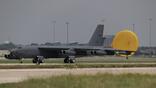
nhb
Credit: U.S. Air Force

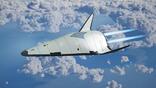
The U.S. Air Force plans to launch an analysis of alternatives study next year for a New Heavy Bomber aircraft amid continued work on a classified proof-of-concept that is starting this year, budget documents show.

“[A] new heavy bomber analysis of alternatives will begin initial planning activities to develop key performance parameters, key system attributes, and additional performance attributes for a follow-on heavy bomber in the USAF,” the Air Force’s budget justification document shows.

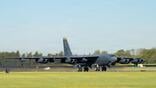
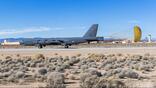
The study would follow a $3 million proof-of-concept effort that concluded in fiscal 2025, which involved a “demonstration on the B-52,” the document. shows.

It was not immediately clear how the proof-of-concept demonstration aligned with the analysis of alternatives for the New Heavy Bomber, which was described in the same project line item.

An analysis of alternatives generally begins after a military service defines and validates a new operational requirement, with the goal of providing informed options for leaders before the start of a competitive acquisition process.

How a New Heavy Bomber program would fit into the Air Force’s portfolio of long-range strike projects also is not clear.

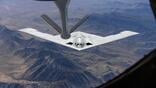
The Air Force is currently investing tens of billions each to field the stealthy Northrop Grumman B-21 for penetrating bombing missions and transform the Boeing B-52J to be able to continue functioning in the standoff strike role for at least a few more decades. The B-21 is programmed to replace the Northrop B-2 and the North American/Rockwell B-1B.

The New Heavy Bomber project is included in a program element that describes a long list of B-52 upgrade projects. That placement could suggest the concept is intended to eventually replace the B-52.

Analysis of alternatives often precede a fielding milestone for a new aircraft by 10-15 years. In that time frame, several major B-52J upgrades, including reengining and new radars, would have been fielded for less than a decade and in some cases still in production. 

Steve Trimble

Steve covers military aviation, missiles and space for the Aviation Week Network, based in Washington, DC.

Comments

1 Comment
Doesn’t sound like a good use of taxpayer money to spend $10s of billions to reengine the B52 only to then replace it shortly thereafter. How about let’s get the new B21 and the reengined B52 operational first.