This article is published in Aerospace Daily & Defense Report part of Aviation Week Intelligence Network (AWIN), and is complimentary through Apr 07, 2026. For information on becoming an AWIN Member to access more content like this, click here.
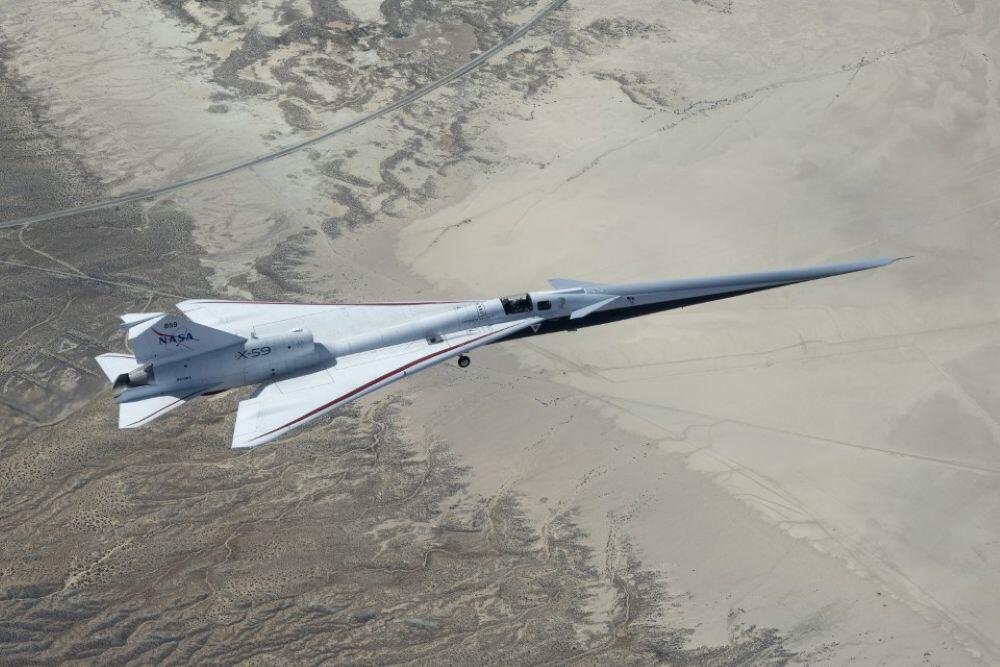
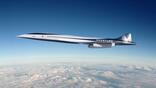
NASA’s Lockheed Martin X-59 Quesst low-boom demonstrator returned to the air with flights on March 26 and 27.
The cockpit warning light that cut short the second flight of NASA’s X-59 low-boom supersonic flight demonstrator on March 20 proved to be a false positive and the aircraft resumed envelope expansion testing with back-to-back flights on March 26 and 27.
The Lockheed Martin Skunk Works-built X-59 was forced to return to base at Edwards AFB, California, after only 9 min. of a planned hour-long flight on March 20 when NASA Test Pilot Jim Less saw a vehicle system warning in the cockpit.
A post-flight investigation found that the indicator’s instrumentation was incorrectly installed, creating a false positive indication of a problem, NASA says. The issue was quickly resolved and the aircraft returned to flight on March 26 with Less again at the controls.
The X-59 flew for the first time on Oct. 28, 2025, flown by NASA Test Pilot Nils Larson. The aircraft reached 200 kt. (230.1 mph) and 12,000 ft. altitude, landing gear down, on the 67-min. flight from the Skunk Works at Palmdale, California, to NASA Armstrong Flight Research Center at Edwards.
The intended 1-hr. second flight was planned to take the aircraft to 220 kt. and 20,000 ft. and to include exploring airflow into the top-mounted engine inlet at different angles of attack. Instead, the flight ended when the warning light came on as the aircraft was climbing, gear still down.
According to the FlightAware flight tracking website, the X-59 flew for 53 min. on its March 26 third flight, exceeding 13,000 ft. altitude and reaching a speed of 290 kt. On its March 27 fourth flight again piloted by Less, the aircraft reached 20,000 ft. and 334 kt., FlightAware said.
Phase 1 envelope expansion is planned to clear the aircraft to Mach 1.5 and 60,000 ft. to provide operating margin for the acoustic validation Phase 2, which is expected to start as soon as late 2026. Following Phase 2, nominally planned to last around nine months, NASA will begin initial community noise tests out of Armstrong Flight Research Center at Edwards.
The X-59 is planned to conduct supersonic passes at Mach 1.4 and 55,000 ft. over a nearby community before beginning its final phase of flights over populated areas across the U.S. to gather data on public response to low booms, particularly indoors, where shockwaves can produce rattles.

Related Content