This article is published in Aerospace Daily & Defense Report part of Aviation Week Intelligence Network (AWIN), and is complimentary through Oct 16, 2026. For information on becoming an AWIN Member to access more content like this, click here.
Honeywell Presses For Early Contract As USAF’s MMA Program Begins
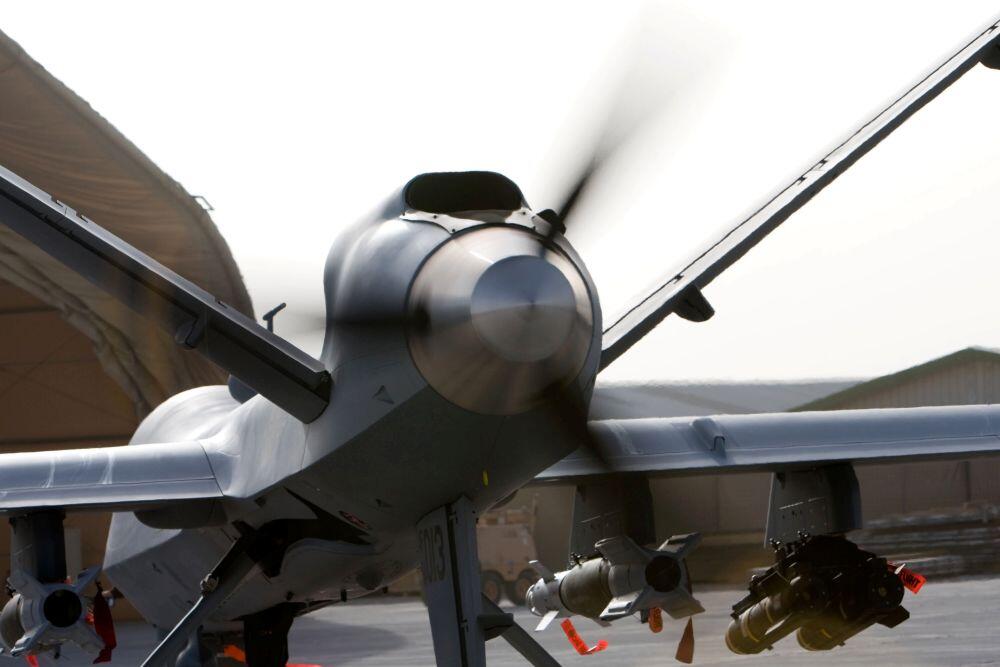
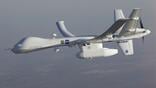
MQ-9’s TPE331 engine.
NATIONAL HARBOR, Maryland—The announced competitors for the U.S. Air Force’s Massed Modular Aircraft (MMA) so far have one major thing in common—they use Honeywell Aerospace’s TPE331 engine.
With an aggressive schedule to start fielding the MQ-9 replacement, Honeywell argues the service should not wait to select the first MMA aircraft. The Air Force should get started now and issue a contract for engine long-lead procurement.
“I think there’s an opportunity for them to do that,” Matt Milas, Honeywell’s president of defense and space, tells Aviation Week. “There’s history of the government providing engines as [government-furnished equipment]. … It totally works with the Air Force’s procurement style and it would give them an opportunity to make it more affordable and accelerate the infusion of capital and capacity into the supply base. So, that would be an awesome way of doing it.”
General Atomics Aeronautical Systems Inc. was the first to showcase its proposed MMA design, an evolution of the MQ-9 called Wildfire. Swarm Aero on Sept. 14 unveiled its Gamera proposal for MMA, and other entrants are expected soon. These use the TPE331, which also powers the MQ-9.
“It performs extremely well. It’s extremely reliable,” Milas says, pointing out that it is about the size and scale of auxiliary power units that the company produces thousands of per year for both commercial and defense applications.
“So it fits into that sweet spot of commercial capability where we have capacity in our factories,” Milas said at the Air and Space Forces Association’s Air, Space & Cyber Conference here.
The Air Force this week announced a goal of fielding 100 MMAs by 2029 and 500 by 2032. This requires industry to move quickly, and that requires funding.
“What we need from the Air Force is some purchase orders for long-lead material, so that we can take those purchase orders, take that funding and flow it to our suppliers,” Milas says. “Give them the firm demand on the specific parts we’re going to need for that TPE331 and get them going, get them hiring, get them the capital equipment that they need.
“So, every day the Air Force delays in releasing that and if we’re going to be the engine provider on any one of those ... getting that money flowing is really essential to starting the clock on when we can grow the capacity to meet those growing needs,” he said.
Honeywell and the Air Force Research Laboratory have been developing an update to the engine, called the 1500 series, that would increase power to provide more range and capability, Milas says.
“That if the Air Force decides, ‘Hey, we want to upgrade it,’ you don’t really have to change out much on the engine or the airframe, right? Once we can do that development work, we can insert the technology into an existing platform. So, if you see a Gamera or a Wildfire and we’re able to use the current about 1,000 shaft horsepower turboprop, you can go to a 1,500 post-development without having to change a whole bunch of stuff,” he said.

Related Content