This article is published in Aerospace Daily & Defense Report part of Aviation Week Intelligence Network (AWIN), and is complimentary through Jan 09, 2026. For information on becoming an AWIN Member to access more content like this, click here.

Global Strike Chief Recommends Replacing B-21 Pilot With WSO

UPI/Alamy Live News

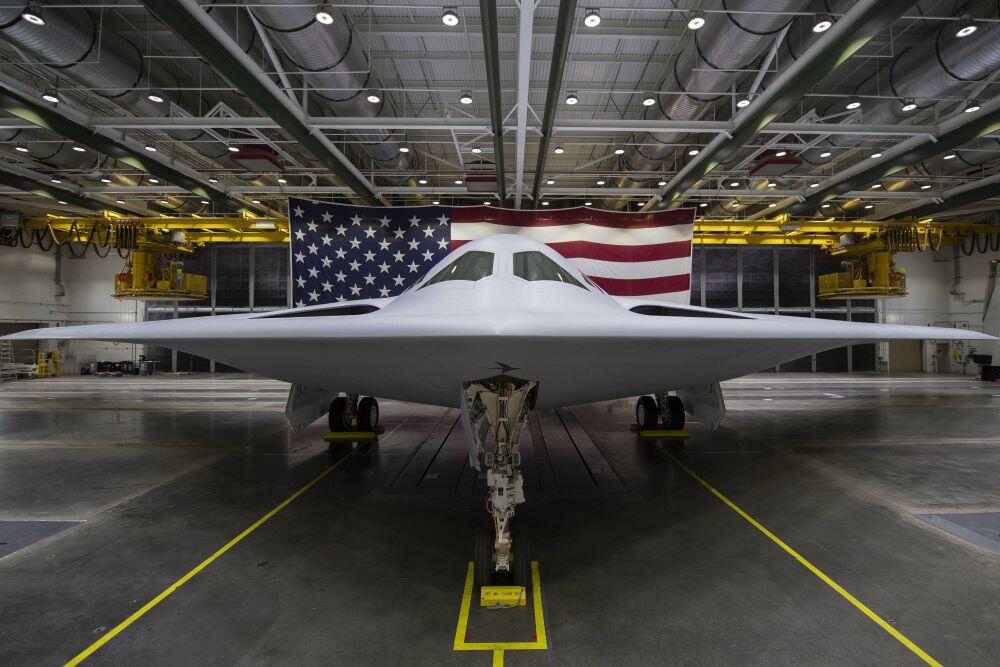
B-21

Credit: UPI/Alamy Live News

The head of U.S. Air Force Global Strike Command (AFGSC) has recommended the placement of a weapon systems officer (WSO) in the cockpit of the Northrop Grumman B-21 Raider, according to an Aug. 15 memo obtained by Aviation Week.

The proposal, if adopted by Air Force headquarters, would change the crew composition in the two-seat bombers, leaving only one officer with a pilot rating onboard at a time when bomber missions sometimes last 36 hr. or longer with multiple inflight refuelings.

“Air Force Global Strike Command has provided their recommendation regarding the B-21 crew composition to the Headquarters. That document is pre-decisional. A decision has not been made,” Lt. Gen. Scott Pleus, acting vice chief of staff, tells Aviation Week.

The Air Force provided no timeline for making the decision.

Gen. Thomas Bussiere, who steps down as AFGSC chief on Nov. 4, submitted the recommendation more than two months ago, saying the nature of the B-21’s mission in the future requires the presence of a WSO inside the two-seat flight deck.

“Unleashing the Raider’s full potential demands a complex blend of skills: airmanship, weaponeering, electromagnetic spectrum operations, sensor management, real-time battle management and agile replanning in combat,” Bussiere wrote in the Aug. 15 memo, which was addressed to the offices of the Air Force secretary, chief of staff and the commander of U.S. Strategic Command.

“For this reason, the B-21 will be crewed by one pilot and one weapon systems officer,” Bussiere wrote.

The memo did not appear to be cast as a policy recommendation, but rather adopted a tone of expressing a final decision by the operating command for the B-21. However, Air Force leadership, which has changed since Aug. 15 with the confirmation of Gen. Kenneth Wilsbach as chief of staff on Oct. 30, is still weighing options for the final B-21 crew composition.

The Air Force bomber community had been reluctant to rely on a single pilot-rated officer to fly missions in the past. The two seats on the Northrop B-2’s flight deck are filled by pilots only. The Boeing B-52H and Rockwell International B-1B include at least a pair of WSOs in addition to two pilots, but the WSOs are seated below deck in the former and behind the pilots in the latter.

Missions such as Operation Midnight Hammer, which struck Iran’s nuclear weapons facilities in June, highlighted the length of bomber missions, with roundtrip flights from the B-2’s operating base in Missouri lasting 37 hr.

In his recommendation, Bussiere, a former B-1B and B-2 pilot, noted the extreme dangers posed by future B-21 missions.

“The future of airpower will be defined by the ability to project power into the most heavily defended airspace on Earth,” Bussiere wrote.

Bussiere’s proposed approach follows the cockpit philosophy of tactical aircraft, such as the Boeing F-15E, where WSOs are trained to fly the aircraft in emergency situations while spending the rest of the time focused on operating the aircraft’s mission systems. In a two-seat aircraft such as the B-21, the WSO also would likely be trained to fly the aircraft in certain scenarios. For example, the WSO would likely be able to land the aircraft if the pilot is incapacitated or injured.

Air Force leaders are considering options for the crew composition as the B-21 development program continues. Northrop has delivered two flight-test aircraft and two ground articles to the Air Force, with four more flight-test aircraft due in the coming years. The Air Force still plans to introduce the B-21 into service in the mid-2020s. 

Steve Trimble

Steve covers military aviation, missiles and space for the Aviation Week Network, based in Washington, DC.