This article is published in Aerospace Daily & Defense Report part of Aviation Week Intelligence Network (AWIN), and is complimentary through Feb 12, 2026. For information on becoming an AWIN Member to access more content like this, click here.

Debrief: Why Singapore’s C-130 Stopgap May Be Bad News For The Super Hercules
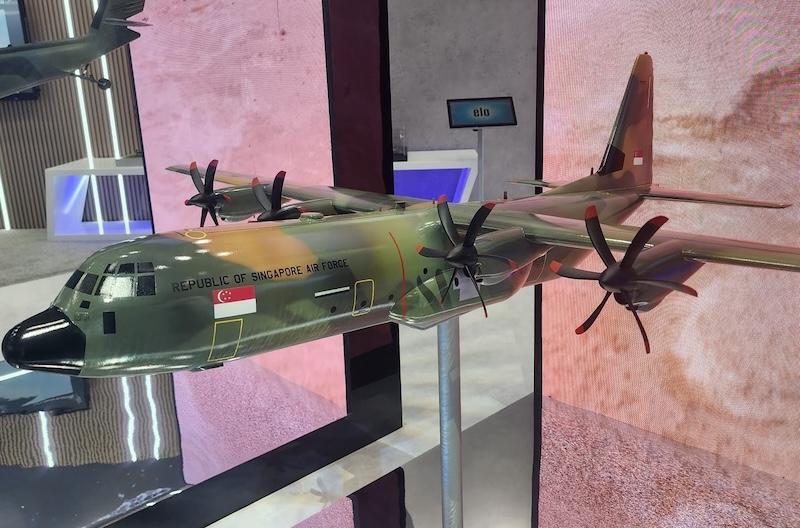
hercules airlifter model at singapore airshow

A model of the C-130J in Singapore colors at the Lockheed Martin chalet at the 2024 Singapore Airshow.

Credit: Chen Chuanren/Aviation Week

SINGAPORE—“The Hercules refuses to die,” a senior Republic of Singapore Air Force (RSAF) commander once remarked. 

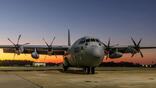
Since the formation of 122 Sdqn. in 1977, the RSAF has operated a fleet of nine Lockheed Martin C-130s—four C-130Bs and five C-130Hs—making the Hercules one of the longest-serving platforms in Singapore’s inventory.

Replacing the venerable transport has long featured high on observers’ lists of the RSAF’s remaining modernization priorities. Yet in February, RSAF chief Maj. Gen. Kelvin Fan outlined an unexpected path forward: The service will acquire pre-owned C-130Hs to replace its four oldest C-130Bs, rather than committing to a wholesale fleet renewal.

In a written interview supporting the Singapore Airshow, Fan said the C-130 “remains the best platform” to meet RSAF operational needs for the next 15 to 20 years. Deliveries of the used aircraft have already begun, marking the first time since the 1990s that the RSAF has turned to secondhand airframes. This is a notable departure for a force whose so-called third-generation platforms have almost exclusively been procured new.

Rather than a clean and straightforward recapitalization around the proven C-130J Super Hercules, the RSAF has chosen a phased, risk-managed approach: Retire the Bs first, extend the life of the H fleet and defer a decision on a full replacement. From a budgetary and operational continuity perspective, the logic is clear. But the move also signals that the Super Hercules may no longer be the default successor.

Keeping options open appears to be central to the strategy. Beyond the C-130J, the RSAF seems to be studying Airbus’ A400M and Embraer’s C-390 Millennium—both of which offer step changes in payload, speed and range, but also introduce new tradeoffs. The A400M’s early reliability and cost challenges have weighed heavily in the past, even as Airbus insists those issues have largely stabilized.

The C-390, meanwhile, is gaining momentum in Europe and Asia-Pacific, including South Korea, but remains a relatively young program with a limited operational track record. An existing memorandum of understanding between Embraer and ST Engineering to support local maintenance would mitigate some risk, but not all.

Bosco da Costa Junior, Embraer Defense & Security president and CEO, welcomes RSAF’s Hercules decision, saying it buys RSAF time to evaluate future platform. Da Costa says Embraer is working with ST Engineering to learn more about the RSAF’s requirements.

What complicates the calculus is how rapidly the Singapore Armed Forces’ operational profile is expanding. The RSAF’s C-130s are no longer confined to regional lift: Humanitarian missions have reached as far as the Middle East, while growing mechanization in the Army has increased demand for rapid movement of heavy systems such as Himars launchers. Overseas presence—particularly in Australia and Thailand—also may require frequent airlift of helicopters and vehicles.

This concept is echoed by Zakir Hamid, Airbus Defense and Space head of Asia-Pacific, who adds that the A400M would also potentially have the organic ability to refuel helicopters and interoperate with neighboring platforms in Indonesia and Malaysia.

The incumbent Lockheed Martin remains optimistic on selling the Super Hercules to the RSAF, and committed to support the H through its lifespan.

“They had an option, and they decided to stick with what's known and what's proven,” Chris Cohn, Lockheed’s director of international air mobility, tells Aviation Week. “From my point, it's a good decision based on what they had at the time to choose from. And I know we are ready to sell them the J when they're ready for them.”

Against this backdrop, the decision to double down on legacy C-130Hs may buy time, but it also postpones a harder question—whether a traditional tactical airlifter for the RSAF will still suffice in the 2030s and beyond. As Singapore fields long-range enablers like the A330 MRTT, the gap between strategic reach and tactical lift is becoming more apparent.

In that sense, the H-model stopgap may be less about extending the life of an old workhorse, and more about acknowledging uncertainty. The RSAF is signaling that it is not yet convinced the Super Hercules is the inevitable answer, and for Lockheed Martin, that hesitation alone may be the clearest warning sign.

Chen Chuanren

Chen Chuanren is the Southeast Asia and China Editor for the Aviation Week Network’s (AWN) Air Transport World (ATW) and the Asia-Pacific Defense Correspondent for AWN, joining the team in 2017.

Singapore Airshow 2026

For all the latest news live from Singapore Airshow, visit our Airshow News site section.