This article is published in Aerospace Daily & Defense Report part of Aviation Week Intelligence Network (AWIN), and is complimentary through Nov 13, 2025. For information on becoming an AWIN Member to access more content like this, click here.

Debrief: Inside The U.S. Army’s Plan To Accelerate MV-75 Fielding—Again

MV-75

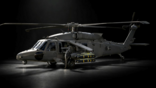
MV-75 tiltrotor

Credit: Bell

The Trump administration set an ambitious new requirement last spring for the Bell MV-75 tiltrotor, the winner of the U.S. Army’s high-speed Future Long-Range Assault Aircraft (FLRAA) competition in December 2022.

The challenge: compress a nine-year timeline for delivering the first operational unit of MV-75s by 18 months, or roughly 15%.

That goal seems ambitious after factoring in two more realities. In 2018, the Army already accelerated the fielding timeline for FLRAA by three years to fiscal 2031. Moreover, the Army’s record of delivering any new combat rotorcraft at all—much less on a doubly accelerated schedule—is dismal. (For reference, look up the costly cancellations of the Sikorsky/Boeing RAH-66 Comanche, Bell ARH-70 Arapaho, Armed Aerial Scout and Future Attack Reconnaissance Aircraft programs.)

But the Army aviation community and Bell accepted the challenge. On the first day of the Association of the U.S. Army’s (AUSA) annual convention Oct. 13, Army officials laid out how the MV-75 program will try to achieve—if not the impossible—then the historically improbable.

“One of the first things we did when we got that directive from Army senior leaders is we went to Bell and said, ‘What are the things that you need to accelerate?’” Col. Jeffrey Poquette, the FLRAA program manager, said during an AUSA panel hosted by Defense News.

Although the acceleration goal is now paramount, the Army and Bell leaders decided first that some aspects of the original MV-75 acquisition plan must not be changed.

Above all, the Army wants to keep its “right to repair” on the MV-75, Poquette said. That means the Army won’t allow any changes to the schedule that grants Bell exclusive rights to maintain and upgrade the tiltrotor. Secondly, nothing in the acquisition plan can change that eliminates the program’s modular open systems approach, which defines a set of standards and interfaces enabling faster changes between subsystems.

But the Army and Bell found that other requirements could be deferred in the name of accelerating the MV-75 delivery schedule. Normal military acquisition procedures call for the contractor to produce a library of technical information, including an Integrated Master Plan, Integrated Master Schedule and the Test and Evaluation Master Plan. These documents take years to produce but are generally considered necessary to complete so that government and industry have full visibility throughout development and testing.

“Things like the artifacts that we need to receive; maybe we can defer receiving the artifacts,” Poquette said.

To offset the risk of miscommunication, Poquette said the Army has embedded its own people among Bell’s engineers and managers working on the MV-75.

“Because my team is there, and when they come back and say, ‘Hey, we’re comfortable, they’re taking the right approach, they’re going the right direction,’” Poquette said. “[Bell] may not get it all written down and submitted and then reviewed. That’s the kind of things that we can defer down the road.”

The MV-75 design process is nearly complete. More than 3,000 engineering drawings have been released, representing 90% of the planned total, Poquette said. The Army has signed more than 5,000 purchase orders from more than 360 suppliers.

In another move to advance the MV-75 schedule, the Army also accepted a higher rate of concurrency between development, testing and production, Poquette said. Again, the Army sought to balance the higher level of risk. In this case, the balance sought is through better communication.

“We said, ‘Bell, how can you make us feel comfortable? How can you make us feel comfortable that you’re going to be building aircraft while you’re in test?’” Poquette said. “And we’ve come to some agreements at the executive level that say, ‘Look, here’s the pricing we want to do, and here’s what we need you to do once we build aircraft. If [the production aircraft are] not where they need to be, what are you going to do to get them fielded?’ So we have all that in place, and that’s how we’ve burned down that risk.”

Steve Trimble

Steve covers military aviation, missiles and space for the Aviation Week Network, based in Washington, DC.