This article is published in Aerospace Daily & Defense Report part of Aviation Week Intelligence Network (AWIN), and is complimentary through Aug 24, 2026. For information on becoming an AWIN Member to access more content like this, click here.

BAE Advancing FCAD Toward Power-On And Flight

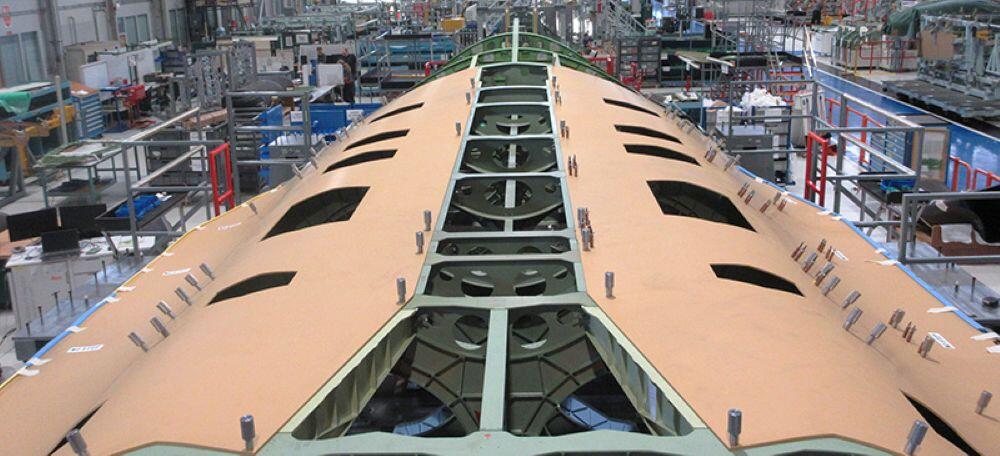
FCAD production line

Skins being added to the FCAD’s airframe structure.

Credit: BAE Systems

LONDON—BAE Systems is targeting power-on of its Future Combat Air Demonstrator (FCAD) in the second half of 2027 as the company prepares to begin final assembly of the twin-engine, stealthy, supersonic aircraft.

The demonstrator, first announced in 2022, is intended to prepare UK industry for its role in the Global Combat Air Program (GCAP) and may also test technologies for the combat aircraft that emerges from the program, Edgewing officials told Aviation Week.

Briefing journalists on the next phase of FCAD development, Tony Godbold, BAE Systems’ Future Combat Air Systems (FCAS) delivery director, said 11,500 parts have been designed and released into production. Those components represent about 90% of the aircraft’s undisclosed mass.

As previously reported, the forward, center and rear fuselage sections are being manufactured and assembled at BAE’s facility in Samlesbury, England, while the cranked-delta wing is being assembled at the company’s nearby Warton site. By the end of the year, the completed fuselage will be transferred to Warton for mating with the wings and final assembly.

“This is all about pushing UK industry to be match-fit ready for a sixth-generation combat air capability and progressing our UK sovereignty to be that world leader in that space, and for many decades to come,” Godbold told reporters.

Although the Eurojet EJ200-powered FCAD will be smaller than the eventual GCAP aircraft, its size has already created engineering challenges, Godbold said. Carbon-fiber panels and skins for the aircraft are the “largest and most complex ever designed and manufactured in the UK,” he said.

Work is now underway to harmonize the flight-test schedule with the UK Defense Ministry ahead of testing in 2028. The campaign is intended to achieve key milestones and demonstrate what Godbold described as a “significant amount of capability” that will be leveraged into the GCAP program.

Among FCAD’s objectives will be the supersonic release of weapons, said Chris Allard, MBDA UK’s vice president for FCAS. His comments marked the first public confirmation that industry plans to conduct such tests with FCAD, although neither the number of trials nor the weapons involved has been disclosed.

The trials are intended to better understand the pressure loads and harmonics associated with releasing weapons from an internal bay and to validate simulation models that could accelerate future weapons integration.

The last UK-developed aircraft equipped with an internal weapons bay was the Blackburn Buccaneer, but it never launched a missile from the bay or released weapons at supersonic speed.

Allard said MBDA wants to make greater use of artificial intelligence (AI), machine learning and simulation to analyze test data, increase the throughput of weapons integration and reduce integration timelines from years to months.

BAE Systems is also exploring with GCAP prime contractor Edgewing how FCAD could accelerate GCAP development. Brooke Hoskins, Edgewing’s chief program management officer, said the demonstrator could “test things for us, which means we will not have to wait until we have an aircraft to do it,” referring to early iterations of the GCAP platform.

In particular, she said FCAD could support digital assurance and certification for GCAP. FCAD is funded through the UK’s Future Combat Air System Technology Initiative (FCAS TI) and supported by the broader Team Tempest industrial partnership, which includes BAE Systems, Leonardo, MBDA and Rolls-Royce.

During the Farnborough Airshow, BAE Systems announced the UK government had awarded a £708 million ($940 million) contract to the Team Tempest partners to continue FCAS work, including integration of uncrewed air systems, advanced networks and weapon technologies.

Tony Osborne

Based in London, Tony covers European defense programs. Prior to joining Aviation Week in November 2012, Tony was at Shephard Media Group where he was deputy editor for Rotorhub and Defence Helicopter magazines.