20 Twenties Winner Building Defense Autonomy At Shield AI
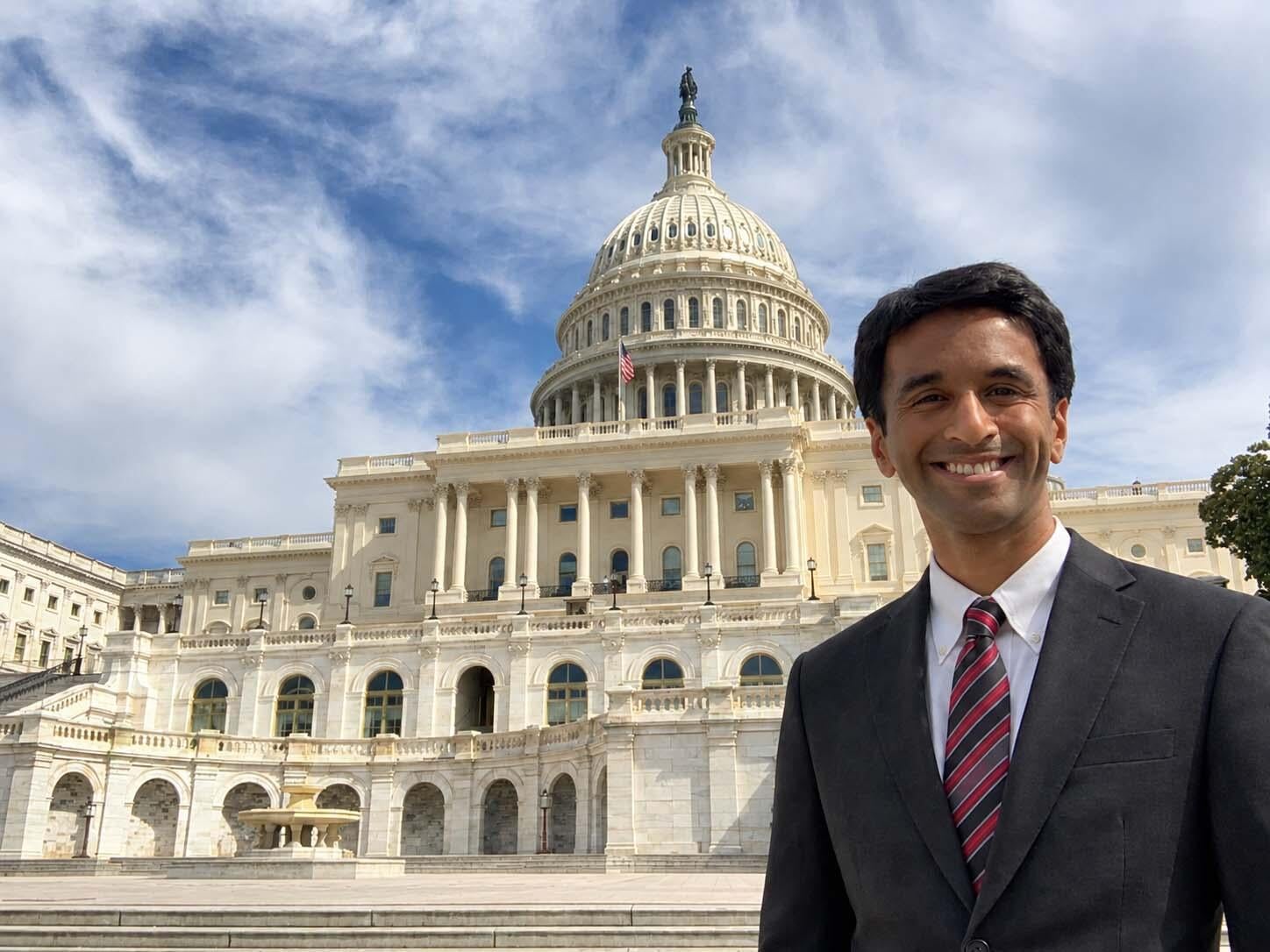
Akshay Kadhiresan is a future concepts engineer at Shield AI, where he architects autonomy and AI applications for multi-domain military capabilities—spanning operational analysis, business strategy and future platform development.
Before Shield AI, he served as a military operations analyst at Boeing Phantom Works and as an aerospace engineer on the F-35 and Trident programs at Lockheed Martin. He was named one of Aviation Week's 20 Twenties in 2019 and has earned multiple awards for technical contributions to future air and space programs.
Akshay holds a B.S. in Mechanical Engineering and an M.Eng. in Aerospace Engineering from Cornell University, along with graduate certificates in Strategic Defense Technologies, Intelligence Analysis, and International Relations.
When you received the 20 Twenties award, what were your career aspirations? How have those goals evolved over time?
I began my career in aerodynamics, directly applying the fundamentals from my aerospace engineering degree. At the time, my ambitions were straightforward: solve challenging technical problems, learn from talented teammates and earn greater responsibility. Over time, however, experience in different roles, teams and companies has helped me realize that my true passion lies at the intersection of technical analysis and high-level mission impact. Today, I’ve expanded beyond aerodynamics to a broader systems and product approach, architecting future concepts and aspiring to lead advanced development programs from design to deployment.
Where are you currently based, and has your career taken you to places—either geographically or professionally—that you didn’t anticipate?
I’m currently based in Northern Virginia, but since graduating from college, my career has taken me through Fort Worth, Denver and St. Louis. While I didn’t anticipate relocating so frequently early on, each aerospace hub immersed me in a unique aspect of industry culture and capability. That journey has given me extraordinary professional breadth, taking me to flight test ranges, supersonic wind tunnels, joint military commands and foreign defense headquarters. Looking back, I never would have imagined that the first five years of my career would range from crawling under the weapons bay of a stealth fighter to briefing a four-star general to helping capture a multibillion-dollar aircraft program.
Since receiving the award, is there a particular project, achievement, or milestone that you’re especially proud of?
I’m proudest of how deliberately I have diversified beyond my roots in aerodynamics to understand the strategic environment in which our systems operate. I have continued my education across complementary disciplines including international relations, intelligence analysis and defense strategy, and have also authored publications examining responsible military AI and the history of commercial aviation. Bridging technology with policy has helped me better understand both the strategic and technical needs our systems must meet and the responsibility that comes with developing and using them.
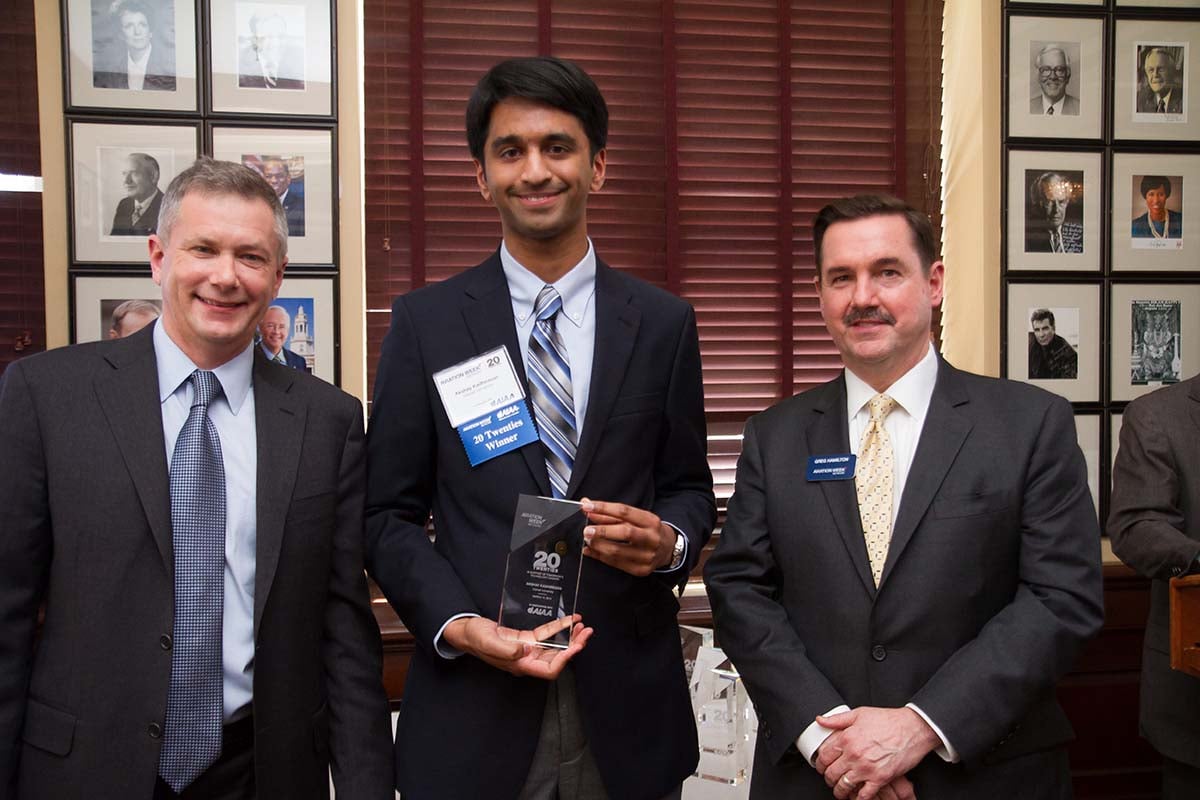
Did winning the award change how you saw yourself professionally or give you confidence to pursue opportunities you might have hesitated on?
As a student, I wondered whether my technical skills and leadership would translate beyond academia. Receiving this award gave me external validation and confidence in my ability to make a tangible impact as a future leader in the aerospace industry. That early recognition started my career on a positive trajectory and pushed me to take on challenging assignments and continually explore outside my comfort zone.
Many 20 Twenties winners are passionate about paying it forward. Have you had opportunities to mentor others or contribute to your community? What has that meant to you?
Mentorship has been central to how I pay it forward, in recognition of those who helped me get to where I am now. I have mentored dozens of high school and college students, as well as early-career engineers, by advising them on career pathways, reviewing resumes and leveraging my network to help several land new roles. I have also partnered with local high school engineering classes to share my journey and explore the realm of possibility: while pilots and rocket scientists get plenty of attention, modern aerospace welcomes people of all backgrounds and interests. These experiences have been incredibly gratifying and I sincerely enjoy helping others find the same success and satisfaction that I have found in my career.
Looking back at your award-winning project, which skills or insights proved most valuable as you transitioned from student to professional? Any surprises about what mattered most?
The most valuable skill hasn’t been raw technical aptitude, but the ability to communicate on a human level: understanding the “why” behind a problem before throwing equations at it, and then articulating the solution clearly once it's built. These soft skills are important in many careers, but perhaps especially so in aerospace, in which program discussions can easily spiral into dense jargon and technical data. While I understood the importance of communication in college, nothing compares to the on-the-job challenge of working across diverse teams of engineers, program managers, executive leaders and end users.
What's the biggest misconception people have about building a career in aerospace and how would you address it?
A major misconception is that an aerospace career still requires spending decades at a single traditional prime or agency. While that path still exists, recent years have seen significant democratization and diversification spurred by commercial space, venture-backed startups and software-defined platforms. This has opened new pathways that simply didn’t exist a generation ago. Today’s engineers have the flexibility to move fluidly between hardware and software, commercial and defense, and agile startups and large primes. Still, that agility comes with increased demands. We must keep adapting as the industry evolves and treat lifelong learning as a core professional skill for a dynamic career.
What advice would you give to students or young professionals aspiring to break into aerospace today? Is there something you wish someone had told you?
When in doubt, say yes. The most transformative career experiences rarely follow a rigid career plan. They come from a blend of preparation, curiosity and the willingness to seize unexpected opportunities, even if they seem like a detour from the current vision. Focus on doing that job exceptionally well, then the next, and then the next. When you look back, you may realize that those unexpected turns became some of the most rewarding parts of your early career.
What keeps you passionate about working in aerospace, especially on challenging days?
It all comes down to the undeniable magic of the industry. Ever since I was a kid, I’ve been fascinated by the science, history and grandeur of flight. In aerospace, lines of code and mathematical models can materialize into aircraft breaking the sound barrier or flying autonomously in congested environments. Whenever I look up and see aircraft I’ve worked on flying overhead, whether at a test range or an air show or on approach to an airport, it’s an immediate reminder that I’m doing exactly what I was always meant to do.
- Learn more about Aviation Week's 20 Twenties Program.
- For more information about sponsorship opportunities, contact Anna Dariotis: [email protected] or visit the website: https://20twenties.aviationweek.com/sponsor/current-sponsors/
- Aviation Week's 20 Twenties Awards, in partnership with Accenture.
Related Content