This article is published in The Weekly of Business Aviation part of Aviation Week Intelligence Network (AWIN), and is complimentary through Jan 14, 2026. For information on becoming an AWIN Member to access more content like this, click here.
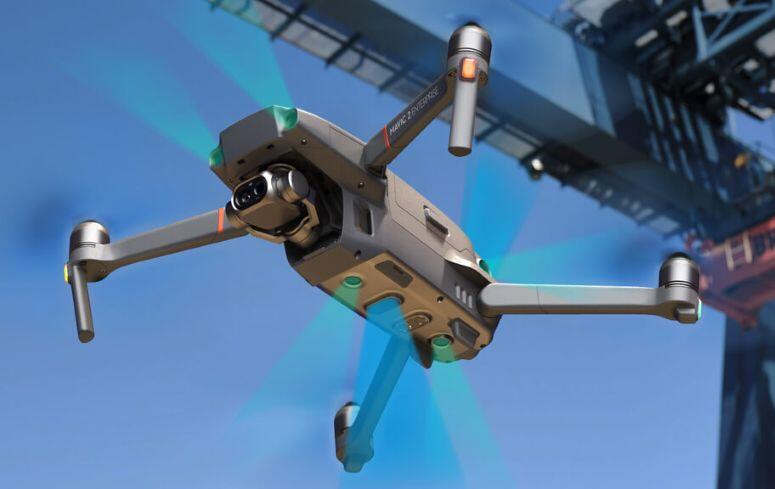
A DJI Mavic 2 quadcopter with a gimbaled camera.
A Federal Communications Commission (FCC) decision to add Chinese-made drones to its list of prohibited communications equipment has instilled uncertainty among public-sector users who have embraced the technology, says an organization representing police and emergency services agencies.
The FCC announced on Dec. 22 that it had updated its Covered List of prohibited equipment and services to include new, foreign-made uncrewed aircraft systems (UAS) and UAS critical components. Specified are systems made by companies that were previously called out in the fiscal 2025 National Defense Authorization Act (NDAA)—DJI and Autel Robotics, respectively, a Chinese drone manufacturer and the U.S. subsidiary of a Chinese technology company.
“The impacts on U.S. public safety agencies will certainly be dramatic,” says Christopher Todd, executive director of the Airborne International Response Team (AIRT). “Aside from Florida and a few other states that preemptively enacted legislation essentially banning drone technology from China and other foreign countries of concern, government and public-safety agencies in most states—as well as their supporting contractors—are actively using DJI and Autel drones in their aviation fleets.”
AIRT is a nonprofit dedicated to advancing the use of UAS for public safety, humanitarian assistance, and disaster relief.
Signed into law in December 2024, the NDAA required that, within a year of its enactment, “an appropriate national security agency” should determine whether communications or video surveillance equipment produced by DJI and Autel Robotics “pose an unacceptable risk” to U.S. national security.
The FCC was tasked with publishing a list of communications equipment regarded as threatening national security under the Secure and Trusted Communications Networks Act of 2019.
In its Dec. 22 announcement, the FCC said it updated the Covered List “following a thorough review by an executive branch interagency body with appropriate national security expertise that was convened by the White House.” The review resulted in a determination that UAS and UAS critical components produced in foreign countries pose unacceptable risks.
The White House-led national security determination provides for an exemption from the FCC’s list if the departments of Defense or Homeland Security decide a given UAS or UAS critical component does not pose risks.
Wireless products and services on the Covered List are banned from receiving FCC authorization, which prevents them from being sold in the U.S. market. The December listing applies only to new UAS devices and not to existing device models the FCC has already authorized. Consumers can continue to use any drone they have already lawfully purchased, the agency said.
A 2025 AIRT survey of government and public-safety users of drones with 702 respondents found that 82% possess DJI drones as part of their aviation fleets, with another 22% using Autel drones. “The recent action by the FCC will force many players to re-evaluate their technology stack ecosystems and flight operations,” Todd warns. “In short, this action may turn out to be a noticeable step backward for the U.S. commercial drone sector.”
Explaining its decision, the FCC said the U.S. government is taking additional steps to safeguard national airspace in preparation for several mass-gathering events, including the 2026 FIFA World Cup, the 250th anniversary of the signing of the Declaration of Independence in July 2026, and the 2028 Summer Olympics in Los Angeles. The agency also referenced President Donald Trump’s Unleashing American Drone Dominance executive order, which seeks to boost the U.S. drone industrial base.
“I welcome this executive branch national security determination, and I am pleased that the FCC has now added foreign drones and related components, which pose an unacceptable national security risk, to the Covered List,” FCC Chairman Brendan Carr said. “Following President Trump’s leadership, the FCC will work closely with U.S. drone makers to unleash American drone dominance.”
Shenzhen, China-based DJI stated on social media that concerns about the data security of its drones “are about protectionism, not evidence. DJI products remain among the safest and most secure on the market, backed by years of reviews by U.S. government agencies and independent third parties.” The manufacturer said it remains committed to its U.S. customers and is “actively exploring paths forward.”
DroneXL, a website that covers the commercial drone industry, said the FCC has effectively banned all foreign-made drones and critical components “in the weakest possible way: by failing to do any actual security work.”
The fiscal 2025 NDAA gave the government one year to conduct a security audit of foreign-made drones, DroneXL founder Haye Kesteloo writes.
“DJI begged for that audit,” Kesteloo says. “They sent letters in March, June and December 2025 asking agencies to examine their products. The response? Silence. No agency started the review. No evidence was gathered. No findings were made.”