This article is published in Aviation Week & Space Technology and is free to read until Oct 30, 2026. If you want to read more articles from this publication, please click the link to subscribe.
Opinion: Why Flight Departments Need MRO Staff At Shop Visits
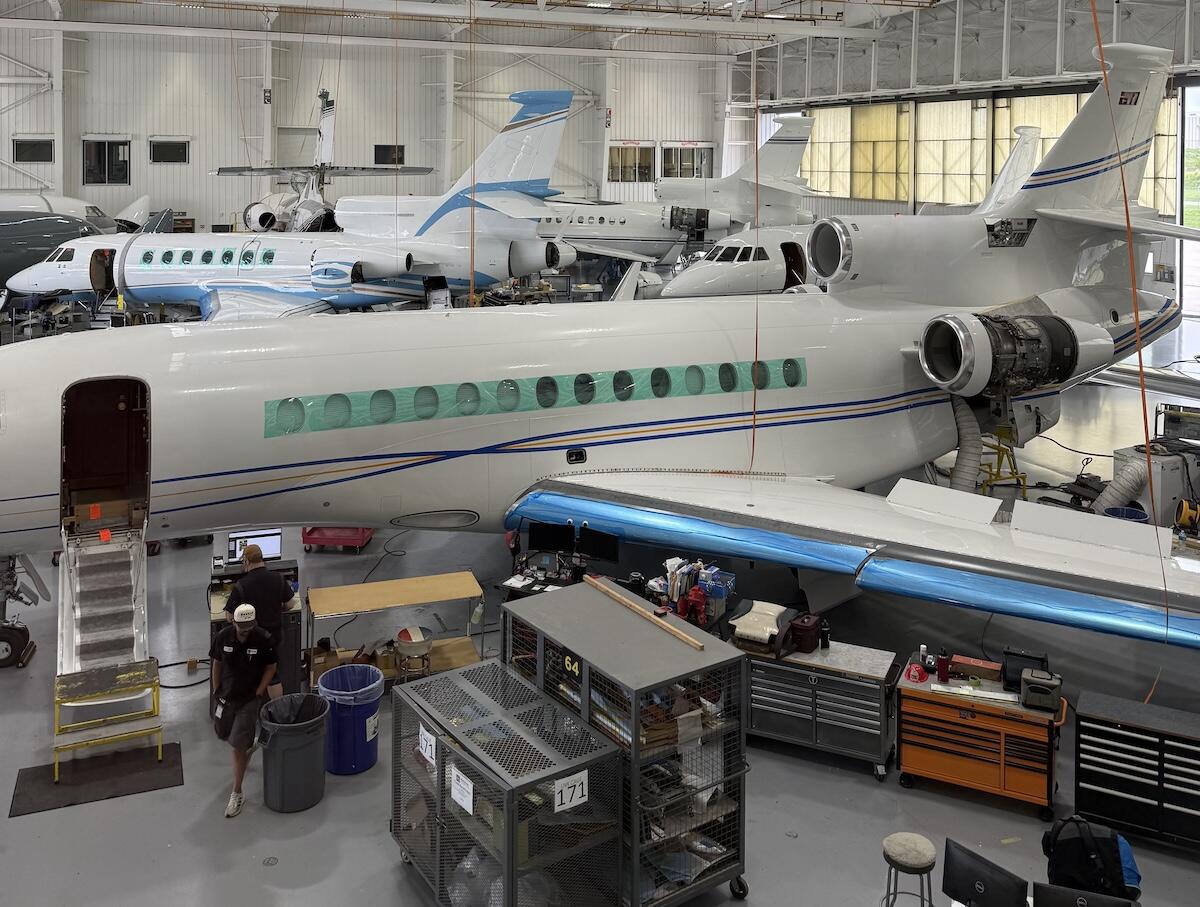
When you take your aircraft to a maintenance, repair and overhaul facility for an inspection or major modification, having a maintenance advocate on site is important for your department.
Someone who represents your company can provide valuable insight into what realistic downtime looks like. That advocate makes informed decisions by visiting the staff and seeing the problem up close. While photos and the write-up from the maintenance, repair and overhaul (MRO) provider are helpful when you are remote from the facility and need to approve squawk work, they are no substitute for having someone on site who can review the problem firsthand to make the final call.
An engineer—an airframe and powerplant (A&P), technician, mechanic or director of maintenance—is better suited to the task than a dispatcher, pilot or other personnel, whose day-to-day roles are not fixing aircraft. However, in a pinch, any of these people are better than having no one.
For example, a maintenance shop thought our aircraft’s water heater had a problem. This could have taken a few hours to troubleshoot. Before they started, I pushed the “press to test” button, which indicated that the lightbulb needed to be replaced. That was a much simpler and faster fix. One can only glean this information by going to the shop floor and seeing the problem up close and personal.
Another important aspect is knowing your own aircraft and your department’s needs. Suppose you have a squawk, such as a loosely tracking cabin seat, that has been bothering the crew. The repair station says it has corrected the issue. Being at the MRO means you can test that. If the seat has not been fixed, the maintenance shop can address it again while they have the aircraft.
If the facility attempts to double-bill on the item, you can contest it as not having been rectified the first time. Granted, if there are more part replacements involved, your company will need to cover that.
Aircraft owners trend toward “I want it yesterday.” While you are at the MRO, you can work with them on projecting future maintenance needs to prevent another event. It is frustrating for the whole department when you have to return for another maintenance event that was maybe only 100 hr. away.
You will need to evaluate the costs of getting inspections addressed early, as some manufacturer or vendor maintenance programs will not pay for early inspections. Ultimately, it comes down to the needs of the primary passenger. If the principal cannot give you the downtime to address the event in 100 hr., then it is time to bite the bullet and pay out of pocket.
If you have ever been to a longer inspection event, such as a C check, you know how long it can take. Prepare for an extended stay. I have found that during these longer events, it is better to use a short-term rental. At the end of the day, it feels like “home” and not a hotel room. The freedom to do laundry, cook your own meals or meet the neighbors is the great benefit. Eating out alone gets old quickly and having access to a kitchen can lead to healthier eating choices. Some chains even have programs tied in with these short-term rentals allowing you to earn travel rewards without staying at a hotel. This option can help save costs for your company, too.
My last advice is to get to know other customers that have aircraft at the facility. An MRO like Duncan Aviation has customer offices where many directors of maintenance or other engineers stay during inspections. They are in the same boat as you—hotel living, eating out often, not being with loved ones. I have found some good friendships as well as excellent networking opportunities this way.
From these encounters, you can learn what worked for their repair—helpful if your aircraft is facing the same dilemma. This also lets you get to know them on a more human level by asking if they would be interested in getting a meal sometime. It certainly can break up the tedium of being solo for so long.
Spending time at an MRO is not only about sitting around waiting for your aircraft to be delivered. If you take the time to plan, learn, control costs and build relationships, a once-a-year visit can have a meaningful impact on future events.
Christopher Reynolds has worked in aircraft manufacturing, airlines, general aviation and corporate aviation. He is an FAA-certificated A&P with 29 years of experience maintaining variety of aircraft.
Related Content