This article is published in The Weekly of Business Aviation part of Aviation Week Intelligence Network (AWIN), and is complimentary through Dec 08, 2025. For information on becoming an AWIN Member to access more content like this, click here.
Apcela has reintroduced the SmartSky Networks system under its own brand.
This article has been updated with a statement by SmartSky Networks. —Ed
A federal jury in Delaware has found that inflight connectivity provider Gogo infringed on patents held by SmartSky Networks in launching its new 5G air-to-ground system and awarded SmartSky, which is no longer operating, $22.7 million in damages.
Gogo indicated that it will appeal the jury’s decision and said the Nov. 21 verdict “has no impact” on its operations or the pending launch of the 5G service.
SmartSky filed a patent infringement lawsuit against Gogo in U.S. District Court in Delaware in February 2022. The complaint argued that Gogo’s 5G technology copied novel “beam-forming” and software-defined radio techniques SmartSky had patented to operate in unlicensed spectrum. In September that year, the court denied SmartSky’s request for a preliminary injunction to block Gogo from launching the 5G network.
Over the course of a decade, SmartSky had developed an air-to-ground (ATG) broadband network for business aviation and regional carriers with hundreds of ground radio sites. The network used 4G LTE and 5G wireless technologies operating within 60 MHz of unlicensed spectrum to provide a low-latency, two-way data link to aircraft. In August 2024, the company abruptly ceased operations, citing its inability to obtain financing.
SmartSky’s exit left Broomfield, Colorado-based Gogo as the dominant provider of ATG inflight connectivity to business aviation.
Gogo had announced plans to build a new 5G network in May 2019, targeting a launch date in 2021. But the rollout has been delayed by issues including a chip design error revealed in 2023.
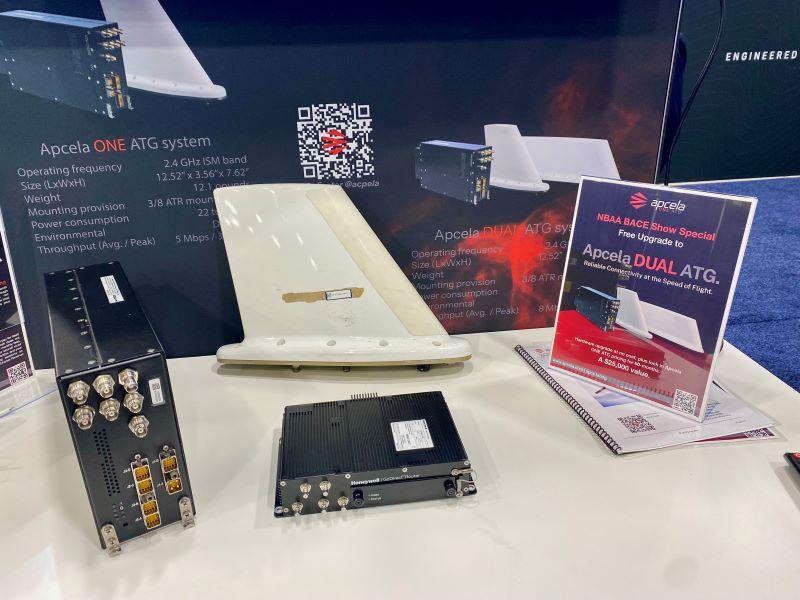
Apcela, a designer and manager of software-defined networks, earlier this year acquired the SmartSky system and completed upgrades of the network. The company exhibited an Apcela-branded airborne equipment set at the NBAA-BACE conference in October.
In a LinkedIn posting announcing the jury’s verdict, Apcela said its acquisition of the SmartSky ATG network “includes a worldwide license to these same key patents.”
“We are obviously pleased that the validity of these patents has been upheld, particularly relative to Gogo’s 5G plans,” Apcela added. “Stay tuned as the implications of this case play out in the coming weeks.”
SmartSky Networks issued a statement late Nov. 24. In addition to the $22.7 million “reasonable royalty for past damages,” the former company said it intends to seek enhanced damages “based on the jury’s willfulness finding, as well as a running royalty for Gogo’s continuing infringements” of two SmartSky patents that do not expire until 2033 and 2035.
“As SmartSky has long maintained and demonstrated in practice, its patented technology has now been proven, in court, as the key to unlock unlicensed spectrum for ATG use,” said Ryan Stone, who co-founded and led the company.
Gogo in a statement said that it is disappointed with the verdict and disagrees with the outcome.
“From the outset, we have maintained that Gogo’s independently developed 5G technology does not infringe SmartSky’s asserted patents, and their claims of patent protection are invalid,” Gogo said.
“We believe that the evidence supports our conclusion and that this litigation is an attempt to stifle legitimate competition and innovation in the aviation connectivity industry,” the company added. “We have strong grounds for appeal on both liability and damages, and we will vigorously pursue all available legal remedies, including post-trial motions and appeals.”