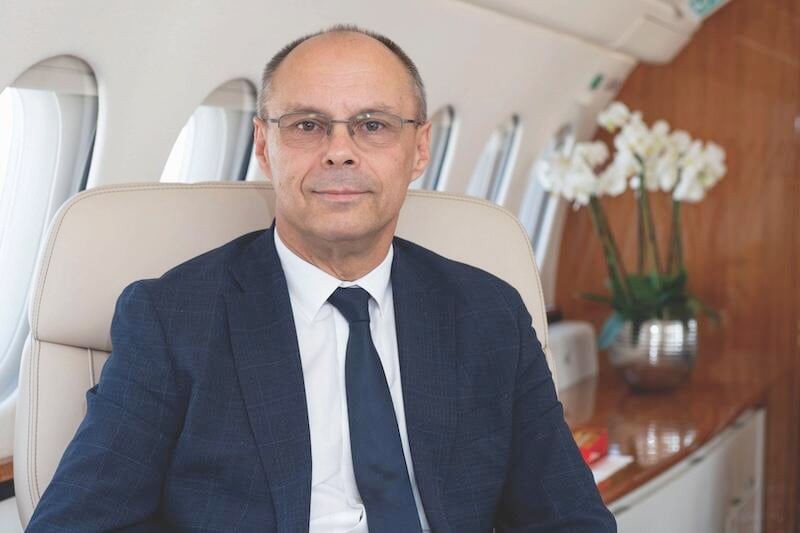
Dassault Aviation's Carlos Brana on the 6X at Dubai Airshow.
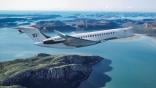
DUBAI—As Dassault's Falcon 6X celebrates two years in service, with more than 20 aircraft delivered around the world and more than 5,000 flight hours logged, the company is working on certifying the twinjet for high-elevation airports.
“Though it's entering its mature phase, we're still adding new features, dual HUDs being the more recent and a much higher certified landing altitude,” says Carlos Brana, Dassault EVP of civil aircraft. “As elegant as the 6X is, it's still a workhorse, built for any mission.”
“The double HUD allows both pilots to see exactly the same thing outside, and to share the same information, and that is the essence of what we have developed with the EASy cockpit.”
In recent months, the company has received steep approach certification for London City Airport and other airports with steeper-than-normal glide slopes and conducted successful tests this summer at the high-elevation airport in La Paz, Bolivia, for certification at airports up to 14,000 ft.
“We are not changing a lot on the aircraft, as it is capable of these approaches, but we are testing it,” Brana says. “Most important is to make sure that the oxygen masks don't fall at these high altitudes, so we went to La Paz, which is higher than 13,000 ft. and the purpose was to ensure that we can land at airports at up to 14,000 ft."
The company is also ensuring that connectivity is optimal. “There are some customers who cannot fly if they are not connected to the world. We have two very high speed systems, Jetwave X from Honeywell and Starlink, which both allow connectivity comparable to what you have in your house,” Brana says.

Related Content